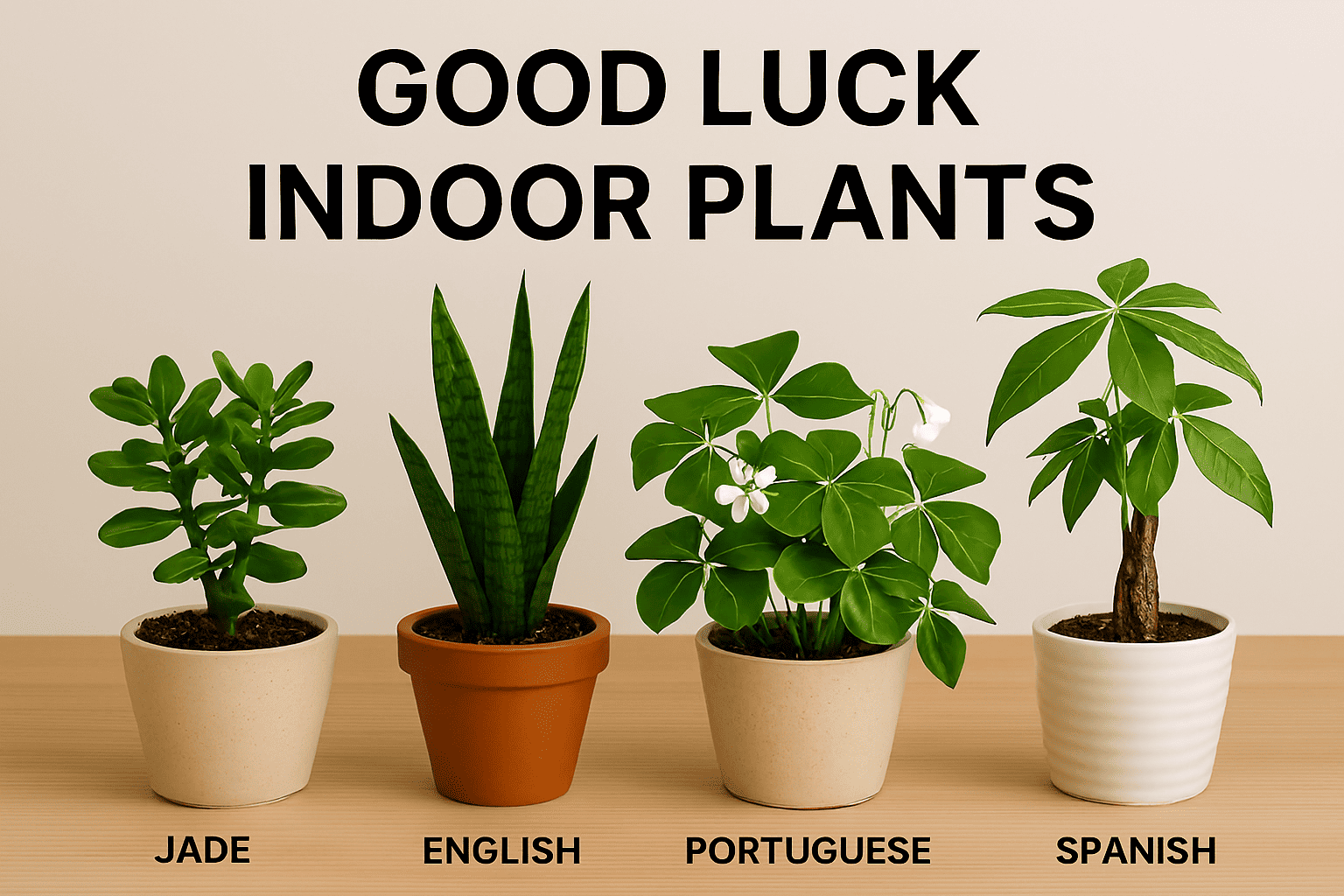
Indoor plants release all the harmful air in the house and produce fresh air to refresh your mind. As a result, the mind is fresh and ready to work and that brings positivity to my home.
- Lucky bamboo
- Jade plant
- Money plant
- Basil plant
- Rubber plant
- Areca palm
- Lavender
- Pothos
- Ficus plant
- Snake plant
- Peace lily
- Jasmine
- Orchid
- Fittonia plant
- English ivy
- Pilea plant
- Hoya plant
- Aloe vera plant
- Rosemary
- Eucalyptus plant
20 types of indoor plants that brings positivity in your home
Here, I will share some different types of good luck indoor plants brings positivity in your home to grow easily.
1. Lucky bamboo indoor plants that brings positivity

If there is a good luck element in the name lucky bamboo then it will also bring good luck at work. It does not require direct sunlight and actually prefers to avoid it. It thrives best in bright, indirect light.
2. Jade plant indoor plants that brings positivity

The jade plant grows best in filtered sun to partial shade, and may sunburn if planted in reflected sun. It is drought-tolerant but requires occasional irrigation and does not like to be over-watered.
Jade plants need more water in the summer and much less in the winter. These drought-tolerant plants are happy to go for several days or even weeks without water and prefer their soil remain dry most of the time.
3. Money plant indoor plants that brings positivity

Different plants are believed to have their own benefits but money plants are one of the most well known indoor plants known to bring good luck, wealth are prosperity. Medium to bright indirect light with southern exposure. After applying the fertilizer you can put the money plant in the water. This plants are drought tolerant but they prefer constant moisture.
4. Basil plant indoor plants that brings positivity

Basil plant is easy to grow with long, luscious, and aromatic leaves. It has several varieties, from sweet to spicy and it find to dark green to purple. It needs a sunny location that receives at least six to eight hours of bright light per day. If you’re growing indoors, place the planter in a south or west-facing window, North and east-facing windows.
5. Rubber plant indoor plants that brings positivity


The rubber plant can withstand fifty to seven percent humidity. Nitrogen Phosphorus Potassium is a very good fertilizer for rubber plants. Light is very necessary for the survival of any plant. Its like bright light and a lot of it, but not direct sunlight. Without water, trees and people do not live. Water your Rubber Tree every 1-2 weeks, allowing the soil to dry out between watering.
6. Areca palm indoor plants that brings positivity

Areca palm is looks like bamboo plant because of its tall, attractive and their fronds are almost same. It prefers in bright, indirect light but will tolerate a bit of shade. South or west facing windows are great as long as you ensure that the plant remains out of direct sunlight for the majority of the day. It requires just enough water to keep the soil moist, but not so much water that it’s drowning. This may take a bit of trial and error.
7. Lavender

Lavendor plant blooms in Winter when you locate it away from hot or cold. This plant has love and attention with delicious-smelling lavender plant growing in your home. It thrives in well drained, slightly gritty soil.
8. Pothos

All kinds of indoor plants are poisonous which are harmful to children, old people and pets. Instead, aim for bright indirect light or filtered sunlight. Water your Pothos every 1-2 weeks, allowing soil to dry out between watering.The best soil for pothos plants should be well-draining and rich in nutrients.
9. Ficus plant

The best part of growing is that it requires low maintenance. Ficus ginseng bonsai plant is an interesting looking plant with narrow elevated roots. This plant is one of variety of the large group of fig plants.This plant prefers abundant, bright and indirect light. It does not tolerate direct light so avoid prolonged exposure to intense light especially during the hottest parts of the day.
10. Snake plant

One of the most toughest indoor plants, snake plants can tolerate easy to grow indoor condition. It also known as “mother -in- law’s tongue” for its stiff, sword like leaves. Typically they grow more quickly in brighter light, but strong direct sunlight burns leaves, especially when plants are outdoors.
11. Peace lily

One of the most popular indoor plants are Peace lily with easy to grow features. It prefers low to bright, indirect sunlight. They’re the perfect plant to bring life to a dark room or corner. This plant need consistently moist soil, but they definitely don’t like to sit in standing water. Whenever the top inch of soil is dry, water the plant until the overflow starts to come out of the bottom of the container.
12. Jasmine

If it is said to enjoy a sweet smell but again the smell should be natural, then we can never avoid jasmine flower. This plant needs six or more hours of strong light per day to thrive indoors. Jasmine will grow well in full sun to partial shaded areas. Indoor jasmine requires more frequent watering—as much as two to three times a week. This plants prefer well-drained, fertile garden soil that is consistently moist.
13. Orchid

The moth orchid plant is bright and indirect light becomes bigger and more intense direct lights damages this plant. Bright, indirect light from an Eastern or Southern window is ideal. These beautiful flowers do not need much water and prefer their growing medium to have the opportunity to dry out completely between watering.
14. Fittonia plant

Fittonia green plant prefers bright, indirect light and place it near a north or east-facing window. During the growing season you should water every 3-4 days and be sure to water more when the soil is dry and not before. The plant needs less water in winter but dry air can cause the soil to lose moisture quickly.
15. English ivy

English Ivy is a perennial foliage plant. It is easy to grow but can be invasive in some regions. This plant is a low-light indoor plant that comes in a wide variety of leaf colors and shapes. They can survive without water for long periods, but the leaves turn dull and new growth stunts. So, English Ivy is a plant that needs a lot of water, you can kill it by overwatering.
16. Pilea plant

Pilea peperomioides, also known as the Chinese Money plant, is popular for its coin-shaped foliage and easy care. Pilea prefers bright to medium indirect light. It thrive in bright indirect light to dappled sun. It can tolerate low light, but it may become leggy and lose its vibrant colour. Avoid extended exposure to direct sunlight, which can scorch its leaves. Water when 25-50% of the soil volume is dry.
17. Hoya plant

One of the easiest indoor plant is Hoya plant for its slow growing and low maintenance features. This plant is known as wax plants due to their thick and shiny foliage. Most of the Hoya plant prefers medium to bright, indirect light upto 6 hours daily. Place it in a south or east facing window that receives indirect light. It prefers to dry out between watering and they do not like to water for too long.
18. Aloe vera plant

Aloevera, a desert plant, has numerous benefits and specific care needs. It requires 6-8 hours of light per day, well-draining soil, and a pH of 7.0-8.5. Weekly watering and infrequent fertilization are necessary. Propagation through leaf cuttings or pups is possible. Pruning and vigilance against pests and diseases are crucial. Aloevera’s uses range from skincare to internal health.
19. Rosemary

Rosemary likes full sun and does not tolerate shade. This means it requires at least six hours of direct sunlight on most days. Although rosemary prefers soil on the dry side, water your plant every few days if there’s no rain. Indoors, let it dry out slightly before watering again.
20. Eucalyptus plant

Eucalyptus gunnii is a popular plant and suitable to grow indoors temporarily, but you should be aware that your plant will probably outgrow your home. This plant needs plenty of light and perform best in a south-facing window.