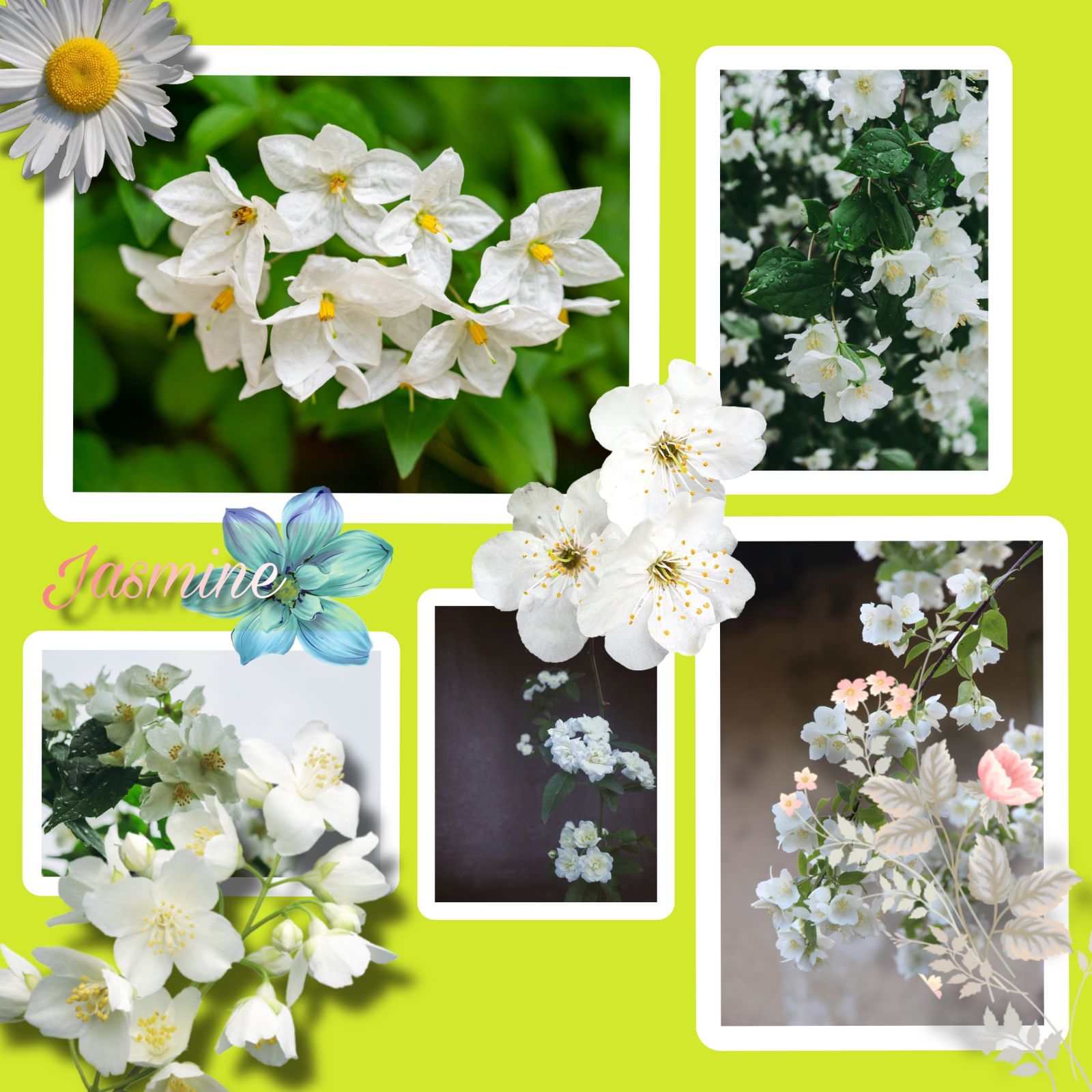
If it is said to enjoy a sweet smell but again the smell should be natural, then we can never avoid jasmine flower. Just as this jasmine flower blooming in the garden like a queen enhances the beauty of my garden, the smell of this flower repeatedly affects me and my loved ones who come to my garden.

- Scientific classification of Jasmine Plant
- Jasmine Plant Prefers
- How to Care Jasmine Plant
- how to propagate jasmine plant
- pruning of jasmine plant
- Common problem of Jasmine Plant
- Benefits of Jasmine Plant
Scientific classification of Jasmine Plant
| Kingdom | Plantae |
| Clade | Tracheophytes |
| Clade | Angiosperms |
| Clade | Eudicots |
| Clade | Asterids |
| Order | Lamiales |
| Family | Oleaceae |
| Tribe | Jasmineae |
| Genus | Jasminum |
Jasmine Plant Prefers
- Light – Bright and indirect light
- Soil – Well drained
- Soil pH – 6.5-7.5
- Temperature – 68°-72° fahrenheit
- Humidity – 40-60%
- Bloom time – March to June
- Native area – Eurasia, Africa, Australasia within Oceania
- Toxicity – Pets & human

%3Amax_bytes(150000)%3Astrip_icc()%2Fgrow-jasmine-indoors-1902621-02-63ac14637b394849b7cc56bc03f971ec.jpg&tbnid=A9vgcIANDl1s-M&vet=1&imgrefurl=https%3A%2F%2Fwww.thespruce.com%2Fgrow-jasmine-indoors-1902621&docid=SpePA9gqIW490M&w=1067&h=1600&itg=1&source=sh%2Fx%2Fim%2Fm4%2F2&kgs=ba403d7e90c8a665&shem=trie#imgrc=ekB3ksJpM8n9cM&imgdii=A9vgcIANDl1s-M)
How to Care Jasmine Plant
One of the main benefits of growing and harvesting jasmine at home is that you know it has not been treated with pesticides. Provide plants with bright sunny days and cool, dark nights. Jasmine plants need adequate, indirect light during the day to develop flower buds, but also require the absence of artificial light at night. Jasmine also benefits from cool temperatures.
Light
This plant needs six or more hours of strong light per day to thrive indoors. Jasmine will grow well in full sun to partial shaded areas. Summer -flowering jasmine does better in a sunny spot, while other varieties, such as winter jasmine, like a more shaded area. They will perform best with direct morning light, but in summer they need protection from the strong afternoon sun. In temperate environments, too much hot afternoon sun can burn the leaves, damaging the plant’s appearance and health.
Water
Indoor jasmine requires more frequent watering—as much as two to three times a week. This plants prefer well-drained, fertile garden soil that is consistently moist. It’ll need more water during the growing season and less when it’s cooler or when the plant is dormant. Mind it,overwatering can be just as deadly as underwatering.
Soil
This plant need well-drained, rich loamy soil with a pH ranging from 6.5-7.5 is ideal for their cultivation. It can be grown on a wide range of soil. Peat moss, perlite, and organic matter form the holy trinity of components for this plant’s soil mix. It will place near a wall or fence in moist but well-drained soil in a sheltered, sunny, site.
Temperature & humidity
Different types of Jasmine demand different types of temperature. On average your jasmine will grow and bloom best in temperatures ranging from 60 to 75 degrees Fahrenheit. These plants can tolerate 68°-72° fahrenheit.
Jasmine grow best in warm weather, the ideal requirements for successful cultivation of jasmine are mild winter, warm summer, moderate rainfall and sunny days.


Any plant that is brought home, we are the best at making this plant grow beautifully and revive the maximum positive energy in every corner of the house.This plant is known as reduce stress level and anxiety due to their claming effects.One of the easiest indoor plants to grow and maintain. It makes a fantastic gift for any occasion, garden with its shiny green leaves.Ideal plants are money plants to keep in your home that release high amounts of Oxygen into your bedroom.Being one of the easiest air-purifying plants to grow and maintain, the money plant is a perfect natural air purifier for your home, especially when the pollution levels are at a peak.To bring wealth and prosperity in your home. This plant is believed to attract money and good fortune. Readmore
Fertilizer
Apply fertilizer in early spring just before new growth appears.Well balanced granular feeds are most popular because they provide a slow release of nutrients throughout the season. You can increase the blooms by feeding the plants fertilizer with a higher potasium ratio,beginning when new growth shows in late winter or early spring.
how to propagate jasmine plant
Jasmine can be propagated by cuttings, layering, sucker, grafting, budding and tissue culture. Plants propagated using these methods have the same characteristics as the parent or source plant since vegetative material is used and no genetic recombination is involved. For preparation of layers,one year old shoots are selected and are buried in the soil 10- 15 cm deep after making a shallow, slanting cut in the portion that is to be buried.


pruning of jasmine plant
Pruning is an important activity as it influences growth, flower-bud initiation, differentiation and, ultimately, the flower production in Jasmine. Pinching the tips, especially in the first two years, promotes rapid growth and lush foliage.
Common problem of Jasmine Plant
1. The primarily disease are blight, rust and Fusarium wilt, all of which affect numerous other varieties of plants.The leaves and stems which leave necrotic areas, discolored halos or patches, wilted leaves, streaked stems and occasionally spread to young vegetation.
2. Few jasmine plant have climber problem such as stem blight, rust, and powdery mildew.
You should keep an eye on your jasmine so you can quickly remedy any issues that may occur.

%3Amax_bytes(150000)%3Astrip_icc()%2Fgrow-jasmine-indoors-1902621-03-350e37ee591c4f63b1b4faf4b95e45fa.jpg&tbnid=ekB3ksJpM8n9cM&vet=1&imgrefurl=https%3A%2F%2Fwww.thespruce.com%2Fgrow-jasmine-indoors-1902621&docid=SpePA9gqIW490M&w=1067&h=1600&source=sh%2Fx%2Fim%2Fm4%2F2&kgs=fc79ed64158a5dd6&shem=trie#imgrc=ekB3ksJpM8n9cM)
Benefits of Jasmine Plant
- 1. Jasmine is used to flavor beverages, frozen dairy desserts, candy, baked goods, gelatins, and puddings.In manufacturing, jasmine is used to add fragrance to creams, lotions, and perfumes.
- 2. The flower is used to make medicine. Jasmine has been used for liver disease (hepatitis), liver pain due to cirrhosis, and abdominal pain due to severe diarrhea.
- 3. Jasmine is inhaled to improve mood, reduce stress, and reduce food cravings. This means you may feel more alert, clear-headed, and energetic after smelling jasmine, which can help relieve symptoms of depression or menopause.
-

How to Grow and Care for Bee Balm: A Complete Guide
Bee balm plant is vibrant perennial plant. The bee balm flower has an open, daisy-like shape, with tubular petals in shades of red, pink, purple, and white. Many of these species continue to be improved for their use in the garden for frequent introductions. To maximize growth and flowering, ensure they receive bright, indirect light and…
-

Complete Guide to Pennyroyal Plant Care
Pennyroyal plant is commonly known as mosquito plant. It produce whorls of pale purple flowers in mid to late summer. It is an herb traditionally used in folk medicine to aid digestion, relieve menstrual cramps and repel insects. To maximize growth and flowering, ensure they receive bright, indirect light and well-draining soil with consistent but…
-

Growing Calathea White Fusion: Key Care Instructions
Calathea white fusion plant care : lets read care shortly It, thrives in bright, indirect light, well-draining soil, and high humidity. Careful watering and propagation, along with pruning and attention to environmental factors, can help this sensitive plant flourish. However, overexposure to light, dry conditions, pests, and inadequate space for root growth can cause problems.…