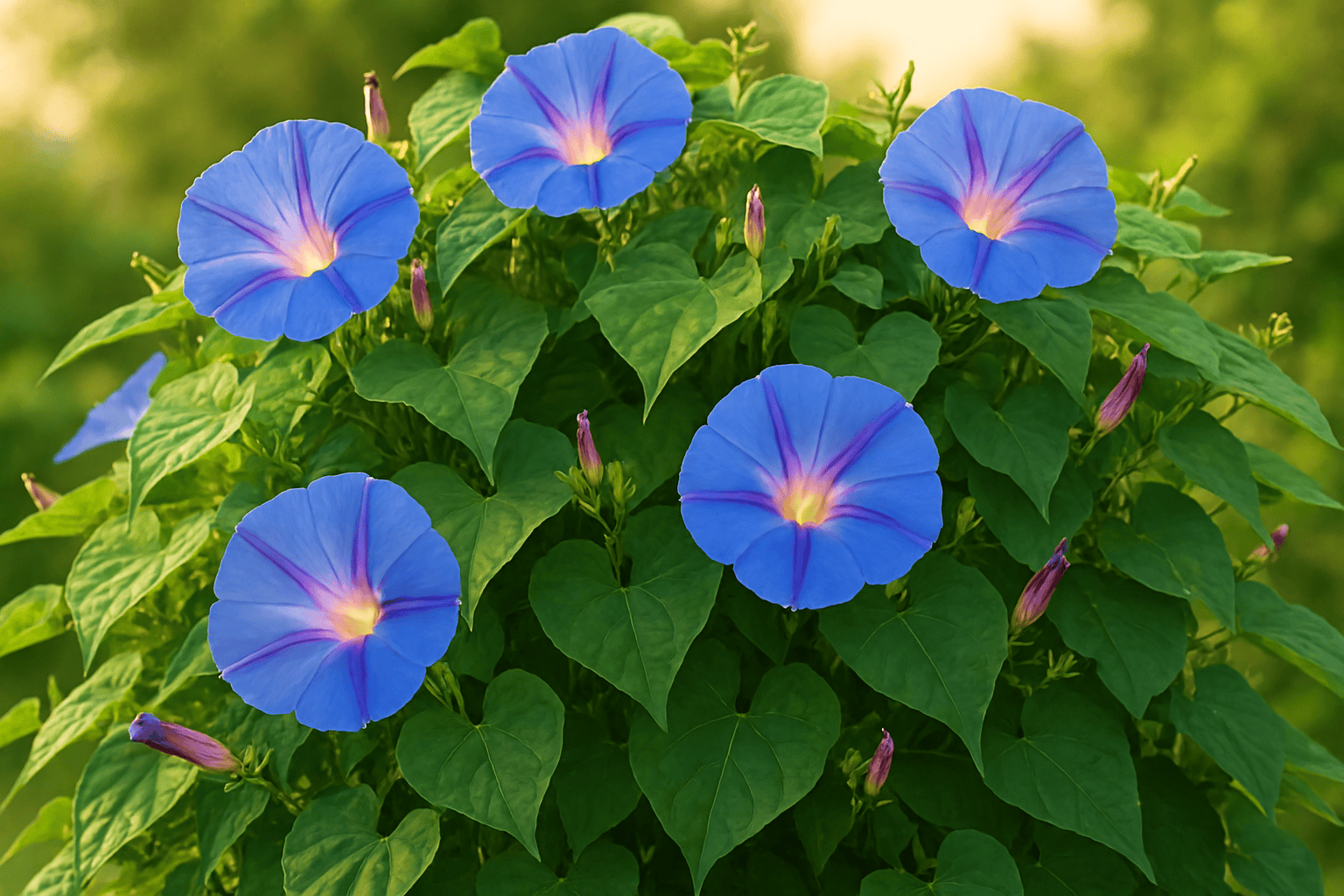
Morning glory is a favourite flower in Japan where it has been cultivated since the 8th century. The seeds of Ipomoea nil were used in ancient China as a laxative. The brightly coloured trumpet-shaped flowers of the common morning glory have a slight fragrance and are popular with butterflies, it attract the pollutants. To maximize growth and flowering, ensure they receive bright, indirect light and well-draining soil with consistent but moderate watering to prevent root rot. With proper care and maintenance a Morning glory plant can live up one years , making it a timeless addition of your indoor gardening.
Morning glory plant Scientific classification
| Kingdom: | Plantae |
| Clade: | Tracheophytes |
| Clade: | Angiosperms |
| Clade: | Eudicots |
| Clade: | Asterids |
| Order: | Solanales |
| Family: | Convolvulaceae |
| Genus: | Ipomoea |
| Species: | I. purpurea |
Morning glory prefers

- Light – Bright, indirect light
- Soil – Well draining
- Soil pH – 6.0 to 7.0
- Temperature – 75°F and 90°F
- Humidity – Moderate to high
- Blooming time – Early Summer
- Flower colour – Blue, purple and pink
- Native area – Mexico and Central America
- Toxicity – Human and pets
Morning glory plant care: Expert tips for Lush, Vibrant Blooms
Adequate amounts of light, water, soil, temperature and fertiliser should be obtained for the plant to grow healthy. The common problems and benefits of the plant have also been shared in this article. This article will help you with help you with all the essentials you need to grow your plant.
If you want to know Periwinkle plant care.
Light
Morning glory requires full sun to thrive in at least 6-8 hours of direct light daily. The flowers will only open when they are in direct sunlight. They need at least 6 hours of direct sunlight per day to produce their beautiful blooms. They are known to open their vibrant, trumpet-shaped blossoms in the morning. Choose a spot that gets morning sun—it helps the buds unfurl beautifully.
Water
This plant thrive with consistent moisture, especially during their initial growth stages. It can tolerate some dryness but consistent watering is best for optimal growth and flowering. Morning glory prefers low-maintenance when it comes to hydration but their water needs change as they grow. Overwatering can lead to root rot and ensure the soil drains well to prevent waterlogging.
Soil

Morning glories prefer moderately fertile, well-drained soil that is kept consistently moist until the plant is well established. They don’t require rich soil but they do need some nutrients for healthy growth. The soil is rich in organic matter and has good drainage to prevent water-logging. If the soil is heavy or clay like, amend it with loamy sand or organic matter to improve drainage, Too much organic matter can lead to excessive foliage growth at the expense of flowers.
Temperature & humidity
Morning glories are tropical-origin vines that love warmth with the ideal range for germination and growth being between 68°F and 95°F.They are sensitive to cold and frost, with temperatures below 50°F potentially slowing or stopping growth and frost causing damage. Morning glories are relatively heat-tolerant but may grow slower in very dry, hot conditions.
This plant is surprisingly adaptable when it comes to humidity but they do have preferences that help them thrive and bloom beautifully. It prefer moderate humidity, ideally within the 60% to 80% range. While they don’t require supplemental humidity and providing it can be beneficial, especially in dry climates.
Fertiliser
Feed your plant during their growing season with a balance fertiliser. To make your plants grow faster, apply fertilisers when the plant starts flowering. It generally doesn’t require heavy fertilisation but a balanced, slow-release fertilizer can help promote healthy growth and abundant flowering. It thrive with moderate fertilization. Fertilize every four to six weeks during the growing season and starting when the vines begin to climb. Avoid excessive nitrogen which can lead to excessive foliage at the expense of flowers.
How to care and propagate of Morning glory plant

The best way to propagate by stem cuttings, it making this the easiest and most popular method. Choose a healthy stem with at least two leaf nodes and avoid flowering stems. Dip the cut end in rooting hormone. Use well-draining potting mix with proper care. Keep the soil moist but not wet until the cutting roots. Transplant the cutting once established.
Pruning your Morning glory plant to make healthy
Morning glories don’t usually require pruning except in fall after frost has killed the foliage. Trimming your plant for new growth to produce more new branches. Make sure to trim just above a set of leaves and regular pruning will also increase the chances of the plant producing its stunning, fragrant flowers. Removing spent flowers before they form seedpods can encourage more blooms and prevent unwanted self-seeding. Pruning can help control their growth, encourage bushier foliage and improve air circulation. Deadheading spent flowers and removing any damaged or diseased stems can be done as needed.
Types of Morning glory plant
- Black kniolas : The black kniolas flowers in a deep purple that’s the darkest shade. These pretty flowers have a pink center that fades into the purple petals.
- Chocolate : The chocolate variety is one of the more subdued morning glories. The tri-lobe leaves aren’t as showy as some of the others, but the white picotee edge.
- Crimson rambler : Another variety of Morning glory is Crimson rambler, it is ideal for covering things like fences.This dark pink flower is touched with red stripes and a white center.
- Cypress vine : Another lovely variety is the cypress vine. It is an ornamental that boasts small red flowers, lacy leaves.
Repotting of Morning glory plant
Repotting is very important to extend the lifespan of Morning glory plant and keep them healthy. This plant requires careful handling to avoid damaging their sensitive roots. When repotting, avoid disturbing the root ball as much as possible. The best time to repot morning glories is when they are actively growing, but before they become root-bound or outgrow their current pot. Water the morning glory thoroughly a few hours before repotting to make the soil easier to work with and to reduce stress on the plant.
Common problem of Morning glory plant

- The most common problem is fungal diseases like powdery mildew, root rot and leaf spot. Aphids is tiny, sap-sucking insects can cause leaves to curl and yellow.
- Leaf discolouration and stunted growth due to various factors like improper watering, poor drainage, or nutrient deficiencies.
- These plants are rarely affected by disease and it can suffer from root rot when conditions are humid.
Benefits of Morning glory plant
- This plant is know for its nectar-rich blooms which is attract bees and butterflies, contributing to garden biodiversity. It is used for attracting pollinators.
- Morning glory is also used in folk medicine to treat diabetes, high blood pressure and heart disease. It being a low-calorie, nutrient-dense vegetable that contributes to a balanced and health-conscious diet.
Morning glory plant Faq
1. Do morning glories come back every year?
Ans. Morning glories will come back every year in zones. In zones that are just slightly cooler, their seeds may germination in Spring.
2. Where is the best place to plant morning glory?
Ans. It grow best when planted in a spot that receives at least eight hours of unfiltered light per day.
3. How to do I even go about clearing this Morning glory?
Ans. This will make it much easier to control in the future until the last remnants of the root system die out.