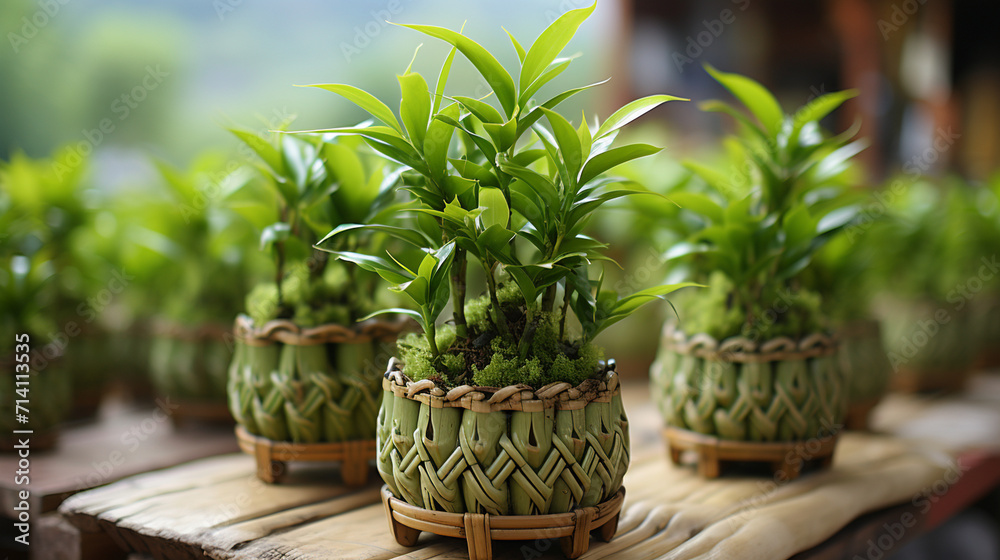

If there is a good luck element in the name lucky bamboo then it will also bring good luck at work. So, how to grow this indoor plant at home, how to care for it, I have told all through this article.
Scientific classification of Lucky Bamboo
- Kingdom: Plantae
- Clade: Tracheophytes
- Clade: Angiosperms
- Clade: Monocots
- Order: Asparagales
- Family: Asparagaceae
- Subfamily: Nolinoideae
- Genus: Dracaena
- Species: D. sanderiana


Lucky Bamboo Prefers
- Light– Partial
- Water – Every week
- Soil – Well draining
- Soil pH – 6.0-6.5
- Temperature– 65-95 degree fahrenhite
- Humidity – 50-70%
- Native area – Central Africa
- Toxicity – Human and pets
lucky bamboo care
If you want to bring good moments to your home, you have to plant a lucky bamboo .If this plant takes care of you, then you also need this plant to take care of it.I have shared my experience that how to take care lucky bamboo plant, with you and hope this article will help you a lot.
Light
Lucky Bamboo does not require direct sunlight and actually prefers to avoid it. It thrives best in bright, indirect light. Too much direct sunlight can harm the plant, causing the leaves to burn and turn yellow. When it comes to light, lucky bamboo prefers bright, filtered sunlight, such as what is found under a rainforest canopy. Avoid direct sunlight as it will scorch the leaves. They are more tolerant of too little light than too much. If the plant begins to stretch, however, or the green fades, provide more light.
Water
It appropriate water mists can be sprayed toward the leaves to increase the ambient humidity and prevent the leave edges from drying. It should be noted that lucky bamboo is sensitive to the fluoride in tap water.If you’re growing your lucky bamboo in water, replace it with fresh every week. Add a drop of liquid feed to the water every couple of months. If you’re growing your lucky bamboo in compost, water when the top few centimetres are dry to the touch. Reduce watering in winter.
Soil


Lucky bamboo prefers well-draining soil to prevent waterlogging and root rot. Use a well-draining potting mix that allows excess water to drain away quickly. A mixture of peat moss, perlite and coarse sand can help improve drainage. It is happiest in a neutral to slightly acidic, well draining but moisture retentive potting soil. It is an easy plant to care for which makes it great for offices and homes alike. It’s happy growing in soil or water but has the longest life when grown in soil.
Temperature & humidity
Lucky bamboo prefers a temperature range of 65–95°F (18–35°C). It use a liquid houseplant fertilizer every three to four weeks. Remove any yellow leaves. Repot the bamboo as its roots outgrow the container.Within this range, it’s like a zen garden—peaceful and growing. Go beyond these limits, and your bamboo might start to protest. Lucky bamboo plants may not survive in temperatures below 55 degrees Fahrenheit and should never be placed in front of an air conditioner. Just as direct sunlight should be avoided, extreme heat should also be avoided.
Lucky bamboo absorbs moisture when it is exposed to humid conditions or immersed in water. The mechanical properties of bamboo may change significantly due to moisture absorption depending on the bamboo species and treatment conditions. Lucky Bamboo needs 50-70%humidity for optimal health and growth. Use a hygrometer to measure and maintain correct humidity levels. Adjust humidity seasonally with humidifiers, dehumidifiers, or ventilation.
Fertilizer
Any fertiliser that is good for lawns, grasses, palms, etc will be good for bamboo.A balanced liquid fertilizer, with an N-P-K ratio of 10:10:10 or 20:20:20, is a solid choice for your lucky bamboo. This is like the plant equivalent of a well-rounded diet, ensuring your bamboo gets a balanced intake of nitrogen (N), phosphorus (P), and potassium (K).Change the water every 7 to 10 days, cleaning the pebbles and container as well. Normally, lucky bamboo will grow fine without any fertilizer, but if you wish, you can give it a small drop of houseplant fertilizer monthly.
Lucky Bamboo Propagation
Many people prefer propagating lucky bamboo in water because it’s easy and effective. Simply place your cutting in a small glass filled with a few inches of distilled water. You will still have branches below as normal, in fact it will get bushier from trimming. But don’t fear, if you trim too short, you will still get new shoots regrowing from the ground level each growing season to refresh the clump. Although it doesn’t naturally live in water, lucky bamboo cuttings will easily grow roots in it. If you purchased cuttings rooted in water, keep them 1-2 inches deep. Then, once a week, replace with fresh water.
Pruning lucky bamboo


Trim off any leaves dead or yellowing leaves with a pair of pruners. If you want to trim lucky bamboo shorter, cut just above a horizontal node. If stalks are brown or mushy, cut them as close to the soil as you can and toss them out. The simplest way to propagate lucky bamboo is by taking cuttings, which can be trimmed off the parent plant with clean scissors or gardening shears. If you trim too short, you will still get new shoots regrowing from the ground level each growing season to refresh the clump. Lucky bamboo is not a bamboo at all, but is a Dracaena. So, it will branch if the tip is cut off. If you increase the light, it’s more inclined to make a few branches instead of just one. And if it’s still in water, moving it to proper soil in a pot will help it grow like a plant is meant to grow.
Common problem of Lucky Bamboo
1. Its leaves can cause a burning sensation in the mouth and throat if ingested.Their leaves can cause them abdominal pain, incoordination, diarrhea, weakness, vomiting, and drooling if ingested.Bamboo plant roots have varieties of getting spread.


2. A lucky bamboo that sits in soggy soil will drown because its roots cannot get oxygen. As the roots rot, its leaves turn yellow and die. If you are growing lucky bamboo in water, algae can grow in old water and compete with the plant for nutrients.
3. Lucky bamboo can occur for a few reasons, including overwatering, chemicals in your water, exposure to too much direct light, temperature shifts, or over fertilization.
Lucky Bamboo Benefits
- The lucky bamboo is placed on the east side of the interiors. You could also place it on the south–east side to attract wealth.According to Feng Shui, it brings balance to the five elements—fire, water, earth, wood, & metal.
- This plant is one of the most popular Feng Shui cures said to bring good luck and prosperity to the place where it is grown. It is also known to enhance the flow of positive energy in the home and office when placed in the right direction.
- There are also many benefits of this lucky bamboo plant. The benefits are so many that I have to write a separate article.I think that article is waiting for you. READMORE