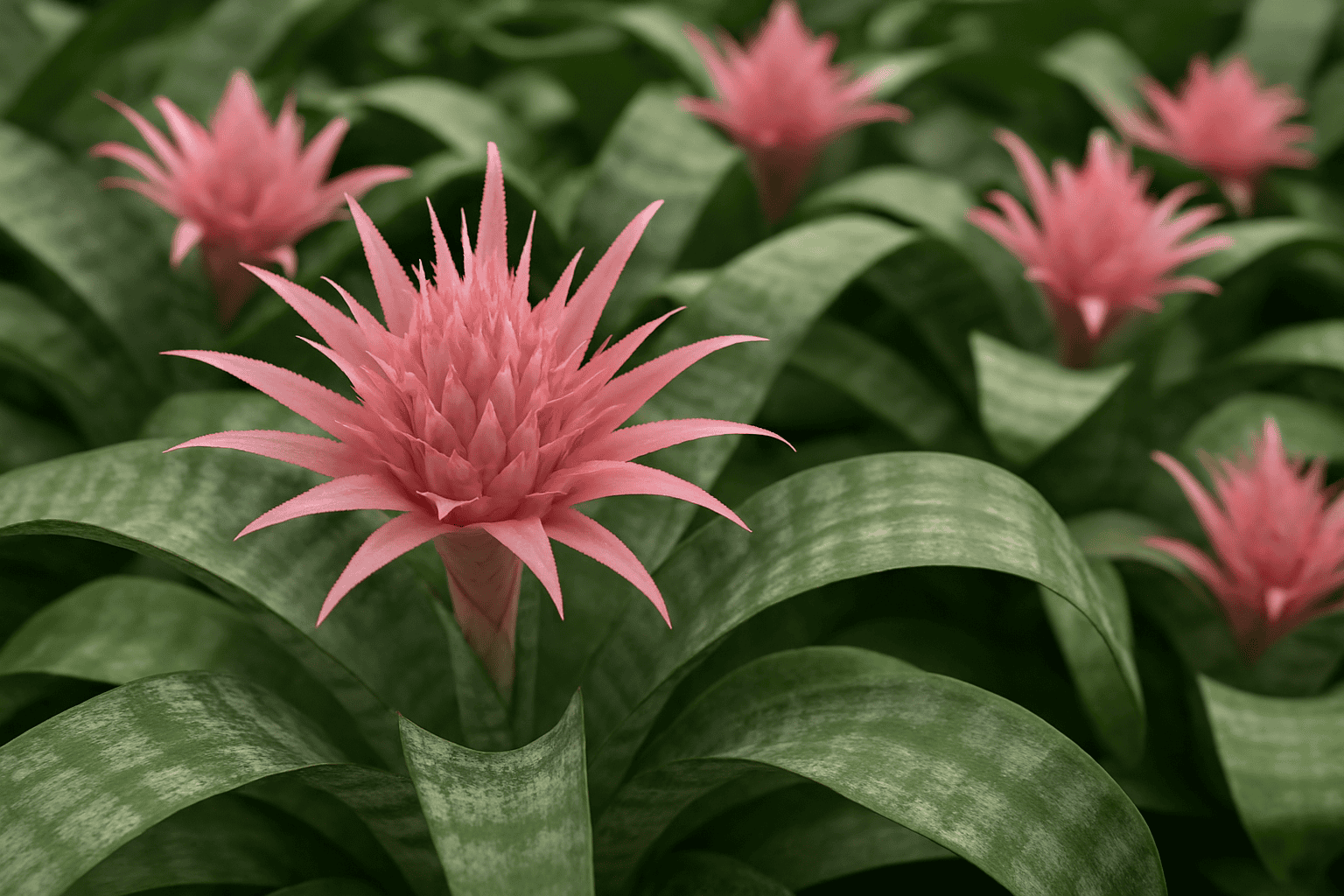
Urn plant is also known as Aechmea fasciata, it is a striking tropical bromeliad prized for its architectural foliage and vibrant pink flower. This plant is popular indoor plant producing a water tight rosette of leathery, sea-green and silver leaves that arch gracefully outward and producing tiny blue flowers, a stunning indoor accent. To maximize growth and flowering, ensure they receive bright, indirect light and well-draining soil with consistent but moderate watering to prevent root rot. With proper care and maintenance an Urn plant can live up 3-5 years , making it a timeless addition of your indoor gardening.
Scientific classification of Urn plant
| Kingdom: | Plantae |
| Clade: | Tracheophytes |
| Clade: | Angiosperms |
| Clade: | Monocots |
| Clade: | Commelinids |
| Order: | Poales |
| Family: | Bromeliaceae |
| Genus: | Aechmea |
| Subgenus: | Aechmea subg. Aechmea |
| Species: | A. fasciata |
Urn plant prefers

- Light : Bright, indirect light
- Soil : Well-draining
- Soil pH : 5.5 and 6.5
- Temperature : 65-75°F
- Humidity : 50-70%
- Blooming time : Lifetime
- Flower colour : Vibrant pink
- Native area : Southeastern Brazil
- Toxicity : Human or Pets
How to grow your Urn plant with some care tips
Proper amounts of light, water, soil, temperature and fertiliser should be obtained for the plant to grow healthy. The common problems and benefits of the plant have also been shared in this article. This article will help you with help you with all the essentials you need to grow your plant.
If you want to know Shrimp plant care.
Light
Urn plant thrives in bright, indirect light and the plant naturally grows below the tree canopy’s shade in its native tropical forests. The best place is East or north-facing windows. They offer gentle morning light without the harsh midday sun. Direct sun exposure, especially during the peak hours, can lead to scorched leaves and discoloration.
Water
The Urn Plant requires weekly watering to keep the soil moist. This plant contains a tank-like center which collects and stores water. During the spring is when you should begin watering your Urn plant at the standard rate of about one inch of water per week. Adjust watering frequency based on environmental conditions like temperature, humidity and sunlight. Overwatering can lead to yellow leaves and root rot. Drooping leaves and wilting are signs of underwatering.
Soil

Urn plant require well-draining soil mix, such as a blend of equal parts peat moss, orchid bark and perlite or pumice, to prevent root rot. Always use a pot with a drainage hole to allow excess water to escape. Urn plant is an epiphytic plant, it uses its roots to hold onto tree branches rather than growing in soil. They tolerate a wide soil pH range of between 4.0 and 7.0. Peat Soil is an acidic soil that retains a lot of moisture and slows decomposition.
Temperature & humidity
Urn plant prefers a warm, stable environment and it grows best in conditions with temperatures between 60°F and 80°F. This temperature is the sweet spot for healthy growth and flowering. It Can tolerate down to 55°F but avoid prolonged exposure to cooler temperture.
Urn plant thrives in moderate to high humidity, ideally between 50% and 60%.They can tolerate slightly lower levels if kept consistently watered. To increase humidity then you can use a humidifier, place the plant on a pebble tray, or temporarily mist its leaves.
Fertiliser
Feed your plant during their growing season with a balance fertiliser. To make your plants grow faster, apply fertilisers when the plant starts flowering. Use a fertilizer with a 10-10-10 or 20-20-20 ratio. This ensures equal parts nitrogen (leaf growth), phosphorus (root and flower development), and potassium.Avoid fertilizing the soil or adding salt-based products to the cup. A single fertilization at the start of spring and summer is also sufficient for healthy growth.
How to propagate your Urn plant
Urn plant is tropical beauties reproduce naturally by producing offsets, also known as pups, which are the easiest and most reliable method of propagation.
- Cut off all lower leaves with sharp secateurs or a knife you just want a couple of postage stamps of leaf left at the top at most.
- Choose the mother plant and clear away an inch or two of soil around the base.
- Use sharp, sterilised knife; identify a healthy pup and cut it away, including some roots.
- Place in a small pot with moist soil. Keep in bright, indirect light and water sparingly—just enough to keep soil slightly damp.
Urn plant care: Pruning your plant that make healthier

Pruning is the essential part of its care that keeps your plant healthy and encourage lush growth. It helps the plant conserve energy and produce more prolific and larger flowers. Deadheading the flower involves cutting the stalk as close to the base as possible, ideally at a 45-degree angle. You can also trim outer leaves that have turned yellow and damaged to promote airflow and new growth. Trim off any outer leaves that are yellowing or have turned brown. Avoid over-pruning, as the foliage is essential for the plant’s photosynthesis.
Repotting of Urn Plant
Repotting is very important to extend the lifespan of Shrimp plant and keep them healthy. This plant requires careful handling to avoid damaging their sensitive roots. Repot when the plant is root-bound or when new pups start appearing at the base of the parent plant. Replenish nutrients in the potting mix every two to three years to keep the plant healthy. The best time to repot is during the spring or summer.
Choose a pot that is only slightly larger than the original with good drainage holes. Gently remove the parent plant from its old pot. Add a base layer of your chosen well-draining soil mix to the new pot. Make your plant healthy.
Facing some common problem of Urn plant

- The most common problem is overwatering leading to root rot and mushy leaves, which is the most frequent issue. Yellow leaves are a common sign of overwatering your urn plant.
- Drooping leaves are caused by underwatering or lack of moisture in the soil. Check the drainage of your pot to ensure the plant is able to drain properly.
- Pest infection can attract pests like mealybugs, scale insects and thrips which can be identified by yellow spots or webbing on the leaves. Discoloured patches that reduce photosynthesis.
Benefits of Urn plant
- Urn plant has Aesthetic and functional benefits. Its striking foliage and vibrant pink bracts surrounding a central “urn” of flowers. Their vibrant colours and unique shapes can lift your spirits and reduce stress. It has long-lasting inflorescence add a tropical and elegant touch to any room, making it a popular choice for home and office decor.
- Another benefits of indoor plant is air purification, it long-lasting inflorescence add a tropical and elegant touch to any room, making it a popular choice for home and office decor. Urn plants absorb toxins like formaldehyde and benzene, improving indoor air quality.
- This plant is symbolizes introspection, personal growth, unity and protection due to its unique rosette formation and its enduring blooms signify resilience and endurance.
Urn plant Faq
1. Can Urn Plant grow indoors?
Ans. Yes, Urn plant makes an excellent indoor plant with the proper care.
2. What should I do with this huge concrete Urn?
Ans. If you want to use it as a planter it’s not hard to drill holes in the bottom of it with a masonry bit.
3. How tall do Urn plants grow?
Ans. Urn plants can grow between one and three feet tall.