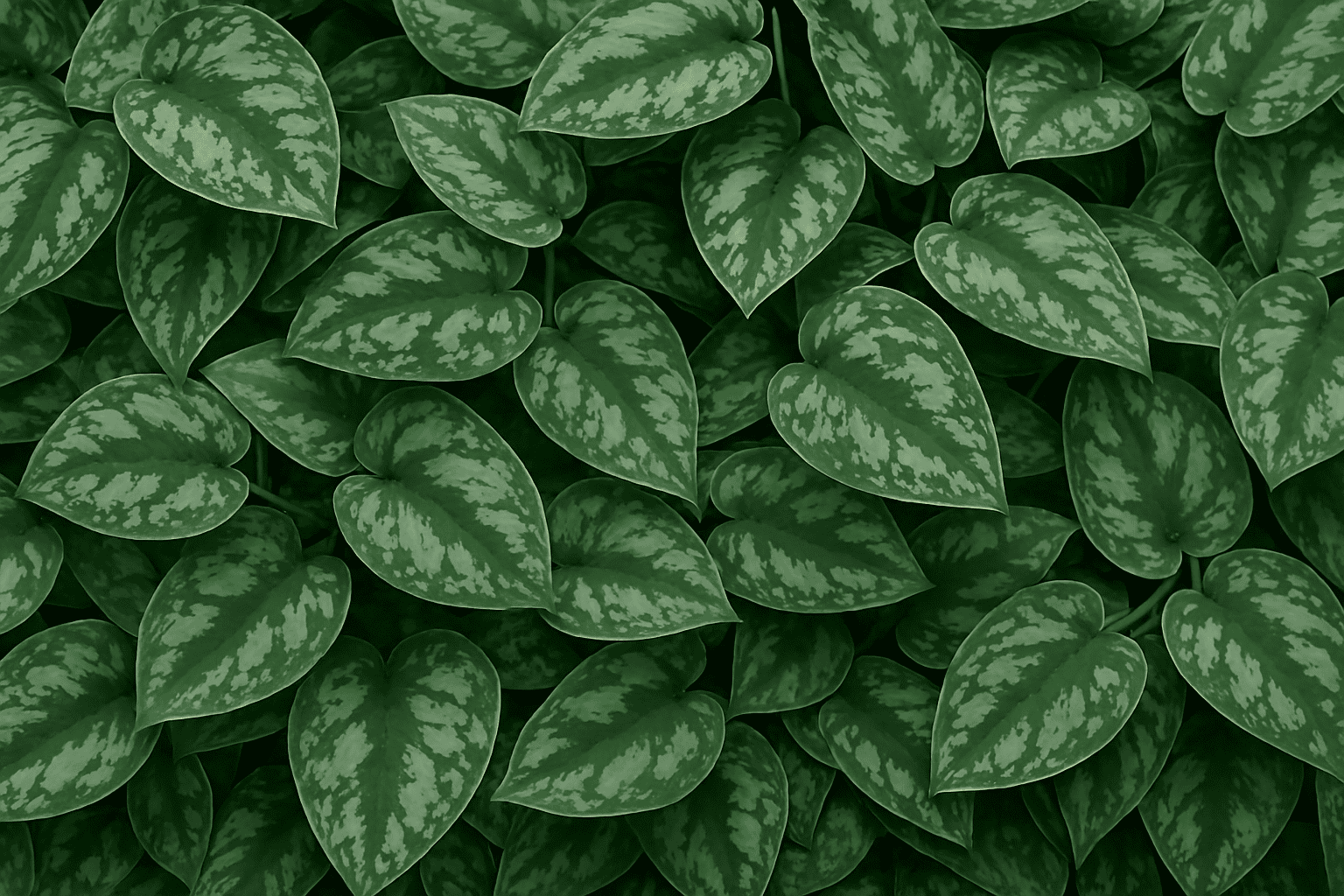
To be care healthy growth Satin Pothos plant, it requires bright, indirect light, well-draining soil, regular watering, proper temperature and humidity.
Introduction
Satin pothos is known for its incredible low maintenance requirements. It has heart shaped leaves with silvery grey splotches which makes them look shiny and attractive. It is a popular vining indoor plant that’s perfect for cascading over shelf and desk.
Scientific Classfication
- Kingdom: Plantae
- Clade: Tracheophytes
- Clade: Angiosperms
- Clade: Monocots
- Order: Alismatales
- Family: Araceae
- Genus: Scindapsus
- Species: S. pictus

Prefers
- Light – Bright, indirect light
- Soil – Well draining
- Soil pH – 6.0 to 7.0
- Temperature – 65-85 degree Fahrenheit
- Humidity – 40-60%
- Blooming time – Spring and Summer
- Flower colour – White
- Native area – Bangladesh, India, Taiwan and Thailand
- Toxicity – Human and pets
Satin pothos plant care with some tips
Proper amounts of water, light, soil, temperature and fertiliser should be obtained for the plant to grow. The problems and benefits of the plant have also been shared in this article.
If you want to know about the Pothos Plant care.
Light
Satin pothos prefers bright, indirect light and can tolerate some direct light but too much can cause their leaves to burn. Place your Pothos near a window with a sheer curtain or in a spot that receives bright but filtered light.
Water

Water your Pothos every 1-2 weeks, allowing soil to dry out between waterings. Pothos is a very forgiving and drought-tolerant plant but it only has a certain amount of roots in a potted container. Some signs of overwatering include yellowing leaves and black stems, while underwatered plants will wilt and their potting mix will dry out.
Soil
It thrives in well draining, nutrient rich soil such as peat moss, perlite etc. The ideal soil mix that drains well like a cactus or succulent mix. Peat moss helps to retain moisture and provides essential nutrients. Orchid bark can be added to the mix to help with drainage.
Temperature & humidity
The ideal temperature between 65 degree to 85 degree Fahrenheit and the lower temperature will suffer cold damage and die.
It thrives in humid environment, the ideal humidity levels between 40 to 60%. To maintain optimal conditions, mist the plant regularly or use a humidifier. Regularly misting the plant with water can help increase humidity levels. Satin pothos can place in bathrooms which tend to have higher humidity levels.
Fertiliser
Fertilise your satin pothos once a month with a complete water-soluble fertilizer. A balanced liquid fertilizer with an NPK ratio of 10-10-10 giving your Satin Pothos the complete nutrient package it craves during the growing season.
Propagation of Satin Pothos Plant Care
Propagating Satin pothos is simple with a stem cuttings, which are best taken in Spring and Summer. It takes 3-6 weeks for Pothos cuttings to root in water, so patience is required.You can speed up the timeline by placing the propagate in direct sunlight, rooting hormone.The main advantage of cinnamon for encouraging root growth is that it has antimicrobial properties, which can help keep the plant healthy while new roots are forming. Apply a little cinnamon powder to the cut stem of the plant to encourage root growth.
Types of Satin Pothos plant
- Scindapsus pictus ‘Silvery Ann’ : It is a cultivar of Scindapsus pictus with heart-shaped. This succulent leaves featuring a high level of silvery variegation.
- Scindapsus pictus ‘Treubii Dark Form’ : It is an evergreen climber that can reach upto 3 meters in height, it has graceful, unfurling stems. A relatively slow grower, it is also low maintenance. This plant provides bright, indirect light and allow the soil to dry out between waterings.
- Scindapsus pictus ‘Silver : Scindapsus pictus is a slow-growing tropical evergreen climber in the Arum family. It growing it in rich, well-drained soil, fertilizing monthly and watering when the top of the soil becomes dry.
- Scindapsus pictus ‘Silver Hero’ : Scindapsus Silver Hero is a stunning aroid known for its silvery-blue, heart-shaped leaves that give it a unique, reflective appearance.
- Scindapsus pictus ‘Silver Lady’ : Scindapsus Pictus ‘Silver Lady’ leaves are large and narrower which are covered with green sheen with silver speckling or splashes on the remaining portion.
Pruning of Satin Pothos Plant care

Pruning your plant can help it look healthy and neat. You can remove damaged or yellow leaves and stems with clean, sharp tools. This plant will not require pruning unless you wish to remove damaged. It is the essential part of its care that keeps your plant healthy and encourage growth.
If you want to prune you plant then choose to one of the nodes because this is where new growth will emerge as well. The part of the stem in between nodes is known as the internode. Pruning directly at the leaf nodes can help the plant to form more bushy foliage.
Repotting of Satin Pothos Plant care
Repotting is important if you want to grow more than one of your favorite plants. Carefully remove the roots and place the plant in the new pot. It should take place during Spring and Summer when your plant has become completely rootbound in its container. Choose a large pot then use fresh, well draining potting mix and gently remove the plant. Repotting is typically needed every 2-3 years when the roots become root bound. Place the plant in the new pot, ensuring the top of the soil is level with the rim of the pot.
Common problem of Satin Pothos Plant

- The most common problems with Satin Pothos include overwatering leading to root rot and the leaves turning yellow.
- Satin Pothos prefer moderate to high humidity, and low humidity can cause leaves to turn brown or yellow.
- This fungal disease is particularly problematic for Satin Pothos due to their sensitivity to soggy conditions.
A common fungal problem for Satin Pothos is Phytophthora root rot, which is caused by overwatering and poor drainage, leading to yellowing leaves.
Benefits of Satin Plant Pothos
- Pothos roots absorb carbon dioxide from the water as well as the air. So they also add oxygen to the water. Believe it or not, fish need some oxygen to survive. Pothos is the best indoor plant for oxygen because of its high rate of conversion.
- Numerous studies have reported on the healing powers of plants and nature, but there have not been so many instances of experimental research. So the leaves of golden pothos have a calming and peaceful effect on the mind.
- In its native environment, the pothos sits lower in the forest, under the trees. It doesn’t see a lot of direct sun because the light is filtered by the trees of the forest.According to Feng Shui, Golden Pothos brings good fortune when kept at home.
Satin Pothos plant Faq
1. How long does Satin pothos live?
Ans. In good health, expect a satin pothos plant to live for five to 10 years.
2. Is Satin Pothos really a Pothos?
Ans. Satin pothos is botanically not a pothos though it is closely related to pothos.