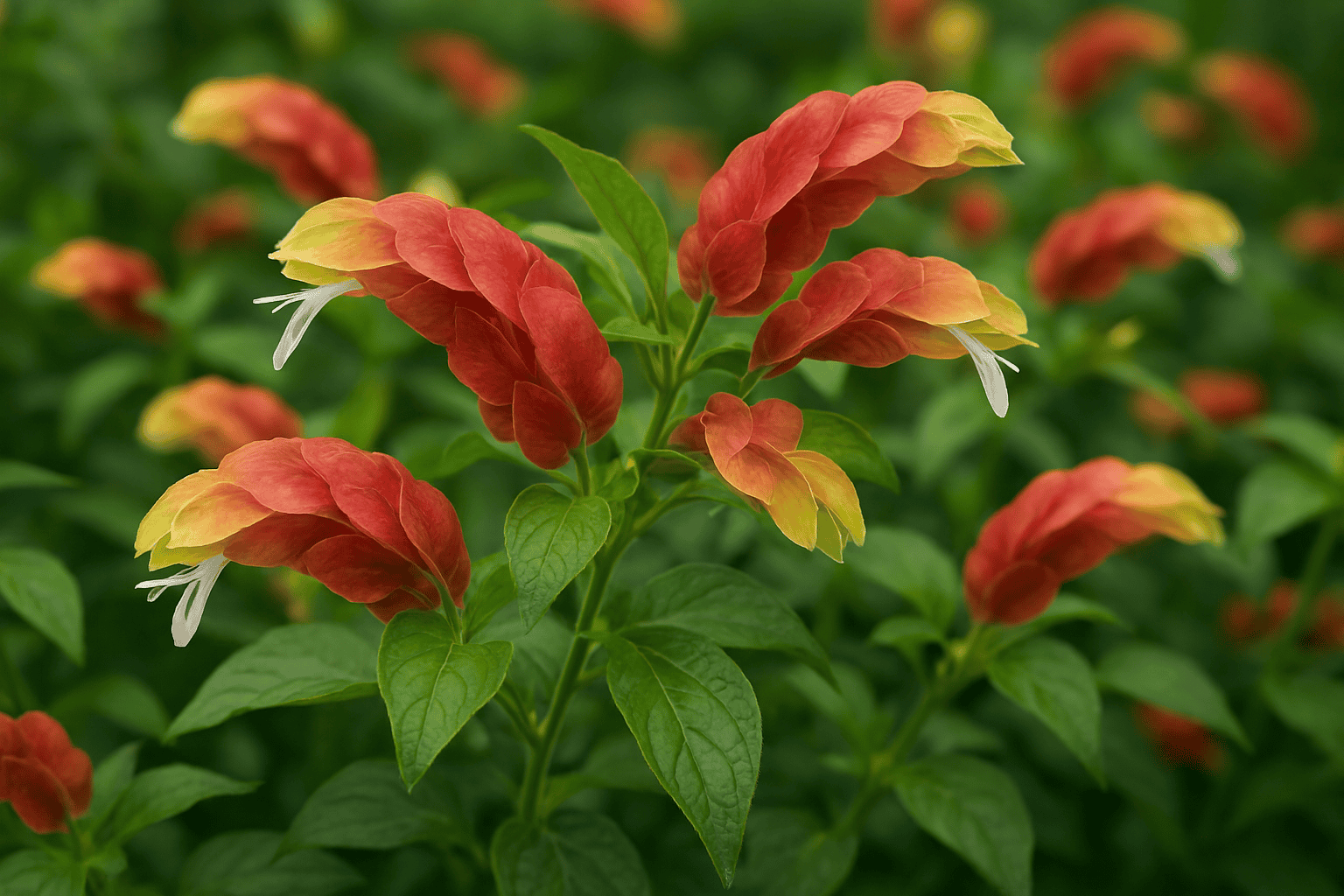
The shrimp plant is also known as Justicia brandegeana. It has unique shrimp-like blooms in red, pink and yellow shades. Shrimp plant is a delightful ornamental evergreen shrub and the leaves are glossy green, making it a beauty even when not in bloom. To maximize growth and flowering, ensure they receive bright, indirect light and well-draining soil with consistent but moderate watering to prevent root rot. With proper care and maintenance a Shrimp plant can live up One to Seven years , making it a timeless addition of your indoor gardening.
Scientific classification of Shrimp plant
| Kingdom: | Plantae |
| Clade: | Tracheophytes |
| Clade: | Angiosperms |
| Clade: | Eudicots |
| Clade: | Asterids |
| Order: | Lamiales |
| Family: | Acanthaceae |
| Genus: | Justicia |
| Species: | J. brandegeeana |
Shrimp plant Prefers

- Light – Full sun to partial shade
- Soil – Well-draining loamy soil
- Soil pH – 6.0 and 7.0
- Temperature – 68 to 100°F
- Humidity – 50-60%
- Blooming time – Summer month
- Flower colour – Red, Pink
- Native area – Mexico
- Toxicity – Non-toxic
Shrimp plant care : Expert tips for Lush, Vibrant Blooms
Adequate amounts of light, water, soil, temperature and fertiliser should be obtained for the plant to grow healthy. The common problems and benefits of the plant have also been shared in this article. This article will help you with help you with all the essentials you need to grow your plant.
If you want know about the Mandevilla Plant care.
Light
Shrimp plant likes bright, indirect light with morning sun is ideal for heathy growth. Place near an east-facing window for soft morning light. It is a tropical beauty known for its quirky, shrimp-like blooms. Direct sun can scorch the leaves, while too little light may cause leggy growth and fewer blooms. The Shrimp plant thrives in partial sunlight, which means it should receive about 3-6 hours of direct sunlight per day.
Water

Shrimp plants prefers love moisture and water when the top inch of soil feels dry, and reduce watering slightly in winter. In warm months, this might be once or twice a week. In cooler seasons, reduce to every 10–14 days. Adjust watering frequency based on environmental conditions like temperature, humidity and sunlight. Overwatering can lead to yellow leaves and root rot. Drooping leaves and wilting are signs of underwatering.
Soil
It thrive in well-drained, loamy or sandy soil and prefer a slightly acidic to neutral pH, ideally between 6.0 and 7.0. A good potting mix for them can be one-third sand, one-third compost and one-third soil. Good drainage is crucial to prevent root rot. The organic matter such as compost, worm castings, or leaf mold boost nutrients and microbial health. If you can add perlite, vermiculite, or coarse sand to improve drainage.
Temperature & humidity
Shrimp plants generally prefer warm temperatures between 68 to 100°F.This is the optimal temperature range for healthy growth and flowering. They can tolerate up to 80°F in summer but prefer consistent warmth. In winter, keep it in a warm room with the temperature no lower than 50 ℉.
They prefer moist air and maintaining moderate to high humidity is ideal, especially for indoor plants. The ideal humidity level is 40–60% humidity is the sweet spot for shrimp plants. If you can increase the humidity level then use humidifier.
Fertiliser
Use a balanced 10-10-10 NPK fertilizer is recommended to promote healthy growth, with equal parts nitrogen, phosphorus, and potassium. Liquid fertilizers is fast-acting, great for quick nutrient boosts. Fertilize every 2–4 weeks from spring through fall. During the winter season, reduce fertilisation.
How to Propagate your Shrimp plant

Propagation is the fastest way to multiply your plants. The most common propagation method is to use cuttings. Shrimp plant is propagated by stem cutting.
- To cut a 4- to 6-inch long stem with at least three sets of leaves just below a leaf node and remove the lower leaves.
- Dip the cut end in rooting hormone and plant in a well-draining potting mix.
- Transfer the plant to a larger pot once roots start to form.
- Maintain the temperature for optimal root growth. Keep the soil moist and mist the cutting occasionally.
Types of Shrimp plant
Varieties of shrimp plant is come in different hues. Here are three of the most common shrimp plants:
- Golden Shrimp Plant : This variety of shrimp plant has bright green leaves, yellow bracts and small white flowers that emerge from the bracts.
- Red Shrimp Plant : Red shrimp plant has large, crimson-coloured bracts with small, tube-shaped white flowers. The vibrant contrast between the red bracts and green foliage makes it a showstopper in any garden.
- Purple Shrimp Plant : This plant is produces deep red to bluish-purple bracts with small purple flowers and somewhat resembles the Justicia Shrimp plants.
- Yellow Shrimp plant : This type features yellow bracts instead of the traditional red or pink, adding a cheerful and unique touch to your garden.
Shrimp plant care: Pruning your plant that make healthier
Shrimp plants benefit from pruning to maintain their shape, encourage bushier growth and prevent them from becoming spindly. Pruning is the essential part of its care that keeps your plant healthy and encourage lush growth. It helps the plant conserve energy and produce more prolific and larger flowers. Removing dead or diseased stems increases light and ventilation which can help prevent pest issues. The best time to trim and prune a shrimp plant is when blooming begins to slow in the winter and early spring.Trimming your plant for new growth to produce more new branches. Make sure to trim just above a set of leaves and regular pruning will also increase the chances of the plant producing its stunning, fragrant flowers.
Repotting of Shrimp plant
Repotting is very important to extend the lifespan of Shrimp plant and keep them healthy. This plant requires careful handling to avoid damaging their sensitive roots. Repot golden shrimp plant every 2-3 years, during the spring to coincide with the plant’s active growth period. Use a pot that is one or two sizes larger then add a layer of potting soil and place your plant in the new pot. Ensure the new pot has drainage holes and water thoroughly after repotting.
Facing some common problem of Shrimp plant

- The most common problem is Overwatering. It can causes roots to become waterlogged, leading to root rot and potential plant death. Root rot leads to wilting and yellowing. It has yellow leaves and musty smell.
- Another common problem is pest infection. Discoloured patches that reduce photosynthesis. The pest like spider mites and mealybugs, and fungal diseases (causing spots and leaf drop). Spider mites can leave fine webbing and speckled leaf damage.
- Drooping leaves are caused by underwatering or lack of moisture in the soil. Check the drainage of your pot to ensure the plant is able to drain properly and wait to water the plant until the top inch of the soil is dry.
Benefits of Shrimp plant
- Shrimp plant has aesthetic and ecological benefits.These plants are known for their vibrant, bract-like flowers that resemble shrimp. It is an evergreen shrub popular as a landscape plant in tropical and subtropical areas.
- It is nectar-rich flowers of shrimp plants attract bees and butterflies, contributing to the support of local wildlife and biodiversity. Attracts Pollinators One of the standout benefits of Golden shrimp plant is its ability to attract pollinators such as bees and butterflies.
- Shrimp plant has signifies positive transformation and inspiration. It brings an uplifting energy that inspires creativity and can significantly transform negative energy into positive vibrations.
Shrimp plant Faq
1. Does the Shrimp plant bloom all Summer?
Ans. Yes, shrimp plants will bloom all Summer. The blooming season for these plants is longer in tropical environments.
2. Does the Shrimp plant come back every year?
Ans. Yes, shrimp plants are perennials and will return every year where they grow best.
3. What plants do your shrimp go crazy about?
Ans. My Shrimp necessarily go crazy for any plant but they love their ial and bamboo leaf litter.
4. Is a Shrimp an indoor or outdoor plant?
Ans. Shrimp plants can be indoor and outdoor, depending on your climate.