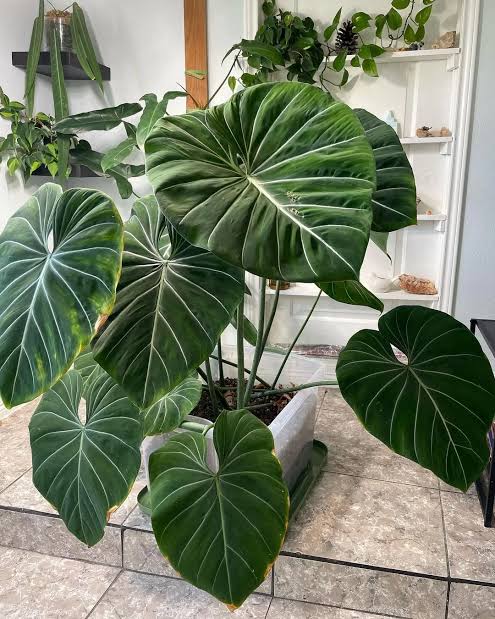
This tropical plant is famous for their big veined velvety leaves,their leaves grow increasingly impressive. It’s stunning variety that is known for its easy-to-grow habit. It is great in hanging planters or climbing moss poles. This plant appreciates bright, indirect light, well-draining soil, and regular watering.
Kingdom – Plantae
Clade – Tracheophytes
Clade – Monocots
Order – Alismatales
Family – Araceae
Genus – Philodendron
Species –P. gloriosum

Prefers
Light – Partial
Temperature – 65°-85° fahrenheit
Soil type – Well drained
Soil pH – Acidic
Bloom time – Rarely
Water – Once or twice a week
Humidity – 60-80%
Mature size – 2.5 ft tall
Native area – South America
How to get care of your Philodendron gloriosum
Here, I will explain how to care for your plant. If you have brought home a new “veined velvety leaves” Philodendron plant, then this article will help you a lot.
Light
Like other plants that naturally from part of the forest understory, Philodendron gloriosum likes bright indirect light. Too much direct sun will burn its leaves, especially without proper acclimation, while keeping it in a spot that’s too dark will result in a sad and spindly looking plant. If you live in a place with very low light, you can grow your plant near a window. Leggy gloriosum is an indicator that the plant is not getting enough light.
Water
This plant will appreciate being kept lightly moist. You can let the first 1 to 2 inchs of soil dry out before watering again during the active summer growing months. During winter, when houseplants are not as active and therefore needs less water. You can let the soil go about half way dry. It is entirely possible to propagate in water. The steps are the same as propagating it using a growing medium, you put the rhizome with or without leaves into the water. Ensure no water touches the leaves or they will rot.
Philodendron Melanochrysum plants, also commonly known as black gold philodendron are a rare type of vining philodendron that have become popular as houseplants due to their gorgeous foilage.This plant is naturally grow as forest understory plants where they received dappled, indirect light.In general, you should not water your plant on a set schedule. Rather, water your plant when the top inchs or so of the potting mix is dry.The best way to soil consists of any airy mix of fresh garden soil, peat moss, pertile and charcoal.Readmore
Soil
This plant grows best in well draining soil containing peat, pertile, charcoal and orchid bark. Alternatively,it also grows in 100% sphagnum moss. Provide bright indirect light and keep the soil slightly damp when watering. Before watering make sure the top 1-2 inchs of soil are dry.

As all around needs very light, aerated potting mix with good drainage with pH 6.5-7.5 and rich in organic matter. Orchid soil combined with peat and pertile gives the plant the right amount of activation and drainage. For healthy, bright green foliage, add organic matter to the planting mix.
Temperature & humidity
Night time temperatures may be lower but should never drop below 60° fahrenheit. Being a tropical plant, this plant likes to have above average humidity between 60-80% but will tolerate average household humidity of around 40-50%. If your home is on the drier side, you can increase humidity levels by grouping your plants togather or by placing them on a pebble tray filled with water.
The ideal temperature range is between 65-85° fahrenheit,if they are grown outside be sure to bring them inside upon the on set of winter because they don’t process a low temperature tolerance and thus quite vulnerable to freezing injury.
Fertilizer
Fertilize your plant during the spring months to fall once every month. Try a balanced liquid fertilizer with a 20-20-20 NPK formulation. Keep in mind to dilute the fertilizer by half the recommended amount.
How to get Propagate your plant
When taking a piece of the stem make sure to take a multiple piece of aerial roots. It’s best to propagate your plants the Spring when the plant is actively growing.
1. Take a new container for the cutting then fill it with the appropriate soil mixture. Choose the area where you will cut the stem of the plant. After cutting have 2 to 3 leaves and nodes at the bottom.
2. Using sharp and sterilized scissors or knife for cut the stem.
3. Cutting stem to allow 12 to 24 hours for callous over.
4. After the calloused placed the stem in water and put in also bright, indirect light where they receive this.
5. Two to three weeks after you should notice a new roots sprouting from the cutting.
6. The roots have grown to atleast 1 inchs in length. Use a well draining soil, foilage liquid fertilizer, humidity, temperature to grow a new plant.

Pruning
If you want the plant to remain bushy, then pruning in winter might not show new growth until the spring. Pruning is helpful to create a bushier plant and control its size and shape. Create a more bushy plant by pruning the vines to encourage new growth. Prune the plant when the stem meets the main plant.
This tropical plant is known as the heart leaf due to its beautiful leaf shape. This variety has stunning golden yellow variegated leaves.It can with stand a variety of lightning conditions from medium light to bright indirect light. The ideal lighting for your plant is bright indirect light, so close to a very sunny window or in bright shade outdoors.This plant can allow the top 2 to 3 inchs of soil to dry out and then watering.It prefers a well draining, slightly acidic soil while giving it water when the top inch of soil dries out.Native to the tropical rainforests of South America, this plant is grow best in warm, humid conditions. Readmore

Common problem
Brown leaves
A common cause of Gloriosum, completely brown leaves on this plant is the development of a disease in the main root system called root rot. Root rot is a complex disease that can happen to any indoor plant.
Yellow leaves
The most common cause of yellowing leaves among the plants is important soil moisture in particular, overwatering. Only water your plant when the top 25% of the soil in the pot is dry.
Toxicity
This plant is a member of the araceae family and therefore is toxic to all animals including humans and pets. Its toxicity is caused by the calcium oxalate crystals that can be found in all parts of the plant.
If you do ingest any parts of a this plant you may begin to feel irritation in the mouth along with excess drooling and foaming at the mouth. This irritation will spread throughout your digestive system causing discomfort. It poisioning may also cause kidney stones in very rare circumstances