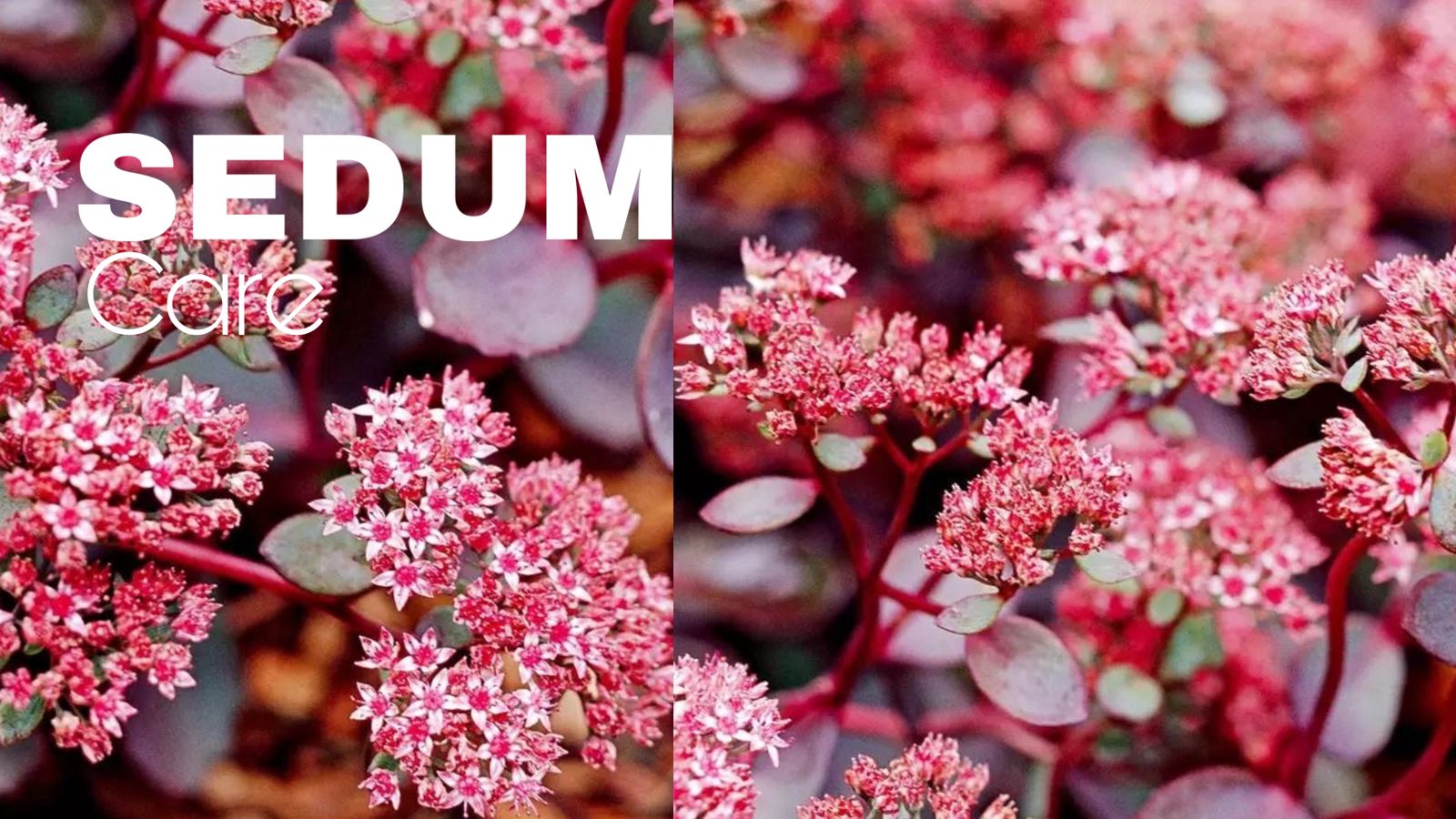
Sedum thrives in bright, indirect light and well-draining soil. This plant is drought-tolerant, preferring minimal watering every 7-10 days. Propagation through cuttings and regular pruning are essential for healthy growth. All of those sedum is a easy to care plant.

Page Content
Introduction
One of the easiest to grow succulent plant is Sedum. This plant is also known as stonecrop for its look extremely coy and beautiful in any garden design.sedum has flashy leaves and tiny, start shaped flowers that bloom in growing season. It has many different shapes and numbers of foliage colours. The foliage looks like to board, rounded, paddle like leaves.
I can’t spend much time behind this plant in my daily routine, In this article I have shared how to grow a healthy vigorous plant in less time. Hope it will help you.
Here some variety of sedu plant you must have.
Scientific classification of sedum Plant
- Kingdom: Plantae
- Clade: Tracheophytes
- Clade: Angiosperms
- Clade: Eudicots
- Order: Saxifragales
- Family: Crassulaceae
- Subfamily: Sempervivoideae
- Tribe: Sedeae
- Genus: Sedum

sedum plant Prefers
- Light – Bright, indirect light
- Soil – well draining
- Soil pH – 6.0-7.0
- Temperature – 65°F to 72°F
- Humidity – 40-60%
- Bloom time -August to November
- Flower colour – white, shades of pink, red and purple
- Native area – East-central U.S
- Toxicity – Non toxic
Detailed care of Sedum plant
Adequate amounts of water, light, and soil should be obtained for the plant to grow. The problems and benefits of the plant have also been shared in this article. This article will help you with all the essentials you need to grow your plant.
Light
Sedum plant can grow best in full sun, at least six hours of direct light on most days. Adjust placement seasonally and use shading to prevent sun damage. More sunlight is better for foliage colour. Bright light produces deeper leaf colour and blooms.
Water
During the summer, get your plant to water every 7-10 days. This plant is drought tolerant and best to give the plant a slow drink and allow the soil to dry out again before next watering. If your plant gets too much water then it can make start to rot. All of the plant prefers that soil should be dry before water again.
Soil


This plant prefers well draining potting mix or succulent potting mix. Sedum is a good choice for grow in containers and they provide excellent drainage. When the soil retains too much water, the plant’s roots can rot or fungal diseases can develop on the leaves.
Temperature & humidity
although These plant can tolerate wide ranges of temperatures and can survive as low as -30 degree Fahrenheit and as high as 90 degree Fahrenheit. The ideal temperature between 60-75 degree Fahrenheit.
This plant grow best in well draining soil area where humidity levels are high. The ideal humidity level is 40-60%.The humidity level needs to be high to save the plant from powdery mildew like pest.
Fertilizer
Sedum plant needs no fertilisation and can tolerate nutrient soil. It prefers an organic compost applied is best. During the growing season feed your plant with balance fertiliser once or twice a year. Fertilisers containing minerals like magnesium, calcium and trace elements help the plant immune system.
Sedum plant propagation

Propagation is a method by which you can make many plants of your choice. The most of the succulent plant, like Sedum can be propagated through the leaf cuttings. Propagation of cuttings is the most popular method. The cutting should be placed in indirect light and kept warm. A dead area of the plant is good indication that the plant is ready for divided. It should be noted that this process is carried out with the plant in its active growing season.
Choose a mature healthy stem of the plant. Then cut the 2 to 3 inches from the tip of a stem and allowing the cutting to callus for a day. It provides rooting hormone to grow your plant healthy. Place the cut end down in a mix soil, after four weeks, roots should appear. Monitor it and water when necessary.
Pruning of Sedum plant
Sedum plant responds well to pruning and to form bushier plant. Pruning is the essential part of its care that keeps your plant healthy and encourage lush growth. Trimming your plant for new growth to produce more new branches. It also creates shorter stems with more branches. If you prune into summer then you may risk removing future flowers. You can remove these in early Spring and then remove them to the rosette base.
It can help to grow large and trimmed them to control size. This is important to maintain a certain shape for aesthetic purposes. It is essential to remove any dead or disease part of your plant to maintain its overall health. Trimming these parts ensures that the plant can healthy growth and it helps prevent the spread of any disease or pests.
Common problem of Sedum Plant
- The most common problem is fungal infection. Crown rot and many other fungal diseases also thrive in wet conditions.
- Soft mushy leaves and wilting is the first sign of overwatering. It can suffocate roots and lead to yellow leaves, while underwatering leaves the plant parched and stressed.
- Gray mold, flower and leaf blight, Botrytis cinereal. This fungus occurs everywhere and commonly infects senescing or damaged plant parts such as old flowers, causing a fuzzy gray mold.
Benefits of Sedum plant

- Main benefit of this plant is contribute to air purification by absorbing carbon dioxide and other pollutants, resulting in cleaner air in environments.
- Use for cough, high blood pressure, wound healing, and many other purposes.
- Sedum plant leaves and stems, when crushed, serve as a poultice for wounds, boasting anti-inflammatory and antiseptic properties.
If you know about hoya plant ,If you have this plant in your house then the benefits from this plant click here.