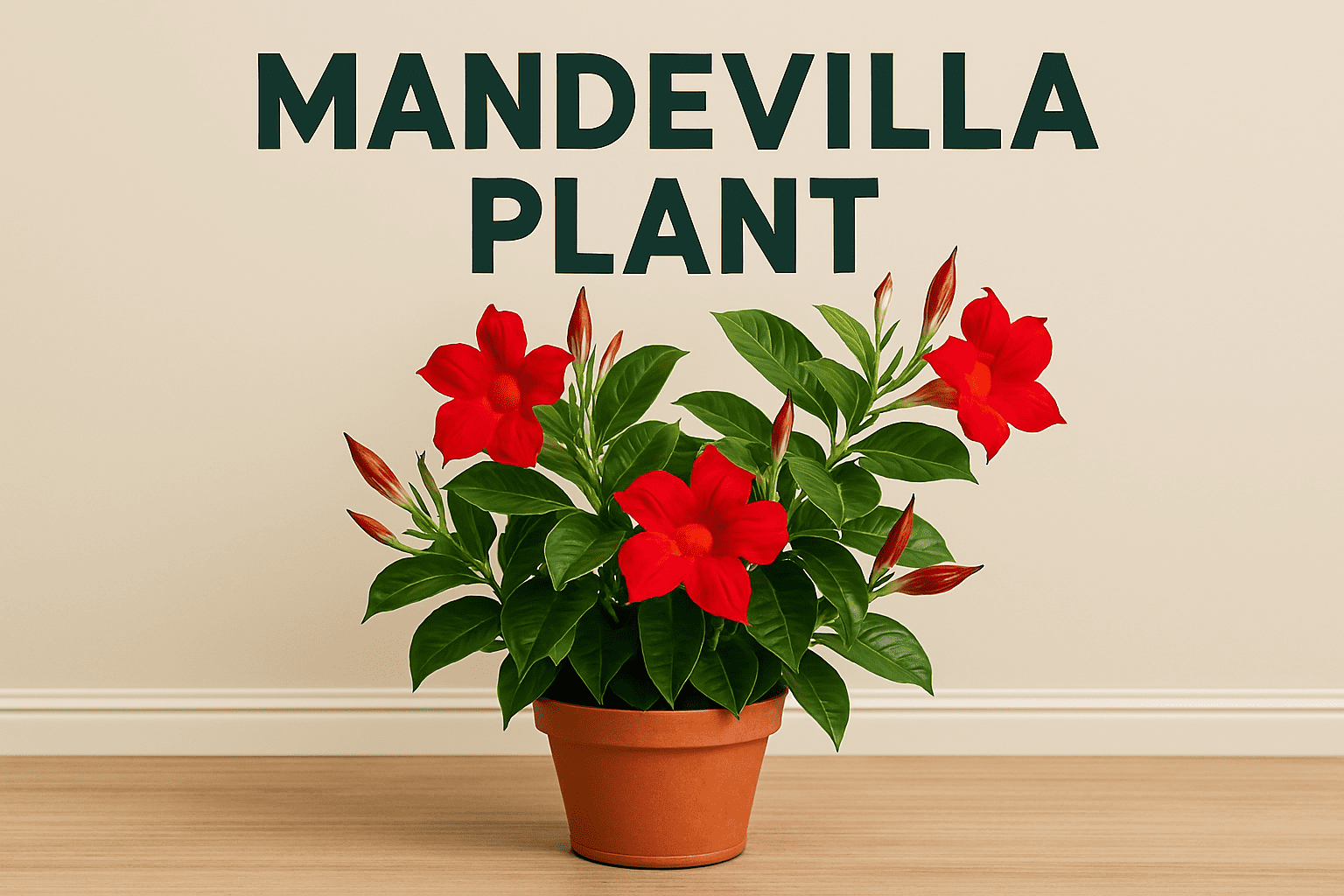
Mandevilla plant is tropical flowering plant and has showy, fragrant trumpet-shaped flowers. It is also known as rock trumpet that produces large showy blooms from late spring to fall. However, if you can provide the appropriate growing conditions, your plant may survive up to many years. I have shared the steps taken to grow this plant care in this article which will guide you.
Scientific classification of Mandevilla plant
| Kingdom: | Plantae |
| Clade: | Tracheophytes |
| Clade: | Angiosperms |
| Clade: | Eudicots |
| Clade: | Asterids |
| Order: | Gentianales |
| Family: | Apocynaceae |
| Genus: | Mandevilla |
Mandevilla plant prefers

- Light – Bright, indirect light
- Soil – Well-draining
- Soil pH – 6.0 and 7.5
- Temperature – 68-90°F
- Humidity – 50-70%
- Blooming time – late spring
- Flower colour – White, Pink, Yellow, and Red.
- Native area – Central and South America
- Toxicity – Human and pets
Mandevilla plant care with some tips
Proper amounts of light, water, soil, temperature and fertiliser should be obtained for the plant to grow healthy. The common problems and benefits of the plant have also been shared in this article. This article will help you with help you with all the essentials you need to grow your plant.
If you want to know Bleeding heart vine plant care.
Light
Mandevilla vines are sun-loving tropical beauties, it need at least six hours of sunlight daily to thrive. They can tolerate partial shade and place near east or west-facing windows. Morning sun is best for gentler and less likely to scorch leaves.
Water
This plant prefers consistently moist, especially during the warmer growing season. Watering once or twice a week is usually sufficient but adjust based on temperature and humidity. Reduce watering frequency during cooler months or when the plant is dormant. Allow the top inch of soil to dry out before watering potted plants. Water the plant slowly to give the soil time to soak up the moisture.
Soil

Mandevilla vines need sandy, well-draining soil with plenty of organic material mixed in. Add compost, peat moss, or well-rotted manure to boost nutrients and improve structure. A good potting mix should include peat moss, sand, and leaf mold, with a pH between slightly acidic to neutral. Ensuring good drainage is crucial to prevent root rot. A slightly acidic to neutral soil pH is best though the plant can also tolerate slightly alkaline soil.
Temperature & humidity
It thrive in in warm temperatures, stable temperatures and prefer a range of 68-90°F. This range encourages lush foliage and vibrant flowers. They are tropical plants and are sensitive to cold, with damage likely below 50°F. Excessive amount of temperature can cause wilting, leaf scorch, and reduced flowering. Provide shade during peak afternoon heat and keep soil moist.
Mandevilla plant needs high humidity environments, ideally between 50-70%. To maintaining humidity is crucial for their health and growth. It can cause leaf curling, reduced flowering and increased pest problems. If you can increase the humidity level then use humidifier.
Fertiliser
Feed your plant during their growing season with a balance fertiliser. To make your plants grow faster, apply fertilisers when the plant starts flowering. A balanced water-soluble fertilizer like 10-10-10 or 20-20-20 is recommended for regular feeding during the growing season. It provides a good starting point for feeding mandevilla plants. Use a water-soluble fertilizer every two weeks during the growing season.
How to propagate your Mandevilla plant
Mandevilla plant can be propagate by stem cuttings.Stem cuttings are a more common and faster method, especially in spring.
- To cut the 4-6 inch below a leaf node from a healthy mother plant.
- Remove the leaves and buds from the lower half of cuttings. Dip the cuttings in rooting hormone to encourage faster root development.
- Maintain the temperature for optimal root growth. Keep the soil moist and mist the cutting occasionally.
Mandevilla plant care: Pruning Mandevilla plant that make your plant healthier

Pruning is the essential part of its care that keeps your plant healthy and encourage lush growth. Mandevilla can be pruned to maintain shape, encourage bushier growth and remove any dead or diseased branches. The best time to prune is in late winter or early spring before new growth begins. Trimming your plant for new growth to produce more new branches. Make sure to trim just above a set of leaves and regular pruning will also increase the chances of the plant producing its stunning, fragrant flowers.
Types of Mandevilla plant
- Sun Parasol White Mandevilla : It fast-growing tropical vine produces fragrant five-petaled flowers in various shades of pink, red, white or yellow, some with yellow throats.
- Sun Parasol Pretty Pink Mandevilla : Sun Parasol Pretty varieties combine the best of dipladenia characteristics with mandevilla growth. It has spent blooms to promote rebloom and continuous colour.
- Mandevilla sanderi : It has twining, woody stems and large pink-red blooms. This plant is commonly known as Brazilian jasmine.
- Mandevilla laxa : This plant is Known commonly as Chilean jasmine. It produces masses of heavily scented white flowers.
- Mandevilla boliviensis : It is also known as white mandevilla. This plant can grow between 3 and 10 feet tall with a 3- to 6-foot spread.
Repotting of Mandevilla plant
Repotting is very important to extend the lifespan of Mandevilla plant and keep them healthy. This plant requires careful handling to avoid damaging their sensitive roots. Mandevilla should be repotted every year or two, preferably in early spring.Select a pot that is only one size larger than the previous one. Ensure the new pot has drainage holes to prevent waterlogging. Use a well-draining potting mix, carefully removing the plant from its old container. Ensure the new pot has drainage holes and water thoroughly after repotting.
Some common problem of Mandevilla plant

- The most common problem is fungal infection like anthracnose and botrytis blight. It has white, fuzzy patches on leaves. It caused by poor air circulation and humidity.
- Too much water causes yellowing of the leaves and mandevilla do not like overly wet feet. This can be caused by overwatering, root rot or nutrient deficiencies.
- Brown leaves may mean the soil is too wet, the plant is in standing water, or the soil is not draining enough. Browning leaves has the opposite problem of yellowing leaves.
Benefits of Mandevilla plant
- Mandevilla plant has aesthetic appeal, its known for their large, trumpet-shaped flowers that come in various colours, including shades of pink, red, white and yellow. The vibrant flowers and lush foliage bring a tropical feel to any garden or outdoor space.
- Another benefits is vibrant and long-lasting blooms, versatility in landscaping and the ability to attract pollinators like bees and butterflies. It is Drought-tolerant and pest-resistant, making it easy to care for even if you’re not a green thumb.
- Studies have indicated that certain Mandevilla species possess anti-inflammatory properties and may aid in wound healing. It has research has identified new pregnane glycosides in Mandevilla species, which exhibit anti-inflammatory and potential medicinal properties.
Mandevilla plant Faq
1.Where should I plant mandevilla?
Ans. Mandevilla should be plant in full sun in the ground in zones.
2. What is this in my mandevilla plant?
Ans. That is a huge population of aphids on your plant. The time to take action is now, you could use insecticidal soap, follow the label instructions.
3. Do I need to have a trellis to grow mandevilla?
Ans. Mandevilla is a vine and will thrive if grown on a support such as a trellis.