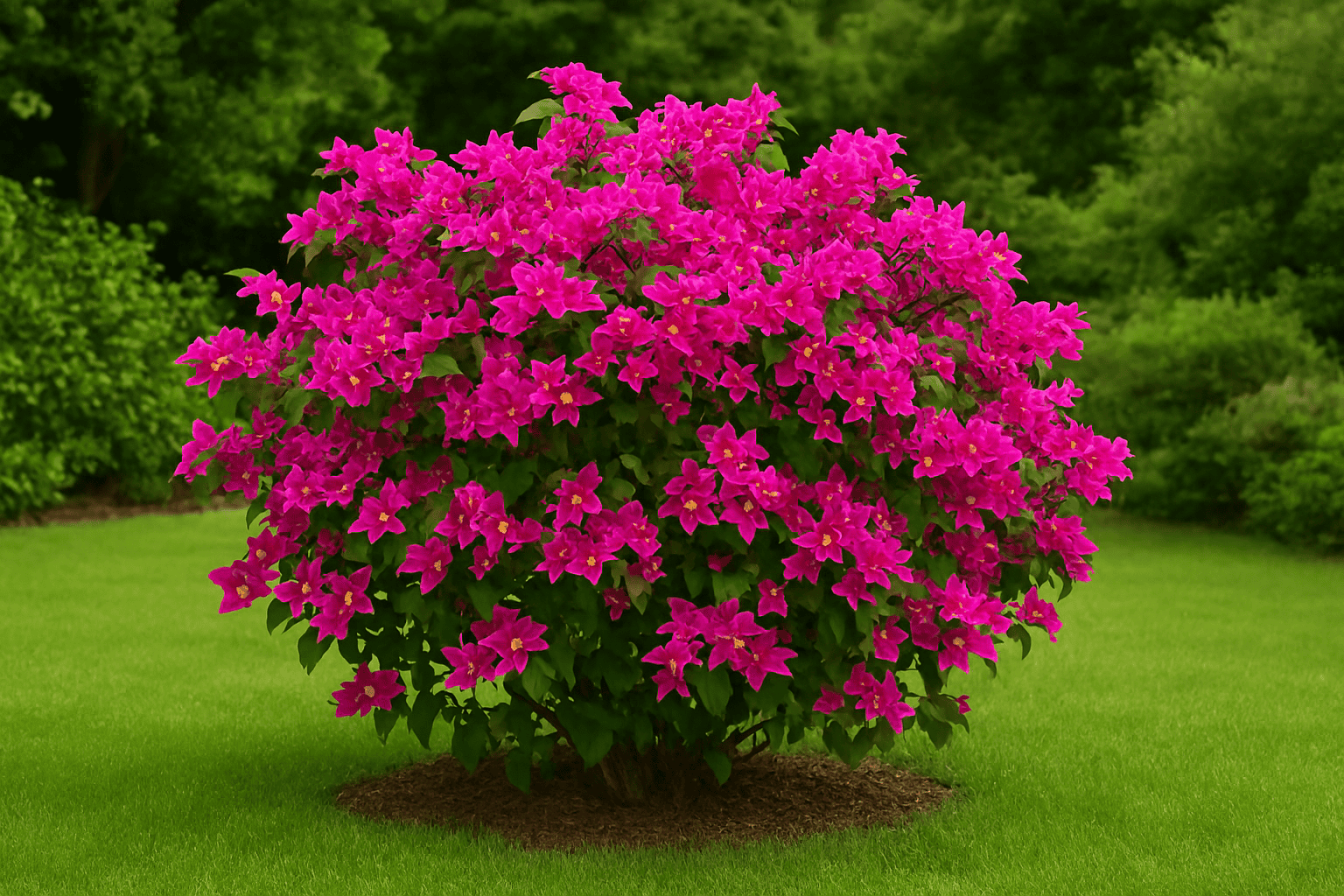
Bougainvillea plants are vibrant, tropical climbers known for their stunning, colorful bracts that bloom throughout the year. It is a fast-growing woody vine and can be grown in a frost-free place by a window. To maximize growth and flowering, ensure they receive bright, indirect light and well draining soil with consistent but moderate watering to prevent root rot.
Scientific Classification of Bougainvillea Flower plant
| Kingdom: | Plantae |
| Clade: | Tracheophytes |
| Clade: | Angiosperms |
| Clade: | Eudicots |
| Order: | Caryophyllales |
| Family: | Nyctaginaceae |
| Tribe: | Bougainvilleae |
| Genus: | Bougainvillea |
Bougainvillea Flower plant prefers

- Light – Direct light at least 6 hour
- Soil – Well draining
- Soil pH – 5.5-6.0
- Temperature – 60°F and 100°F
- Humidity – 40-60%
- Blooming time – Early Summer
- Flower colour – Pink, Magenta, Purple and Red
- Native area – South America, Argentina
- Toxicity – Human and pets
Bougainvillea flower plant care : Expert tips for Lush, Vibrant Blooms
Adequate amounts of light, water, soil, temperature and fertilizer should be obtained for the plant to grow healthy. The common problems and benefits of the plant have also been shared in this article. This article will help you with all the essentials you need to grow your plant.
If you want to know about Hibiscus Plant Care.
Light
Bougainvillea plant is sun-loving plant. At least 6 hours of direct light is essential for producing its iconic colorful bracts. In low-light conditions or during winter, grow lights can help maintain healthy growth and flowering. If you’re growing it inside, place it near a sunny window. The natural light is insufficient and consider supplementing with a grow light.
Water

This plant is drought tolerant and should not require watering more than twice a week. During the hot months, you can expect to water your plant at least once a week. Watering regularly will have a positive impact on the amount of blooms and the richness of your plant’s flowers. Excessive amount of water can cause your bloom drop.
Soil
Bougainvillea plant prefers well-draining, loamy sandy soils. It will not tolerate soil that soil that holds water. This plant is thrives in slightly acidic soil with a pH between 5.5 and 6.0. A good mix includes garden soil, compost and perlite. Essential organic soil mixture for Bougainvillea plants, double filtered with all required nutrients and active micro-organism for healthy growth.
Temperature & humidity
Bougainvillea plants thrives in warm temperature and ideally temperature between 60 degree Fahrenheit and 95 degree Fahrenheit. They are not frost-tolerant and should be protected from freezing temperatures.
Its plant generally prefer moderate to high humidity levels, ideally around 40-60%. Too low humidity can lead to bud drop and wilting, while too high humidity can create an environment for fungal infections. If you want to increase humidity level then use humidifier.
Fertiliser
Feed your plant during their growing season with a balance fertiliser. To make your plants grow faster, apply fertilisers when the plant starts flowering.
The best fertiliser for Bougainvillea plant needs the right combination of nitrogen, phosphorus and potassium.A fertilizer with an NPK ratio like 10-10-10 or 20-20-20 is a good starting point. Avoid over-fertilizing, as this can lead to excessive foliage growth at the expense of flowers.
How to care and propagate of Bougainvillea flower plant

Bougainvillea plant is propagate by stem cuttings. To cuttings 6 inches long in spring. First dip the cut ends into hormone rooting powder. Make sure it has at least 7 nodes and no signs of disease. Remove most leaves, leaving only a couple at the top. The best time to take cuttings is in late spring or early summer when the plant is actively growing. Place the pot in a warm, bright location but avoid direct sunlight which can scorch the cutting. Keep the soil consistently moist but not waterlogged. After a few weeks, check for root development by gently tugging on the cutting.
Pruning your Bougainvillea flower plant to make healthy
Pruning bougainvillea is stimulates new growth with flower buds. Dead, damaged or diseased stems should be pruned at any time as soon as you notice them. It involves trimming back branches to promote bushier growth and more blooms. The best time to prune is in early spring before new buds form, but light trimming can be done throughout the year. It is essential for encouraging lush blooms, maintaining shape and keeping the plant healthy. Use sharp, disinfected pruning shears to prevent disease spread. Trim long, straggly branches to maintain symmetry and desired size.
Bougainvillea flower plant types
- Royal Purple : This plant is evergreen, large with partial shade light.The flowering shrub grows thick vibrant deep purple flower clusters that instantly give your outdoor life when used for landscaping.
- Paper Flower : Paper flower is among the most common varieties.It is also perfect for training trellis or climbing walls.
- Gold Rush : The hybrid gold rush variety grows beautiful showy yellow blooms that are accentuated by their green foliage.
- Sunvillea Rose : Sunvillea Rose is differentiated from the former through its creamy-colored bracts.The cream color also allows this bougainvillea variety to pair pretty well with a wide range of other colorful flowering plants.
- Crimson Red : The Crimson Red bougainvillea effortlessly brings a spark of life to your garden thanks to its attractive bracts.
Repotting your Bougainvillea Flower plant care
Repotting is very important to extend the lifespan of Bougainvillea plant and keep them healthy. Carefully remove the plant from its pot, loosen the roots and clean away old soil.
Select a pot that is slightly larger than the current one and ensuring good drainage. Use a well-draining mix, such as a combination of potting soil, coarse sand and compost. Gently remove the bougainvillea from its old pot, taking care not to damage the roots.
Repot Bougainvilleas only when they are fairly root-bound. Choose a pot that is not more than 4”-6” larger than the pot it is already in. After repotting, provide shade for a few days to allow the plant to adjust.
Some Common problem of Bougainvillea flower plant care

- This plant has several common problems, including pest infestations, diseases and issues related to watering and sunlight. This fungal disease appears as a white, powdery coating on leaves and stems. It can cause yellow leaves.
- Bougainvillea needs at least 5-6 hours of direct sunlight per day. Lack of sunlight can result in fewer blooms and leggy growth.
- It is drought-tolerant and prefers to dry out slightly between watering. Overwatering can lead to root rot and yellowing leaves. While underwatering can cause wilting and crispy leaves.
Benefits of Bougainvillea flower plant care
- Bougainvillea plant has various benefits like, ornamental value, potential medicinal properties, and environmental advantages. Its vibrant colours and ability to climb or sprawl make it a popular choice for fences, walls, and containers.
- Another benefits have anti-inflammatory, antioxidant and antibacterial properties. It is a widely recognized ornamental plant with ancient therapeutic uses, contains a rich array of bioactive compounds that exhibit pharmacological properties.
- It’s foliage can be useful for landscaping, creating privacy screens and controlling erosion. This plant can also stabilize slopes and attract pollinators, contributing to biodiversity.
Bougainvillea flower plant Faq
1.What’s wrong with my bougainvillea plant?
Ans. I think it needs a bigger pot and more sunlight, they do good under the sun.
2. Where should you not plant bougainvillea?
Ans. It should not be planted in areas where there will be standing water or areas that have poor draining soil.
3. Do bougainvillea grow better in pots or the ground?
Ans. Bougainvillea is enjoy crowded roots they will do much better when planted in pots.
4. Anybody growing bougainvillea indoors?
Ans. I know this is an outdoor plant for full light exposure, but I’m wondering if anyone has managed.