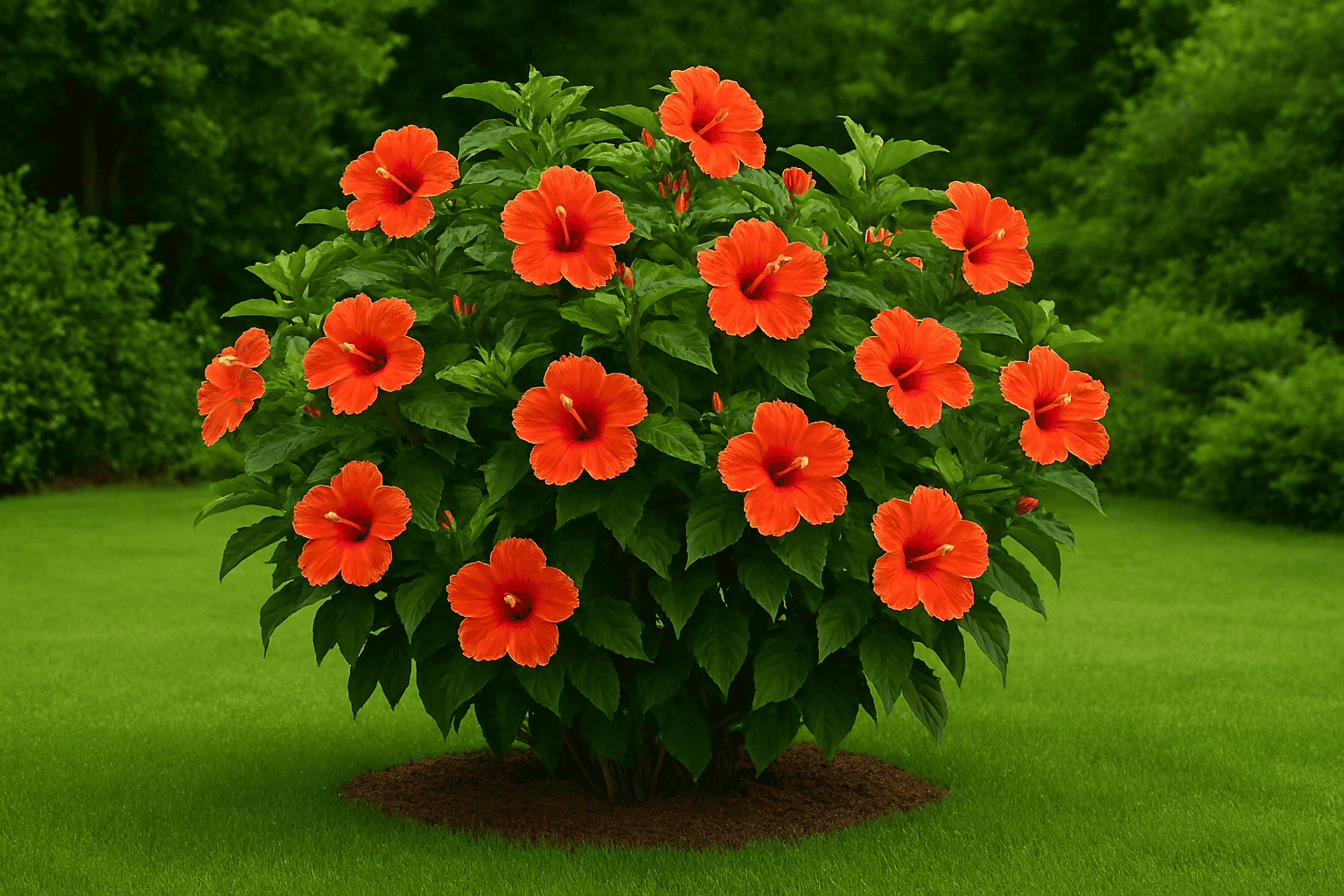
Hibiscus plants are flowering plants that belong to the Malvaceae family. It has large, trumpet-shaped flowers with bright colors from white to pink, red, blue, orange, peach,yellow, and purple. To maximize growth and flowering, ensure they receive bright, indirect light and well-draining soil with consistent but moderate watering to prevent root rot.
With proper care and maintenance a Hibiscus plant can live up 5 to 10 years , making it a timeless addition of your indoor gardening.
Hibiscus Plant Scientific classification
| Kingdom: | Plantae |
| Clade: | Tracheophytes |
| Clade: | Angiosperms |
| Clade: | Eudicots |
| Clade: | Rosids |
| Order: | Malvales |
| Family: | Malvaceae |
| Subfamily: | Malvoideae |
| Tribe: | Hibisceae |
| Genus: | Hibiscus |
Hibiscus plant prefers

- Light : Bright, direct light
- Soil : Well draining soil
- Soil pH : 5.5 to 6.5
- Temperature : 65°F and 75°F
- Humidity : 40% and 70%
- Blooming time : Late Spring
- Flower colour : Red, orange, pink
- Native area : Africa and Asia
- Toxicity : Non-toxic
Hibiscus plant care : Expert tips for Lush, Vibrent Blooms
The amounts of light, water, soil, temperature and fertiliser should be obtained for the plant to grow healthy. The common problems and benefits of the plant have also been shared in this article. This article will help you with help you with all the essentials you need to grow your plant.
If you want to know Hydrangea Plant Care.
Light
Hibiscus plant grow well in bright light with southern locations, filtered light is better. It requires very bright light to bloom well indoors. A sunny western or southern exposure that has at least 4-5 hours of bright, direct light is best.
If you move the plant outdoor for the Summer then accumulate it to the brighter light conditions. You may grow hibiscus in light to partial shade both indoor and out.
Water
This tropical plant gets regular watering from Spring to early autumn during the growing season. It needs sufficient water especially in the growth stage so it can grow well. To be careful to avoid water-logging. In winter, Water only when the top 1–2 inches of soil feel dry. Overwatering in cold months can harm the plant. The humid conditions reduce watering to avoid soggy soil.
Soil

Hibiscus plant grow best in well-draining, loamy soil with slightly acidic pH level. A good potting mix for hibiscus typically includes a combination of potting soil, peat moss and perlite or vermiculite. The soil should be able to retain moisture while also allowing for good aeration. A good potting mix with organic matter will provide the necessary nutrients for healthy growth and flowering.
Temperature & Humidity
It thrives in warm temperature, the daytime temperature between 65-75 degree Fahrenheit and should not be exposed to temperatures below 50 degree Fahrenheit. Above Temperatures 90°F can cause heat stress , wilting leaves and yellowing or dropping leaves.
The ideal humidity level is 50-70% and maintaining this range promotes healthy growth and abundant blooms. Excessively high humidity can increase the risk of fungal disease, so good air circulation is also important. If humidity is consistently below 50%, it can cause leaf drop, wilting and stunted growth.
Fertiliser
Feed your plant during their growing season with a balance fertiliser. To make your plants grow faster, apply fertilisers when the plant starts flowering. The best fertiliser for hibiscus needs the right combination of nitrogen, phosphorus and potassium. The ideal ratio is 7-6-5 NPK fertiliser. If your plant gets too much high nitrogen fertiliser, the foliage will be full and lush but with fewer blooms.
Hibiscus Plant care : How to propagate your plant
Hibiscus plant is commonly propagated through the stem cuttings.The best time to propagate hibiscus is in late spring or early summer. Another method is growing hibiscus from seed, which is less common but still viable.
- Select a 4-6 inch stem with new growth at-least 2-3 sets of leaves.
- Use a clean, sharp knife or pruning shears to cut just below a leaf node. Remove the lower leaves, leaving only a few at the top.
- Place the cutting in a location with bright, indirect light and maintain a consistent temperature. Root development should occur in 4-6 weeks.
Pruning of Hibiscus plant care

Pruning hibiscus is stimulates new growth with flower buds. Dead, damaged or diseased stems should be pruned at any time as soon as you notice them. It involves trimming back branches to promote bushier growth and more blooms. Use rubbing alcohol or a horticultural disinfectant to sterilize tools between plants. Ensure your tools are clean and sharp to prevent damage and disease spread. Late winter is the ideal time for pruning before new growth begins.
If you want to make your plant healthy then repotting is important
Repotting is very important to extend the lifespan of Hibiscus plant and keep them healthy. Carefully remove the plant from its pot, loosen the roots and clean away old soil. Gently remove the plant from its current container and place it in a slightly larger pot with fresh potting mix. It involves carefully transferring it to a larger pot with fresh potting mix to encourage healthy growth. Select a pot that’s one size larger than the current one with good drainage holes. Repotting is best done in early spring.
Facing some common problem of Hibiscus plant

- The common problem is leaves drooping ; lack of light, water and nutrients. Pest attack can also lead to a droopy hibiscus plant. Also, take immediate action if you notice pest or diseases.
- Too much water in the soil can starve oxygen roots and make it more difficult for the plant to absorb nutrients. It can also make your plant harmful.
- The hibiscus plant needs regular supplies of nutrients, especially in the hot months when they are flowering and producing flowers. It has been in the same pot for 2 to 3 years, may suffer from compacted or less nutrient soil.
Benefits of Hibiscus plant care
- This plant has variety of benefits like heart health, blood pressure regulation and hair growth. It
contains antioxidants like vitamin C and anthocyanins, which can help protect the body against cell damage caused by free radicals. - Some studies suggest that hibiscus may promote liver health by protecting against damage and enhancing detoxification processes.
- It may help regulate blood sugar levels which could be helpful for people with diabetes or these at risk of developing conditions. Studies suggest hibiscus may help lower blood pressure effects on blood vessel relaxation. This could be beneficial for individuals with hypertension.
Hibiscus plant Faq
1. Will hibiscus grow back every year?
Ans. It will grow back every year in tropical zones. This tropical plant will only grow back in more southern hardiness.
2. How long does a hibiscus live?
Ans. This hybrid plant is not live more than a decade but it isn’t uncommon for older varieties to live over 50 years.
3. What is going on with my Hibiscus?
Ans. We have a couple hibiscus like this. I think some nursery’s around call them fiesta hibiscus. The colour change is through the mutation, the yellowing colour might be from other causes.
4. What’s all over my hibiscus?
Ans. They have a pretty great multi- pack of ladybugs, lacewing flies and nematodes. Get ladybugs and release them on the plant and they will take care of the problem for you.