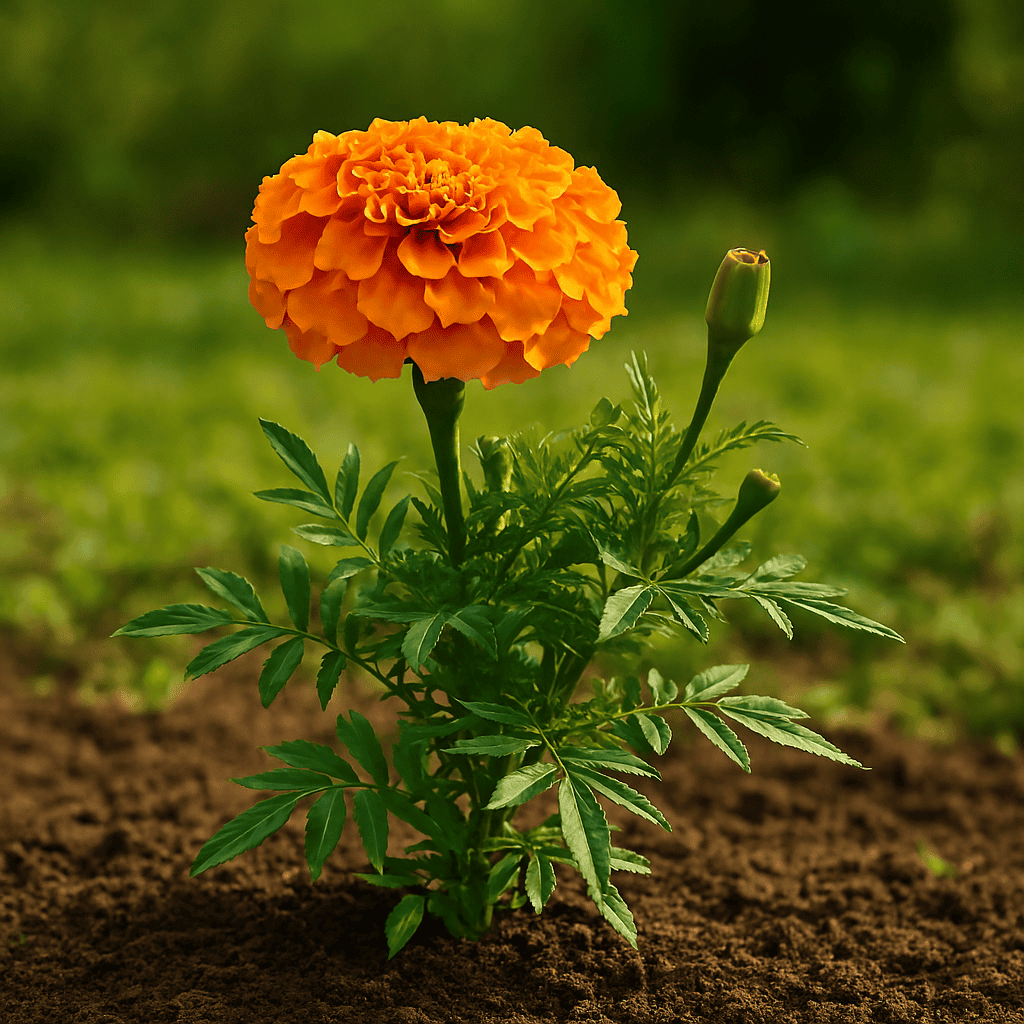
Today I will write about the plant with care, it is impossible to imagine that it would not be in the home of any plant lover. Marigold Plant has cheerful flowers with warm colours and fern like foliage. This plant is genus of about 50 species and native to southwestern North America and South America.
Scientific classification
- Kingdom: Plantae
- Clade: Tracheophytes
- Clade: Angiosperms
- Clade: Eudicots
- Clade: Asterids
- Order: Asterales
- Family: Asteraceae
- Subfamily: Asteroideae
- Tribe: Tageteae
- Subtribe: Pectidinae
- Genus: Tagetes

Prefers
- Light – Full sun
- Soil – Well draining
- Soil pH – 6.5–7.5
- Temperature – 70-85 degree Fahrenheit
- Humidity – 60-70%
- Blooming time – May to September
- Flower colour – Orange, yellow and red
- Native area – Central and South America
- Toxicity – Human
Marigold plant care with some tips
Proper amounts of water, light, soil, temperature and fertiliser should be obtained for the plant to grow. The problems and benefits of the plant have also been shared in this article. This article will help you with all the essentials you need to grow your plant.
If you want to know Common problem of indoor plant.
Light
Marigold thrive in full sun and can tolerate very hot summers. If you planted in cool and moist area, it can be affected by powdery mildew and don’t bloom well. They thrives with at least 6 hours of direct light daily. Place them a bright south- facing window. Shady conditions will cause the plants to become leggy and to flowerless.
Water

This plant has a strong root system, they become more drought tolerant. During hot or dry weather, water regularly to keep the soil moist but not waterlogged. Get water when the soil is dry and this plant is need to be watered everyday during the summer.Wet foliage can cause fungal issues like powdery mildew. Overwatering signs include droopy, yellow leaves.
Soil
Any type of potting mix soil should keep them happy. It can grow in a variety of soils and prefers well drained, fertile soil with pH for marigolds is between 6 and 7. This plant prefers sandy loam soil with good aeration and drainage are considered ideal for the cultivation of marigold. Avoid marigold cultivation in acidic and alkaline soil. You can improve drainage in heavy garden soil by adding compost or sand.
Temperature & humidity
The ideal temperature range is between 70-80 degree Fahrenheit. They can tolerate heat, humidity and drought tolerate making them suitable for a variety of climates. This plant is grow at 65-75 degree Fahrenheit during the day and 65-70 degree Fahrenheit at night.
It thrives in moderate humidity such as 60-70%. Low humidity can cause crispy leaves, curl and turn brown. If you can increase the humidity levels by using a humidifier and decrease humidity by improving air circulation or spacing out plants.
Fertiliser
To make your plants grow faster, apply fertilisers when the plant starts flowering. It may cause plants to produce excessive foliage at the expense of blooms. This helps the plant get enough nutrients to continue to grow. A general-purpose fertilizer with equal amounts of nitrogen, phosphorus, and potassium should be incorporated into the soil at the time of planting.
Propagation of Marigold plant care
Propagation is the process when you want to grow up another plant. The best time to take your plant cutting for propagation is growing season when the plant actively grow healthy. It can easily propagate by seed and stem cutting. Use a sterilised scissors to cut the propagation part and dip the cutting in rooting hormone then plant it about 2 inches deep in a small pot.
Pruning of Marigold plant care

Pruning is the essential part of its care that keeps your plant healthy and encourage growth.Trimming your plant for new growth to produce more new branches. Make sure to trim just above a set of leaves and regular pruning will also increase the chances of the plant producing its stunning, fragrant flowers. Remove the dead or damage leaves to encourage more blooms and bushier growth.
Types of Marigold plant
- French Marigold : This plant is the variety of French marigold, it is native to Mexico and Guatemala. Petals have been used to treat various ailments including skin irritation and scraps.
- Mexican Tarragon : It has bright green narrow leaves and small golden yellow flowers. This plant is used as a medicinal plant and leaves have tarragon like scent.
- Autumn Orange : Another variety of marigold is Autumn orange, it has two-and-one-half inch wide deep orange ruffled flowers.Cheerful marigolds with their brilliant color combinations of red, orange and yellow.
- Cresta Orange : One of the earliest marigold is Cresta Orange, it has large showy orange flowers bloom. This plant brings an extremely fine and delicate texture to the garden.
- Diamond Jubilee Yellow : This plant is the variety of Diamond Jubilee Yellow, it features bold yellow ball-shaped flowers at the ends of the stems from early summer to mid fall.
Repotting of Marigold plant care
No repotting is necessary for your plant but you can repot in the spring when it’s about to grow quickly. Choose a pot with good drainage and that’s 1–2 inches larger than the current pot. Spring is the prime time for repotting the Marigold.You can also make your own potting mix by two parts all-purpose potting soil with one part each of perlite, sand and peat moss. After the flowers bloom then the energy shifts to root development and making it the ideal time to repot.
Common problem of Marigold plant

- The most common problem is overwatering, it can accumulation of water in the soil. This plant can cause the leaves turning yellow.
- Marigold can be affected by pest including aphids, spider mites. A fungal disease that causes a white residue to appear on the leaves.
- Another problem is plant leaves turn purple, it cause by the deficiency of phosphorus. Brown spots can be caused by bacterial leaf spot, or an excessive amount of iron.
Benefits of Marigold plant
- This plant is providing wealth and prosperity and positive energy.
- Marigold used for various purpose like celebration and died rituals. It shows anti bacterial and anti viral properties.
- It helps to reduce the inflammation of the eye, treatment of conjunctivitis and a number of other chronic ocular inflammatory conditions.
Marigold plant Faq
1. Are marigold edible?
Ans. Marigolds are often used in salads. The flower petals, chopped and mixed with salad green.
2. What is a pot marigold?
Ans. This pot marigold is a flower species belonging to an entirely different genus from the marigold.
3. How many years does Marigold plant live for?
Ans. Marigold plant lives for 90 days the begin to die back.
Beautiful