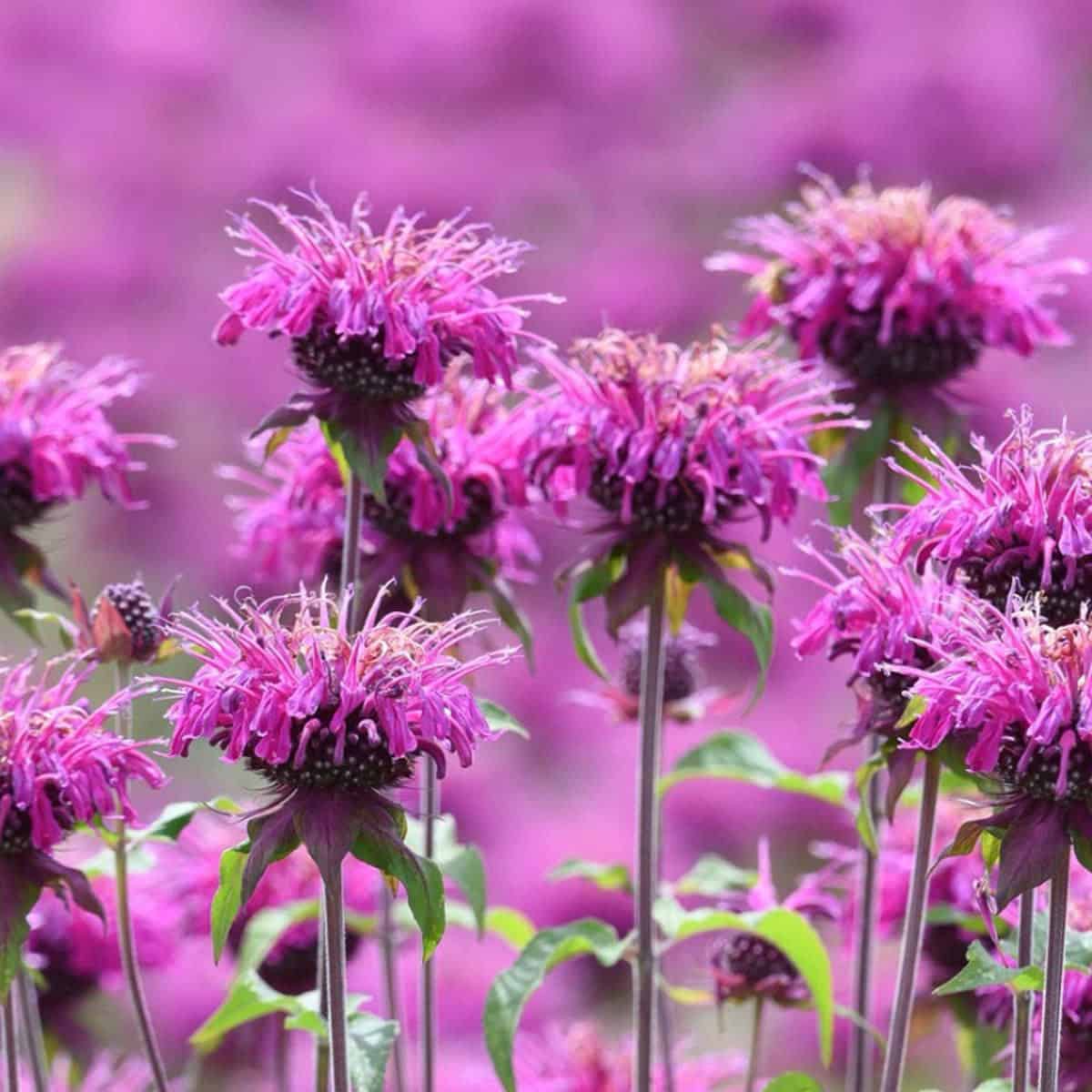
Bee balm plant is vibrant perennial plant. The bee balm flower has an open, daisy-like shape, with tubular petals in shades of red, pink, purple, and white. Many of these species continue to be improved for their use in the garden for frequent introductions.
To maximize growth and flowering, ensure they receive bright, indirect light and well draining soil with consistent but moderate watering to prevent root rot. With proper care and maintenance a Bee balm plant can live up 3 to 5 years, making it a timeless addition of indoor gardening.
Bee Balm plant prefers
- Scientific name : Monarda didyma
- Family : Mint
- Plant type : Perennial
- Length : 2 to 4 feet tall
- Temperature : 60°F and 75°F
- Humidity : High
- Sun Exposure : Full Sun to Partial shade
- Soil type : Well-draining
- Soil pH : 6.0 to 7.0
- Blooming time : Mid-to-late summer
- Flower colour : Purple, Red, Pink
- Toxicity : Nontoxic
Bee balm plant care: How to grow this plant
Adequate amounts of light, water, soil, temperature, humidity and fertiliser should be obtained for the plant to grow healthy. This article will help you with all the essentials you need to grow your plant.
If you want to know about the Pennyroyal plant care.
Light
Bee balm grows best in a location that receives bright, direct sunlight each day. This plant can handle partial shade but your plants are likely to become leggy over time. Bee balm plants will perform best in beds which receive full sun or a minimum of six hours of light each day.
Water

Bee balm plant requires regular moisture because it is moisture loving plant. Though the plant is able to withstand brief periods of drought, supplemental water may be needed in gardens that experience especially hot weather. Water every 3 to 4 days to help roots grow. Keep the soil evenly moist but well-drained, as soggy soil causes root rot.
Soil
Soil is extremely important for plant growth. Mainly I have shared the common soil mix that will make the plant better if mixed with soil. This plant grows best in rich, moist, and well-draining soil with a neutral pH between 6.0 and 7.0. If your soil dry out too much then you see browning, yellowing or curling leaves.
Temperature & Humididty
Bee balm plant grow best in temperature between 60 to 75 degree Fahrenheit. To keep your plant in these ideal conditions and placing plant in the cold area. If the temperature change suddenly the plant leaves turning yellow.
Bee balm plant does not require high humidity. It prefers dry conditions and does not require humidity to grow. Too much moisture can cause issues with the plant and making it more susceptible to diseases like rust and powdery mildew.
Fertiliser
Fertiliser is essential things you need to make such as how much temperature you, if it is too much, you need to shift the pot to another place, how much soil mix you need. This plant enjoys nutrient-rich conditions, but as long as it is planted in soil rich in organic matter, it does not require supplemental fertilization.
Types of Bee balm plant
There are many types of Bee balm plant.
- Jacob cline: It is a brilliant red variety plant which can reach heights of four to five feet over the season. This plant makes an excellent backdrop and coordinates well with salvia or other flowering herbs.
- Leading lady plum : This plant is a wonderful compact variety. The flowers are large, prolific and flashy. It is an early bloomer that will begin flowering in late spring to early summer.
- Raspberry wine : It is a great background plant with heavy bloomer and bright magenta flowers which begin to bloom in mid-summer.
- Blue stocking : Blue stocking is blue-violet blooms and its like a fair amount of moisture.
Propagation of Bee balm plant care

Bee balm plant is best propagate by division during the active growing season in Spring. Choose a healthy mother plant to propagate it. The best way to propagate your plant is root division. Avoid dividing bee balm too late in the summer or fall.
- Using a sharp clean pruning shears or scissors to take softwood stem cuttings from a healthy plant.
- Remove the bottom leaves from each cutting.
Pruning of Bee balm plant that make it healthier
Pruning is the essential part of its care that keeps your plant healthy and encourage lush growth. Trimming your plant for new growth to produce more new branches. Early Spring is the best time for pruning and cut the dead, hollow stems down to about 2-3 inches above the soil level. Bee balm does not require aggressive pruning but regular maintenance throughout the year can benefit the plant’s health. Deadheading spent flowers throughout the season encourages more prolific blooms.
Repotting of Bee balm plant

Bee balm plant grow best in Spring and requires regular repotting and should only be transplanted once it has outgrown its previous container. Repot it once a year to replenish the soil. If the plant is root bound invite fungal infection that kill the plant. Use a pot only 1–2 inches larger than the current root ball, ensuring it has drainage holes. Keep your plant with proper care and wait a week before watering after repotting because a risk of root rot. Carefully remove the excess amount of soil from the root before placing this plant in a new container.
Facing some common problem of Bee balm plant

- Bee balm plant leaves turn yellow when the plant is overwatering. It should be removed immediately so thar plant does not start to rot.
- If your plant is not blooming because the plant may not be getting enough light. If light is not the issue your plant may be experiencing poor soil conditions, overfertilising or overcrowding which can affect blooming.
- The most frequent problem for bee balm is white, powdery dusting on the leaves and stems.
Benefits of Bee balm plant
- Bee balm plant is also known as horsemint so its used for antibacterial, antifungal and soothing properties.
- It is highly beneficial for the skin. Anti-inflammatory, antimicrobial, antioxident properties make it excellent irritation, fighting acne and moisturizing.
- Bee balm is treasured for attracting beneficial bees aswell as other pollinators including butterflies and hummindbirds who come to feast on its nector. Colourful flowers, fregrance that floats on the summer air and butterflies fluttering.
Bee balm plant Faq
1. How bad is bee balm, really?
Ans. My bee balm has grown more than I anticipated. My concern is that it seems susceptible to powdery mildew.
2. Should bee balm be deadheaded?
Ans. Deadheading is not require for bee balm but it can help encourage more blooms.
[…] If you want to know about the bee balm plant care. […]