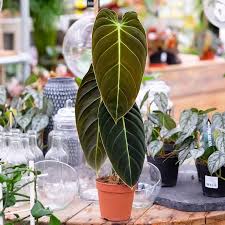
Philodendron Melanochrysum plants, also commonly known as black gold philodendron are a rare type of vining philodendron that have become popular as houseplants due to their gorgeous foilage. Is most expensive because of its rarity and high maintenance requirements. These plants are not found at every garden centre, so you must search for a specialist around nursery if you want. This beloved plant is a climber which sets it apart. It’s native to Colombia and Costa Rica where it can be seen climbing up tree trunks, especially at higher elevations.
Kingdom – Plantae
Clade – Tracheophytes
Clade – Angiosperms
Clade – Monocots
Order – Alismatales
Family – Areceae
Genus – Philodendron
Species – P. melanochrysum


Prefers
Temperature – 65°-80° fahrenheit
Water – Once the top 2 to 3 inchs of soil has dried out
Soil type – Well drained
Soil pH – Acidic
Light – Partial
Bloom time – Summer
Flower time – Green, white
Native area – South America
Size – 3-5ft tall
philodendron melanochrysum care
Here, I will explain how to care for your plant. If you have brought home a new “black gold” Philodendron plant, then this article will help you a lot.
Light
This plant is naturally grow as forest understory plants where they received dappled, indirect light. When grown indoors , it is best to try and replicate these conditions by choosing a location for your plant that receives bright, indirect light. It’s usually means near one of the sunniest windows. Watch for peak afternoon sun to ensure it is not too much. Avoid these tropical plants to prolonged of direct sunlight as the leaves can burn easily.
Water
In general, you should not water your plant on a set schedule. Rather, water your plant when the top inchs or so of the potting mix is dry. They do not like to completely dry out, but like to remain some what moist. Before you water, stick your finger down into the potting mix to feel for moisture. There is no fixed time when it comes to your plant watering. It takes 7 to 8 days before you can water your plant.
This tropical plant is known as the heart leaf due to its beautiful leaf shape. This variety has stunning golden yellow variegated leaves.It can with stand a variety of lightning conditions from medium light to bright indirect light. The ideal lighting for your plant is bright indirect light, so close to a very sunny window or in bright shade outdoors.This plant can allow the top 2 to 3 inchs of soil to dry out and then watering.It prefers a well draining, slightly acidic soil while giving it water when the top inch of soil dries out.Native to the tropical rainforests of South America, this plant is grow best in warm, humid conditions. Readmore


Soil
The best way to soil consists of any airy mix of fresh garden soil, peat moss, pertile and charcoal. An orchid bark may be added to improve texture and drainage. You can also purchase a commercial orchid mix and use it as soil for the plant. Many growers choose to grow their plant in pure sphagnum moss as it is organic, airy and retains water well. Alternatively, you can make your own soil mixture at home by combining one part peat moss, one part perlite and one part orchid bark mix.
Temperature & humidity
It prefers warmer temperatures, but it will still be fine in avarage household temparature. In general it is happy in a range of 65° – 80° fahrenheit. This plant care involves the use of a rich and well draining soil that is high in organic matter. Provide the plant with bright indirect light and maintain a temperature.
This plant loves high humidity, you can increase humidity by placing a humidifier near the plant or by placing a tray of water near the plant. You can also mist the leaves regularly to help increase humidity. If you want to give your plant a boost in humidity, you have a few possibilities.
Fertilizer
This plant is benefit from regular fertilizer during their active growing period. Use a balance liquid fertilizer once a month from the early Spring to the late Summer.
philodendron melanochrysum propagation
When taking a piece of the stem make sure to take a multiple piece of aerial roots. It’s best to propagate your plant in the spring when the plant is actively growing.


1. Take a new container for the cutting then fill it with the appropriate soil mixture. Choose the area where you will cut the stem of the plant. After cutting have 2 to 3 leaves and nodes at the bottom.
2. Using sharp and sterilized scissors or knife for cut the stem.
3. Cutting stem to allow 12 to 24 hours for callous over.
4. After the calloused placed the stem in water and put in also bright, indirect light where they receive this.
5. Two to three weeks after you should notice a new roots sprouting from the cutting.
6. The roots have grown to become 1 inchs in length. Use a well draining soil, foilage liquid fertilizer, humidity, temperature to grow a new Philodendron Melanochrysum.
This tropical plant is a stunning variety that is known for its velvety, heart-shaped leaves and easy-to-grow habit. Your Philodendron micans wants weekly watering sessions, allowing its soil to completely dry out between waterings to prevent overwatering and root rot. This plant is best in bright indirect light, so place it near a window, but be sure to keep it away from the harsh direct rays of the sun. When your plant is the top 2-3 inches of the soil have dried out. This tropical plant requires well-draining soil mixture that is easy to grow your plant. Luckily, the lower part of that range is typical for indoor heating in temperature regions. Almost any indoor temperature that works for you is a good temperature for velvet leaf Philodendron. Readmore
Common problem of Philodendron


Brown leaves
A common cause of completely brown leaves on this plant is the development of a disease in the main root system called root rot. Root rot is a complex disease that can happen to any indoor plant.
Yellow leaves
The most common cause of yellowing leaves among the plants is important soil moisture in particular, overwatering. Only water your plant when the top 25% of the soil in the pot is dry.
Toxicity
This plant is a member of the araceae family and therefore is toxic to all animals including humans and pets. Its toxicity is caused by the calcium oxalate crystals that can be found in all parts of the plant.
If you do ingest any parts of a this plant you may begin to feel irritation in the mouth along with excess drooling and foaming at the mouth. This irritation will spread throughout your digestive system causing discomfort. It poisioning may also cause kidney stones in very rare circumstances.