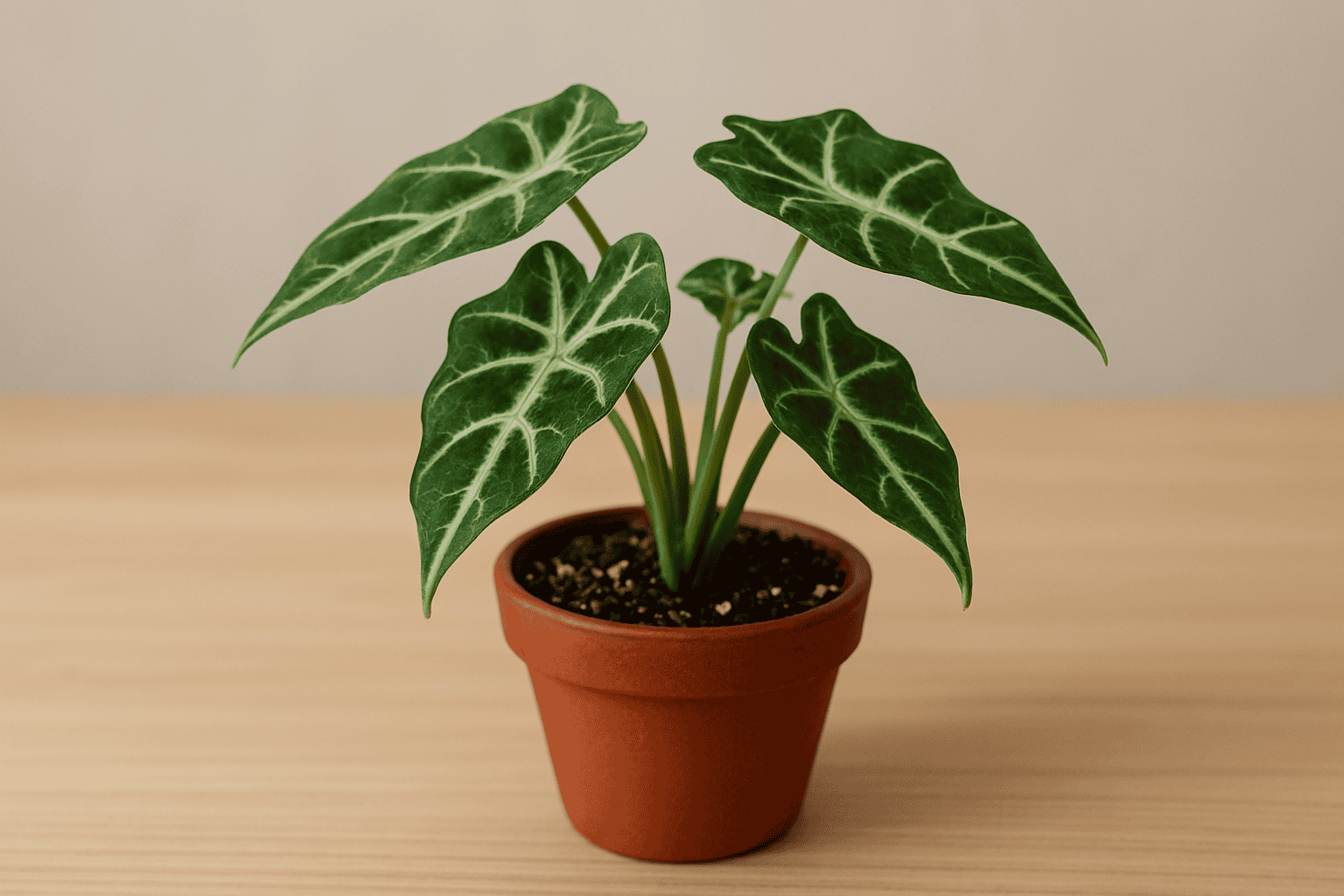
Alocasia tiny dancer plant is hybrid Alocasia known for its unique, upright stems and cupped, arrow-shaped leaves. It has Small, compact, with distinctive, shiny green leaves on graceful, curving stems. It’s a great choice if you’re looking for a small, compact plant to add to your collection.
Alocasia tiny dancer Plant Prefers

- Scientific name : Alocasia brisbanensis
- Family : Araceae
- Plant type : perennial
- Length : 4-6 inches tall
- Temperature : 65-80 degree Fahrenheit
- Humidity : 60%
- Sun exposure : Bright, indirect light
- Soil type : Well draining
- Soil pH : 5.5-6.5
- Blooming time : Spring and Summer
- Flower colour : White and green
- Native area : Southeast Asia
- Toxicity : Human and pets
How to grow and care of Alocasia tiny dancer plant
Adequate amounts of light, water, soil, temperature, humidity and fertiliser should be obtained for the plant to grow healthy. This article will help you with help you with all the essentials you need to grow your plant.
If you want to know Liriope plant care.
Light
Alocasia are fairly adaptable so will thrive in a range of light conditions from low to bright indirect sunlight.Be aware that they are not suited to low light or direct sunlight – which can scorch their leaves. Seasonal changes can impact the intensity of light your plant is receiving.
Water

This plant is water-loving plants, Alocasias enjoy humid, moist conditions, but not overly soggy soil. They grow in the tropics in their native environment.These roots need oxygen, which they do get even when they’re in water.
Soil
Alocasia tiny dancer plant prefers loose, well draining soil or soilless mix is ideal. A peat based mixture with lots of perlite, vermiculite or sand will do the trick. Adding some compost for nutrients and charcoal for freshness is beneficial, ensuring good airflow and drainage are key for this moisture-loving, but rot-prone, plant.
Temperature & humidity
The ideal temperature between 60°F to 80°F and absolutely dislikes cold drafts or temperatures below 60°F which can trigger dormancy or damage.They do not tolerate cold temperatures and should not be exposed to temperatures below 50°F.
Alocasia tiny dancer prefers high humidity, ideally 60% or above. It will also appreciate being placed in a humid environment which you can create by misting it frequently.
Fertiliser
Using fertilisers is the process to grow your plant easily. During the growing season use liquid or slow fertiliser, feed the Alocasia tiny dancer with a balanced, water-soluble fertilizer to promote flowering. A balanced, water-soluble fertilizer with a ratio of 20-20-20 is ideal.
Propagation of Alocasia tiny dancer plant

- Most alocasias can be propagated by division. Simply remove the plant from its pot and then, with secateur, separate a clump of roots from the main rootball.
- The most common propagation method for Alocasia is soil propagation.This method is best for tubers that already have their own root system. Prepare a pot for each division with good drainage holes and a suitable soil.
- Place the cutting in a pot with fresh potting soil. Pour a little water around the cutting, so that the soil is slightly moist.
Alocasia tiny dancer plant: Pruning your plant to make it healthier
Pruning is the essential part of its care that keeps your plant healthy and encourage lush growth. It’s best to prune your alocasia when it is actively growing in the spring or summer.Only prune your alocasia to remove damaged, dying, or dead foliage. Doing this will allow the nutrients to head to the healthy foliage, helping it flourish. Alocasia plants should be pruned regularly to encourage new growth and keep them looking their best.
Repotting of Alocasia tiny dancer plant
Alocasia tiny dancer plant grow best in Spring and require regular repotting and should only be transplanted once it has outgrown its previous container.You should wait until a plant has filled its pot with roots before repotting. Choose a new larger pot with good drainage. It should be repotted after it doubles in size or once a year.
Common problem of Alocasia tiny dancer plant

- This plant can be susceptible to root rot and fungal infections if their soil doesn’t have proper drainage and becomes waterlogged.
- Powdery Mildew is a common Alocasia fungus that leads to a light grey or white powdery substance on your plant’s leaves.
Benefits of Alocasia tiny dancer plant
- Alocasia is a fairly popular decorative indoor plant. Negativity puller and brings positivism, happiness, and good luck.
- Placing an Alocasia tiny dancer can influence the flow of energy, potentially inviting wealth and success. Adopting the principles of Feng Shui, the Jewel Alocasia is believed to bring good fortune to its keepers.
- It is an exotic plant that makes great indoor plants. Studies have shown that the presence of plants in the home can help to reduce stress and improve overall well-being.The beautiful, dark green leaves of Alocasia plants add a touch of color and elegance to any room.
Alocasia tiny dancer plant Faq
1. Is Alocasia tiny dancer rare?
Ans. This hybrid plant is most popular among plant collectors and Alocasia enthusiasts.
2. Why is Alocasia so hard to keep alive?
Ans. Alocasia needs more care than other indoor plants. It can also prefers in the proper environment.
3. Does alocasia tiny dancer go dormant?
Ans. This plant can go partly dormant in the winter months. Stop watering your plant until the early spring months.