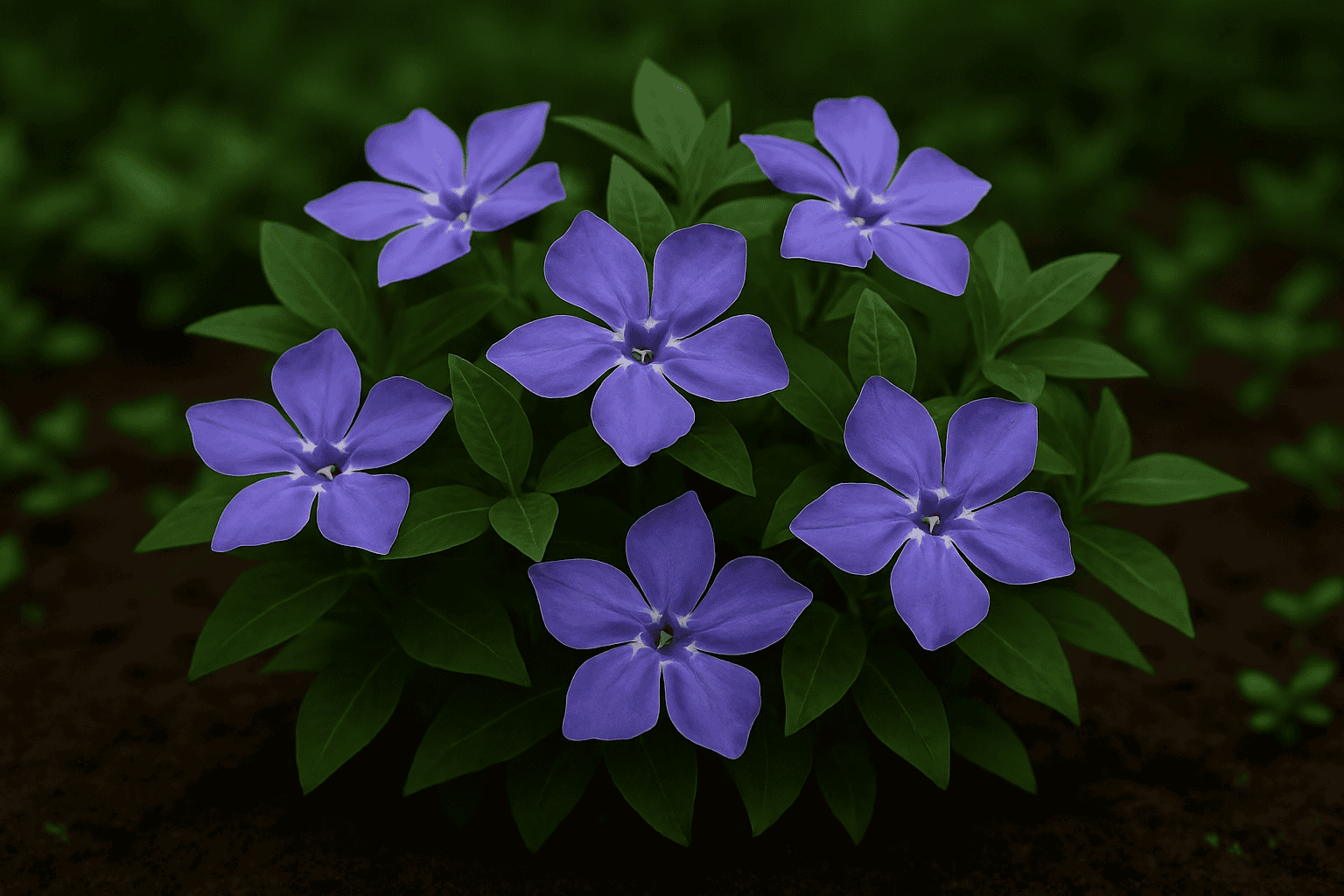
Periwinkle plant is a tough, low maintenance, perennial evergreen with broadleaf foliage. The glossy, evergreen leaves are usually 1-2 inches long and opposite in arrangement along to stem. They are elliptical in shape and have a dark green colour. To maximize growth and flowering, ensure they receive bright, indirect light and well-draining soil with consistent but moderate watering to prevent root rot. With proper care and maintenance a Periwinkle plant can live up 20 years , making it a timeless addition of your indoor gardening.
Scientific classification of Periwinkle plant
| Kingdom: | Plantae |
| Clade: | Tracheophytes |
| Clade: | Angiosperms |
| Clade: | Eudicots |
| Clade: | Asterids |
| Order: | Gentianales |
| Family: | Apocynaceae |
| Genus: | Catharanthus |
| Species: | C. roseus |
Periwinkle plant prefers

- Light : Partial shade
- Soil : Acidic to Neutral
- Soil pH : 6.0-7.5
- Temperature : 75-90 degree Fahrenheit
- Humidity : 50-70%
- Blooming time : Spring
- Flower colour : Purple, Pink and White
- Native area : Madagascar
- Toxicity : Human and Pets
How to grow and care periwinkle plant with some care benefits
Proper amounts of light, water, soil, temperature and fertiliser should be obtained for the plant to grow healthy. The common problems and benefits of the plant have also been shared in this article. This article will help you with help you with all the essentials you need to grow your plant.
If you want to know about the best indoor plant for office.
Light
Periwinkle plant prefers partial shade and full shade with about 3-6 hours of sunlight. Seasonal changes can significantly impact the light needs and health of your plant. It can tolerate full sun in cooler climates. Periwinkle is a popular choice for pots and hanging baskets. It is a low-maintenance plant that produces an abundance of blooms.
Water

It is drought tolerant and consistently moist soil. Keep water deeply especially when the plant is young or during hot, dry weather to encourage root growth. Less water frequently during winter when the plant’s growth slows down. Yellowing leaves and drooping can indicate either overwatering or underwatering. Check the soil moisture before watering to avoid issues.
Soil
Periwinkle plant prefers well draining soil that is slightly acidic to neutral. It can adapt to different soil types, including clay, sand, loam and even slightly alkaline soil. The soil is rich in organic matter and has good drainage to prevent water-logging.If the soil is heavy or clay-like, amend it with sand or organic matter to improve drainage.
Temperature & Humidity
It thrives in temperature between 75°F and 90°F. It is tolerant of both hot and cold temperatures but sensitive to rapid temperature changes. This plant Can tolerate temperatures down to 40°F and occasional dips below 50°F.
Especially, periwinkle plant prefers medium to high humidity levels. While they can tolerate average humidity.They will grow best in environments with humidity levels above 50%.
Fertiliser
Feed your plant during their growing season with a balance fertiliser. To make your plants grow faster, apply fertilisers when the plant starts flowering. It generally doesn’t require heavy fertilisation but a balanced, slow-release fertilizer can help promote healthy growth and abundant flowering. A 10-10-10 NPK fertiliser is a good choice for periwinkle. Avoid over-fertilizing, as it can lead to excessive foliage growth at the expense of flowers.
How to care and propagate your Periwinkle plant

The best way to propagate by stem cuttings. You can propagate this plant by taking cuttings or by division.
- Choose stems that are actively growing and free from disease or damage. To Cut 4-6 inch stems and removing leaves from the bottom third.
- Use a well-draining mix. Dip the cut end in rooting hormone and plant in the soil mix.
- Keep the soil moist but not wet until the cutting roots.
- Transplant the cutting once established.
Periwinkle plant care: Pruning Periwinkle plant that make your plant healthier
Pruning is the essential part of its care that keeps your plant healthy and encourage lush growth. Trimming your plant for new growth to produce more new branches. Make sure to trim just above a set of leaves and regular pruning will also increase the chances of the plant producing its stunning, fragrant flowers. It can involve removing dead or damaged stems, spent flowers and trimming back long or leggy branches.
Regular pruning also helps prevent diseases and improves the overall appearance of the plant. Prune back the plants after flowering to encourage bushier growth and more blooms in the following season. Use clean, sharp garden shears or clippers to make clean cuts. Disinfect your tools with a solution to prevent the spread of diseases.
Types of Periwinkle plant
- Vinca minor: It is a variety of periwinkle that commonly used trailing, mat-forming evergreen ground cover.
- Rose periwinkle: This plant grows as a herb or small shrub, sprawling along the ground or growing up to 1m tall. The flowers can be pink or white, with five petals.
- Dwarf periwinkle: It is a species of flowering plant in the dogbane family. A mat-forming evergreen shrub with trailing, rooting shoots and opposite pairs of glossy, dark green leaves.
- Big leaf periwinkle: Big leaf periwinkle is an evergreen. It is a perennial ground cover that looks like a larger version of its more diminutive cousin with violet-blue flowers.
- Periwinkle blue : It thrives in areas with partial shade to full sun, making it adaptable to various environments. This plant is a resilient and low-maintenance ground cover.
- Rose periwinkle: This plant grows 7 to 24 inches high and wide. It forming a mound of colorful flowers in white, pink, or rosy-purple on brittle stems.
If you want to make your plant healthy then repotting is important
Repotting is very important to extend the lifespan of periwinkle plant and keep them healthy. Carefully remove the plant from its pot, loosen the roots and clean away old soil. Choose a pot with drainage holes and fill it with a well-draining potting mix. Water the plant well before repotting to make it easier to remove from its current container. Repotting is beneficial every 2-3 years to refresh the soil and encourage healthy growth.
Facing some common problem of Periwinkle plant

- Periwinkle plant can face issue like fungal diseases, pests and improper watering. It can lead to root rot and other fungal problems.
- The most common problem is
leaf spot, crown rot, and powdery mildew. Pests like aphids, slugs and snails can also affect them. - Excessive amount of light can scorch leaves, especially in hot climates. Ensure adequate light but avoid scorching heat.
Benefits of Periwinkle plant
- According to studies, the plant is antioxidants that help maintain cognitive health by protecting the brain from free radical damage, which can cause unwanted inflammatory response.
- Periwinkle is its supportive effects on glucose metabolism which has been verified by science. It promote normal insulin secretion by supporting the liver’s role in glucose utilisation.
- It has been used in many traditional systems as a throat soothing gargle. Its action is likely due to its inflammation-supportive effects and ability to help maintain healthy bacterial and fungal balance.
Periwinkle plant Faq
1. Is there a similar non toxic flower I can plant instead of periwinkle ?
Ans. Yes, you can plant Sunpatiens instead of Periwinkle. This plant is an impatiens hybrid with similar blooms to periwinkle.
2. What is this periwinkle-ish looking plant?
Ans. This plant will continue to bloom on and off throughout Spring and Summer.
3. Any ideas on how to get rid of Periwinkle vines effectively?
Ans. This plant is pulling it up by the roots can be hard but it’s quite effective.