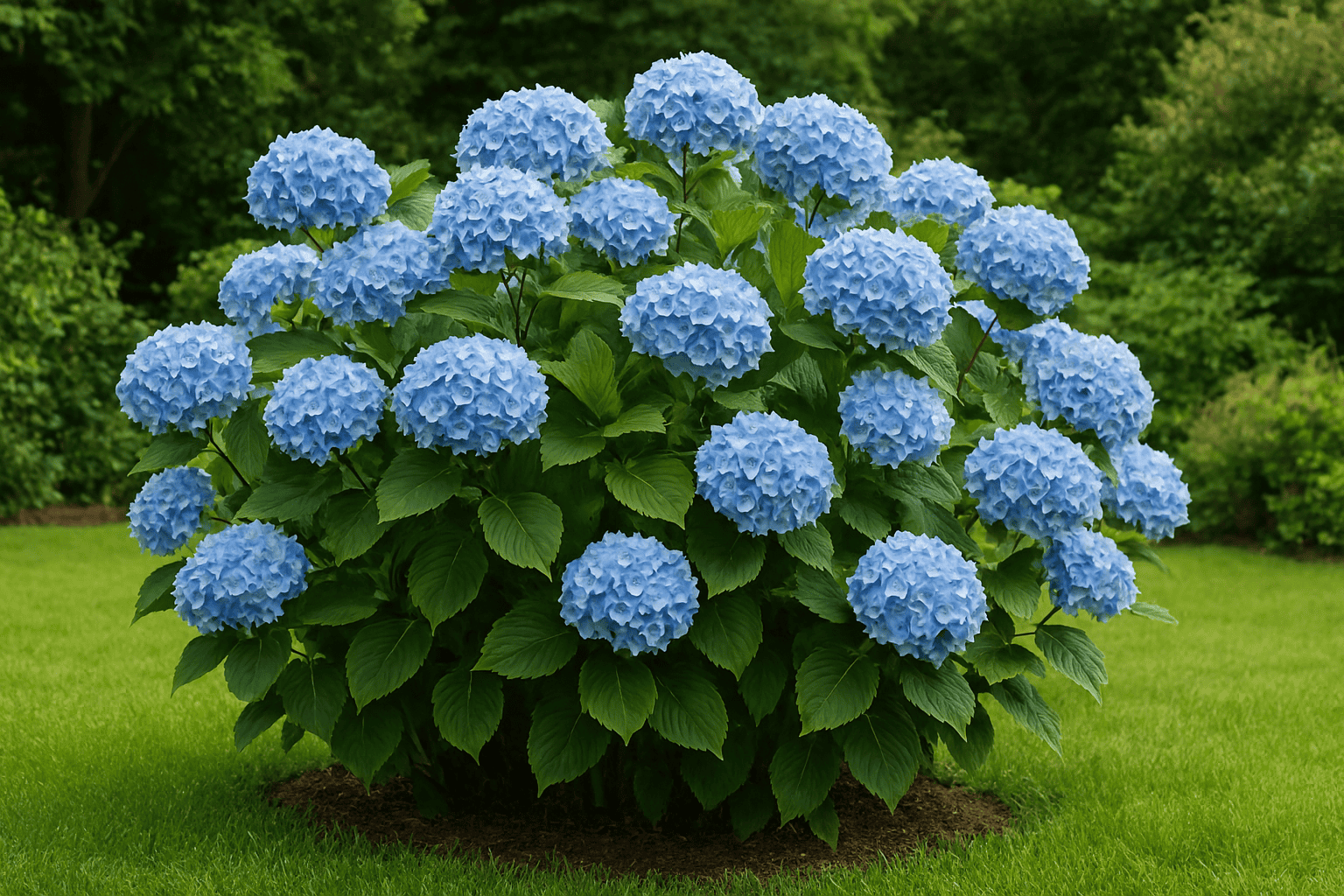
One of the most popular and easy to grow ornamental plant with large, mostly spherical flower. It has pink, purple and blue shaded flower. Provide rich soil and consistent moisture without water logging the plant. To maximize growth and flowering, ensure they receive bright, indirect light and well-draining soil with consistent but moderate watering to prevent root rot.
Scientific classification Hydrangea plants
| Kingdom: | Plantae |
| Clade: | Tracheophytes |
| Clade: | Angiosperms |
| Clade: | Eudicots |
| Clade: | Asterids |
| Order: | Cornales |
| Family: | Hydrangeaceae |
| Genus: | Hydrangea |
| Species: | H. macrophylla |
Hydrangea Plants Prefers

- Light : Bright, indirect light
- Soil : Well draining
- Soil pH : 5.5-6.0
- Temperature : 60-70°F
- Humidity : 50-70%
- Blooming time : Summer
- Flower colour : Pink to blue
- Native area : Asia and America
- Toxicity : Human and Pets
Hydrangea Plants Care : Expert tips for Lush, Vibrant Blooms
Adequate amounts of light, water, soil, temperature and fertiliser should be obtained for the plant to grow healthy. The common problems and benefits of the plant have also been shared in this article. This article will help you with all the essentials you need to grow your plant.
If you want to know Black eyed Susan plant care.
Light
Hydrangeas plant do best in the partial shade with morning sun. They can tolerate some morning sun, avoid exposing them to harsh afternoon sunlight which can scorch their delicate foliage and flowers. Most hydrangeas thrive with 3–6 hours of morning sunlight.
Water

This plant needs water one to two times a week during the growing season. Increase the amount of water you give hydrangeas during hot weather. It should be watered several times per week with an inch of water at a time.
Soil
Hydrangeas plant thrive in well-draining soils that receive plenty of moisture.They prefer a slightly acidic to neutral soil pH, typically between 6.0 and 7.0 but can tolerate a wider range depending on the variety. Adding compost or well-rotted manure improves soil structure, drainage and nutrient availability.
Temperature & Humidity
It generally prefers moderate temperature such as between 60-75 degree Fahrenheit. Some varieties like panicle hydrangeas are more cold hardy and can tolerate temperatures down to -40 degree Fahrenheit. They don’t like extreme heat or cold and it’s best to avoid placing them.
The ideal humidity level is 50-70% relative humidity. High humidity helps hydrangeas retain moisture which is crucial for their overall health and vibrant blooms.
Fertiliser
Feed your plant during their growing season with a balance fertiliser. To make your plants grow faster, apply fertilisers when the plant starts flowering.The best fertilizer for hydrangeas is a balanced, slow-release fertilizer with an NPK ratio of 10-10-10 or similar. If your plant gets too much high nitrogen fertiliser, the foliage will be full and lush but with fewer blooms.
Hydrangea Plants Care : How to propagate of this plant

The best way to propagate by stem cutting, choose a green flowerless stem and cut the stem below a leaf node. Hydrangeas can be easily propagated from semi-ripe cuttings, taken in late summer. Place it in indirect light and keep the soil slightly damp.The best time to propagate hydrangeas is in late spring or early summer, between May and July.To propagate hydrangea cuttings, start with new growth that has no flowers on it.
Pruning of Hydrangea plants care
Pruning is the essential part to make your plant healthy. Hydrangeas pruning depends on the type of hydrangea. Remove spent flower heads throughout the summer to encourage more blooms. To cut some of the oldest stems to the base each year to encourage new growth and better air circulation. If you want to controlling size then prune back stems by about one-third for panicle and smooth hydrangeas. Trimming your plant for new growth to produce more new branches. Make sure to trim just above a set of leaves and regular pruning will also increase the chances of the plant producing its stunning, fragrant flowers.
Types of Hydrangea Plants
- Panicle hydrangeas : Panicle hydrangeas are known for their cone shaped flower heads. These are large blooms typically start white and may turn to pink.
- Smooth hydrangeas : It is also known as wild hydrangeas.The leaves of arborescens are generally heart shaped, thin, and floppier than the mop-heads.
- Climbing hydrangeas :This plant is popular due to the uniqueness of growing up structures and having large blooms.
- Endless summer hydrangeas : It is label includes several cultivars with rounded mop head blooms in pink, purple.
- Limelight hydrangeas : It has strong stems to support the large, cone-shaped creamy white to dusty rose flowers.
How to repot of Hydrangeas plants
Repotting is very important to extend the lifespan of hydrangeas plant and keep them healthy. Carefully remove the plant from its pot, loosen the roots and clean away old soil. Gently remove the plant from its current container and place it in a slightly larger pot with fresh potting mix. Hydrangeas plant is grow under five feet tall make beautiful container plants. The best times to repot are late fall or early spring, while the plant is dormant. Avoid repotting during the heat of summer, especially in warmer climates.
Facing some common problem when you care your Hydrangeas plants

- If your hydrangeas are constantly wet, roots can rot and the entire plant may die.Wetting the foliage can spread diseases that cause hydrangea leaf problems.
- When they plant too close to each other or to surrounding plants, they won’t get the air circulation that helps them avoid diseases.
- Too much nitrogen, in particular, will encourage lots of leafy growth but few flowers. A fast release fertilizer can burn plants.
Some Benefits of Hydrangea plants
- Hydrangeas has medical benefits, it may protect from kidney damage and provide antioxidant and anti-inflammatory effects, among other benefits.
- It is eye-catching beauty that makes famous for their dramatic, globe-like flower clusters with bloom in shades of blue, pink, white and purple.
- This plant is generally low maintenance once established. They are disease resistant and drought tolerate.
Hydrangea Plants Faq
1. Do hydrangeas prefer sun or shade ?
Ans. Hydrangeas prefer full sun or partial shade.
2. Should you cut off dead hydrangeas blooms?
Ans. Yes, you can cut off dead hydrangeas blooms during the growing season to encourage more flowering.
3. How close should I plant hydrangeas?
Ans. Yes, if you don’t want to crowd them. Think of a circle with radius 2 to 3’.
4. When is a good time to plant hydrangeas?
Ans. I planted my panicle hydrangeas end of July last year while in bloom.