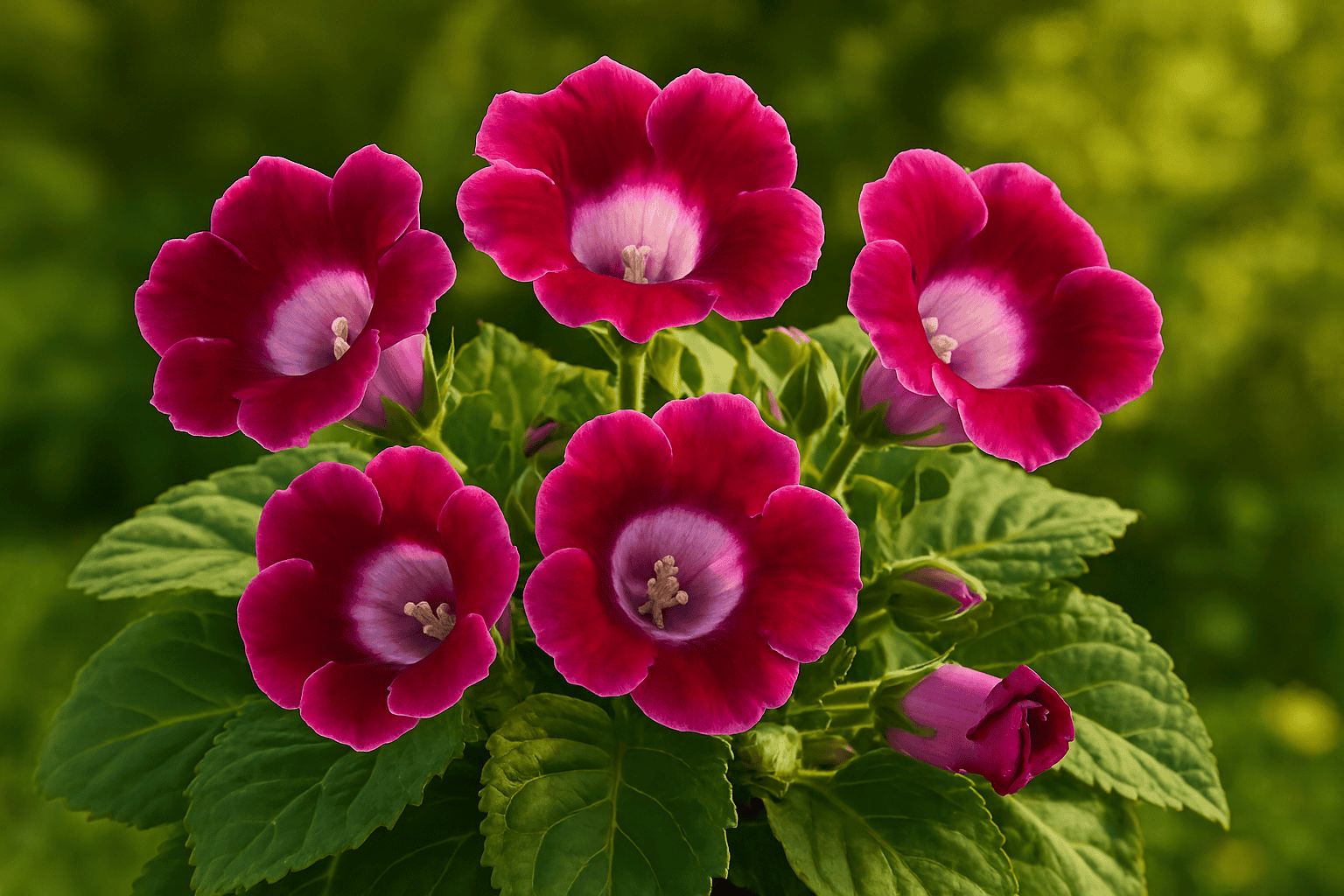
Gloxinia plant is tropical plant with colourful flowers. It has velvety green leaves and elegant, ball shaped flowers in a range of flowers. To maximize growth and flowering, ensure they receive bright, indirect sunlight, well-draining soil, and consistent but moderate watering to prevent root rot.
With proper care and maintenance, a Gloxinia plant can live up to 2-3 years, making it a timeless addition of your indoor gardening.
Scientific Classification Gloxinia Plant
- Kingdom: Plantae
- Clade: Tracheophytes
- Clade: Angiosperms
- Clade: Eudicots
- Clade: Asterids
- Order: Lamiales
- Family: Gesneriaceae
- Genus: Sinningia
- Species: S. speciosa

Gloxinia Plant Prefers
- Light – Bright, indirect light
- Soil – Slightly Acidic
- Soil pH – 6.0-6.5
- Temperature – 60-65 degree Fahrenheit
- Humidity – 50-70%
- Flower colour – Red, Purple, Pink
- Blooming time – Late Summer
- Native area – Brazil
- Toxicity– Non toxic
Gloxinia Plant care with some tips
Proper amounts of water, light, soil, temperature and fertiliser should be obtained for the plant to grow. The problems and benefits of the plant have also been shared in this article. This article will help you with all the essentials you need to grow your plant.
If you want to know Why gardening is important for us.
Light
Gloxinia plant prefers bright, indirect light and filtered light are also suitable. A north or east-facing window is ideal and providing enough light without the harsh intensity of direct sun. Avoid too much light can burn the flowers so keep an eye on it Summer.
Water

It needs moist soil and consistently moist but not soggy soil, especially when actively growing.Too much moisture can cause the root rot. Water when the top inch of soil feels dry and avoid overwatering which can lead to root rot. Avoid watering directly on the bulb to prevent rot.
Soil
Gloxinia plant thrive in a well-draining, rich potting mix. A good mix typically includes peat moss, perlite and a standard potting mix with proportions like 50% potting mix, 30% perlite and 20% peat moss that’s will make good medium. It prefers slightly acidic pH of 6.0-6.5 ideal.
Temperature & humidity
This plant thrive in warm temperatures ideally between 65-75 degree Fahrenheit. Night temperatures should ideally be at least 60°F but can be allowed to drop to 52°F to 55°F.
It prefers optimal humidity levels around 50-70%. Low humidity can lead to browning or curling of leaf edges and premature bud drop. If you want to increase humidity level then use humidifier. It helps Gloxinia leaves maintain their lushness and prevents them from drying out and developing brown edges.
Fertiliser
In general, fertilizers formulated for flowering plants would contain amounts of nitrogen less than or equal to the amounts of phosphorus. The balanced liquid fertilizer diluted to half strength, applied every two weeks during active growing season. Apply the fertilizer solution to the soil and avoiding getting it on the leaves.
Propagation of Gloxinia Plant care

Gloxinia plant can be propagate by various method including leaf cutting, tuber division and seed sowing. Leaf cutting is the popular method where a healthy leaves are cut and place in a moist well draining soil.
- Select a healthy mature leaves then cut the leaf with a clean sharp knife and use in rooting hormone.
- Place in well draining soil mix and maintain high humidity.
Tuber Division
- Divide the tuber when the plant is dormant.
- Use a clean, sharp knife to divide the tuber into pieces.
- Place pieces into shallow planters with lightweight potting medium, leaving the top of the tuber exposed.
Pruning of Gloxinia Plant Care
Pruning is the essential part of its care that keeps your Gloxinia healthy and encourage lush growth.
It involves deadheading spent flowers and removing any yellowing or dead leaves to encourage new growth and maintain plant health
Trimming Gloxinia plant for new growth to produce more new branches. Prune your plants immediately after the flowering season is complete.
Use clean, sharp scissors or pruning shears to make the cuts, preventing disease spread. Regularly remove any leaves that are turning yellow or have died back.This helps improve air circulation and reduces the risk of fungal diseases.
Repotting of Gloxinia Plant care
Repotting is very important to extend the lifespan of gloxinia plants and keep them healthy.When the plant grows out of its current pot or the soil loses its nutrients, a healthy root develops.
Steps of Repotting Preparation :
- Choose a larger pot that’s slightly larger than the previous one with drainage holes to prevent waterlogging.
- Use a well draining potting soil such as peat moss, compost, and perlite or vermiculite.
- Place in a suitable environment the repotted gloxinia in a warm location with bright, indirect light and avoid overwatering.
- Carefully remove the Gloxinia from its old pot and trying to preserve as much of the root ball as possible.
It should be repotted after their blooming period during their dormancy phase, typically 2-3 months after the flowers fade.
Common problem of Gloxinia Plant care

- The most common problem is overwatering that can lead to root rot and characterised by a soggy, unhappy plant with yellowing leaves or a foul smell from the soil.
- Spider mite infestation on Gloxinia causes discoloration, deformation and potentially severe damage. It leading to reduced plant health and aesthetics.
- Suddenly change temperature can damage your plant leaves. Ensure proper drainage and allow the top inch of soil to dry out between waterings.
Benefits of Gloxinia Plant care
- Decorative purpose – Gloxinia is known for their vibrant, bell shaped flowers and soft, velvety foliage. It adding a touch of beauty to any room.
- Air-Purifying – It contribute to improve indoor air quality by filtering toxins and releasing Oxygen. They also release oxygen into the air and contributing to a healthier breathing environment.
- Aesthetic Value – Gloxinias are attractive plants with vibrant, colorful blooms, adding beauty and visual appeal to any room.
Gloxinia Plant Faq
1. Is Gloxinia an indoor or outdoor plant?
Ans. Gloxinia can be grown outdoors in warmer climates.
2. What is the lifespan of Gloxinia plant?
Ans. This plant is typically grown as perennial and can live for 2-5 years.