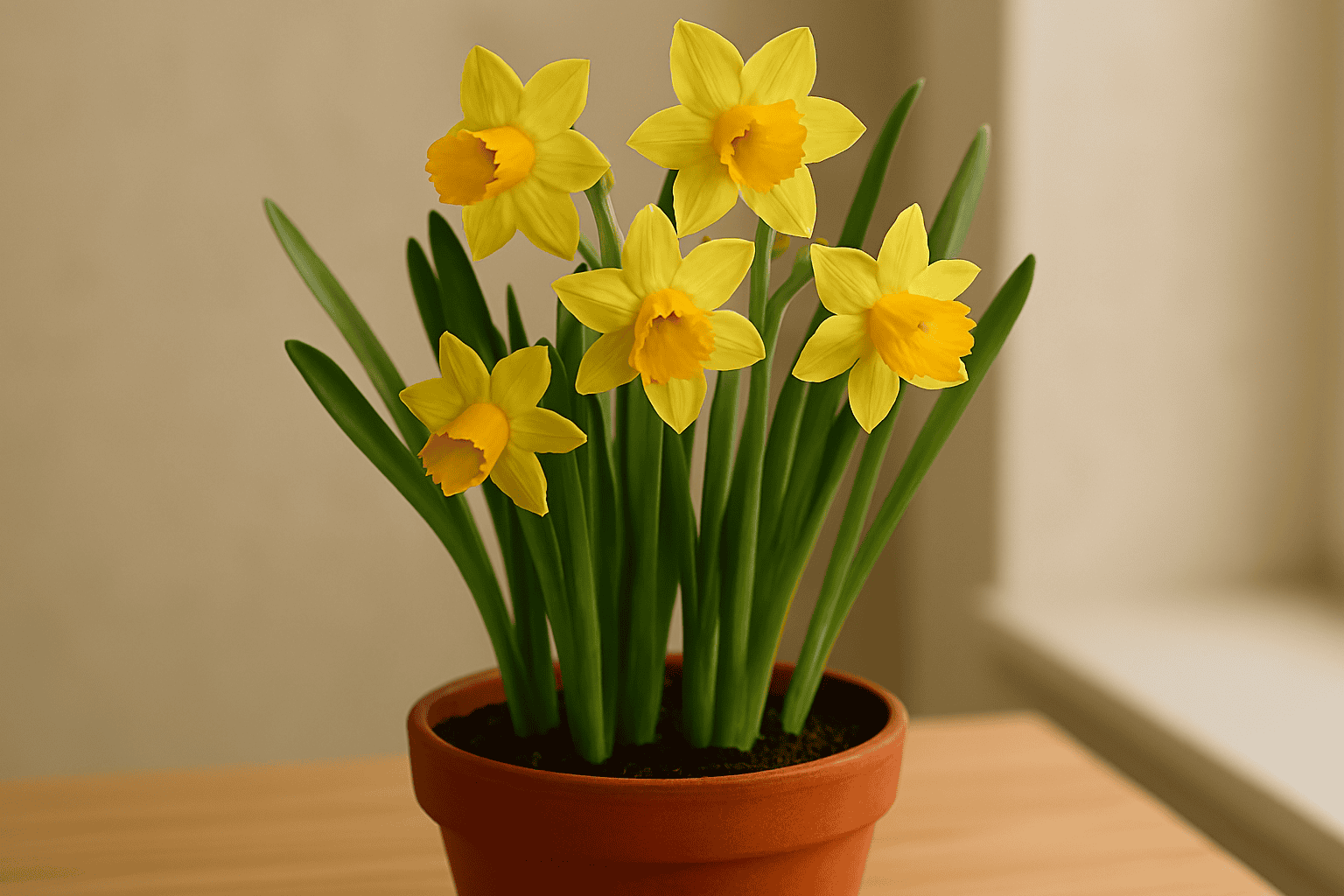
Daffodil plant care is easy-growing spring-flowering perennial bulbs. It has large, small, split or lampshade-like. The daffodil is the national flower of Wales and the symbol of cancer charities in many countries. It is popular for spring-blooming flowers known for their vibrant colours and trumpet-shaped flowers.
However, if you can provide the appropriate growing conditions, your plant may survive up to 3-5 years. I have shared the steps taken to grow this plant care in this article which will guide you.
Scientific Classification
- Kingdom: Planate
- Clade: Tracheophytes
- Clade: Angiosperms
- Clade: Monocots
- Order: Asparagales
- Family: Amaryllidaceae
- Subfamily: Amaryllidoideae
- Tribe: Narcisseae
- Genus: Narcissus

Prefers
- Light – Bright, indirect
- Soil – Well draining
- Soil pH – 6.0-7.0
- Temperature – 50 degree-70 degree Fahrenheit
- Humidity – 40-60%
- Blooming time – Late Winter to Early Spring
- Flower colour – Yellow or White
- Native area – Western Europe and North America
- Toxicity – Human and Pets
Daffodil plant care with some tips
Proper amounts of light, water, soil, temperature and fertiliser should be obtained for the plant to grow. The problems and benefits of the plant have also been shared in this article. This article will help you with all the essentials you need to grow your plant.
If you want to know about the Monstera Peru Plant care.
Light
Daffodils need full sun or at least six hours of direct sunlight daily while they are actively growing. It does best in full sun but will tolerate light shade. The best planted in mid to late autumn and will emerge in early spring and reaching peak bloom about a month before the average last frost date.
Water

These flowers need a lot of water while growing about an inch a week through manual watering or rainfall. It like to be watered regularly in the spring and fall. But stop watering in mid to late spring, about three to four weeks after the flowers fade. In a very dry climate, you may need to water the bulbs regularly in winter after planting as well as in spring.
Soil
This plant prefers well-draining soil with slightly acidic nature.They need good drainage to prevent bulb rot so avoid planting in heavy clay or waterlogged areas. These flowers also grow in containers filled with potting soil.
Temperature & humidity
It thrive in a temperature range of 50 degree Fahrenheit to 70 degree Fahrenheit. They can tolerate cooler temperatures and even brief freezes, they struggle in consistently high temperatures or prolonged exposure to freezing temperatures.
The humidity level is between 40-60%,they don’t require extremely high humidity. They can benefit from increased moisture and especially if the air is dry.
Fertiliser
Feed your plant during their growing season with a balance fertiliser. To make your plants grow faster, apply fertilisers when the plant starts flowering. It generally doesn’t require much fertiliser but can benefit from a high-potassium fertilizer. Avoid using high-nitrogen fertilizers, as they can lead to issues like “daffodil blindness”.
Propagation of Daffodil plant care

The most common method is bulb division where small bulbs are separated from the parent bulb and replanted. The best time to propagate daffodils by bulb division is after the foliage has turned yellow and died in the summer. It can be propagated sexually by seed. Sexual propagation for daffodils is relatively simple, seeds are obtained and then planted in protected areas.
- Choose a healthy, pick large, firm bulbs with a dry paper covering.
- Set the bulbs in a shady location for at least two days to dry then use your hands to separate the bulblets from the parent bulbs carefully.
- Small bulbs will produce foliage for several years as they gain size then begin to flower.
Pruning of Daffodil plant care
Pruning is the essential part of its care that keeps your plant healthy and encourage lush growth. Trimming your plant for new growth to produce more new branches. Prune your plants immediately after the flowering season is complete. Daffodil leaves should not be cut back until after they have turned yellow. Use sharp scissors or pruners to make clean cuts. Allow at least four to six weeks for daffodil foliage to die before cutting it back. Cut off the flower heads just below the papery section behind the flower. Do not cut back the green leaves until they have turned yellow and dried out.
Types of Daffodil plant
- Split Corona : The cups of these fancy daffodils are split into segments and pressed back against the petals. Most split cup daffodils have large flowers and bloom mid to late in the season.
- Jonquilla : Most varieties are wonderfully fragrant. They have narrow, grass-like foliage and are good for naturalizing and for forcing. These long-lasting, heat tolerant daffodils are good for both northern and southern gardens.
- Cyclamineus : Most varieties have reflexed petals (pulled back) and small, narrow cups. They bloom in early spring and are shorter than most other daffodils.
- Poeticus : It have large white petals and a small flat cup that is typically yellow and ringed with green or red. There is usually one flower per stem and all varieties are very fragrant.
- Tazetta : These daffodils are suitable for both northern and southern gardens. The flowers have short cups, an intense, sweet fragrance and are very long-lasting. The stems are stout and strong, and the leaves are broad.
Repotting of Daffodil plant care
Spring and early Summer is the best time to repot your plant. It should be repotted in the fall and after their foliage has turned yellow. To allow them to establish roots before the following spring bloom. Potted daffodils usually bloom for 2-3 years before needing to be replanted in the ground or replaced with new bulbs. With proper timing, you can grow potted daffodils for indoor winter flowering simply by controlling the timing of the chill period.
Common problem of Daffodil plant care

- The most common problem is fungal disease like pest infestations and issue related. This fungal disease causes bulbs to turn brown and decay, leading to stunted growth and yellowing leaves.
- Daffodil is so sensitive that it can’t tolerate waterlogged soil, which can cause the bulbs to rot. Ensure the soil is well-draining and avoid excessive watering.
- It doesn’t require winter protection against the cold. But overwintering can damage the leaves.
Benefits of Daffodil plant care
- Daffodil plant symbolize rebirth, new beginning, hope, joy and good luck. Its symbolism arises from the fact that daffodils emerge each spring to light up barren landscapes with their cheerful yellow, orange, and white flowers.
- It is used as a treatment for Alzheimer’s disease. This plant has been used as traditional medicines for a wide variety of diseases, including tumours for thousands of years.
- Daffodil contains chemical that helps reduce pain. People use daffodil for asthma, joint pain and wound healing but there is no good scientific evidence to support these uses.
Daffodil plant Faq
1. Are daffodils easy to grow?
Ans. They are easy to grow when given good drainage and medium to heavy loamy soil.
2. Daffodils growing in perfect circle?
Ans. There was a round flowerbed before and the bulbs were planted at the border.
3. How long do daffodils last?
Ans. Depending on bloom for about six weeks and cultivar with growing conditions.