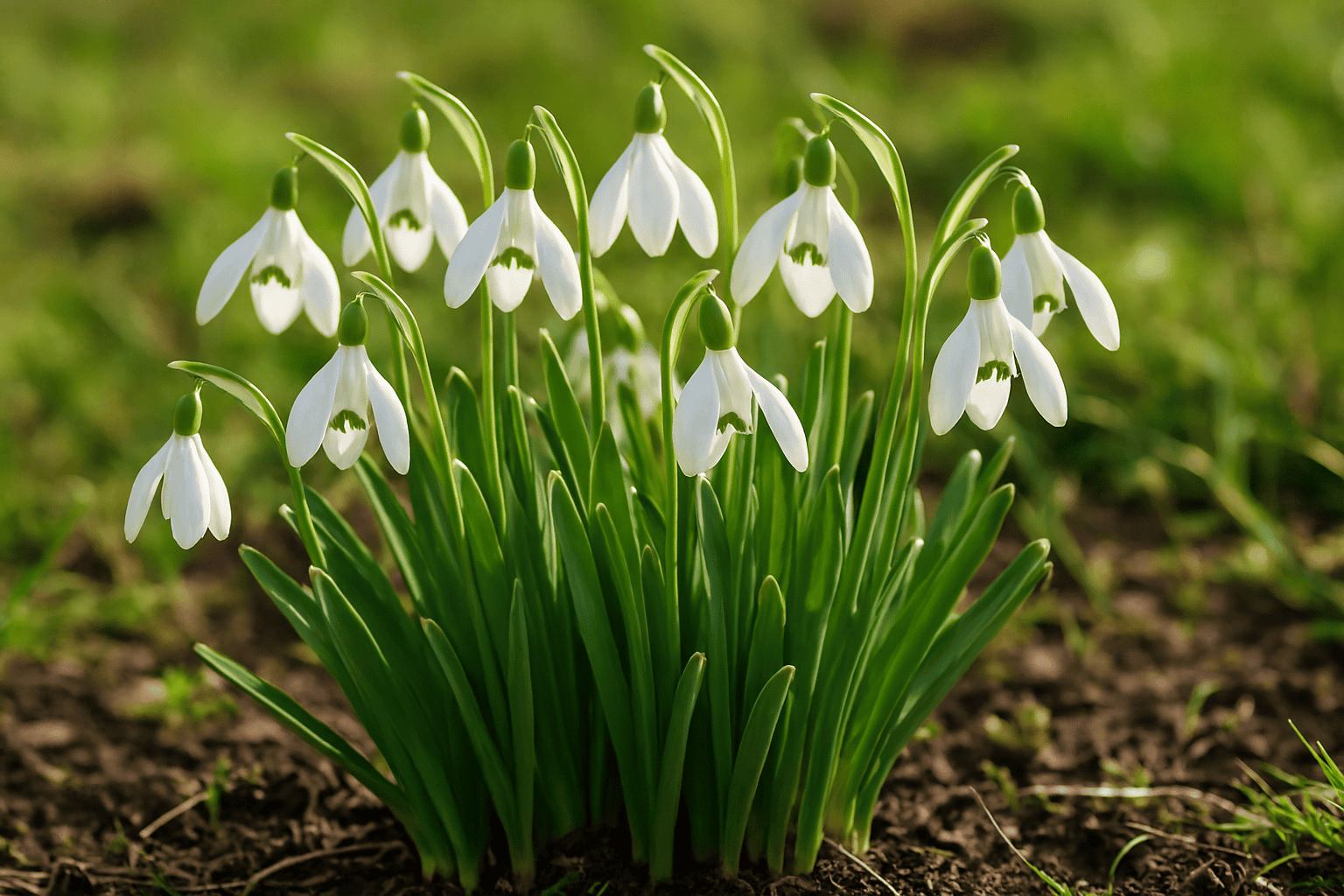
To be care healthy growth Snowdrop plant, it requires bright, indirect light, well-draining soil, regular watering, proper temperature and humidity.
Introduction
Snowdrop plant is a small genus of approximately 20 species of bulbous perennial plant. This colourful bulb plant requires almost no maintenance and also be toxic for humans and pets. It has two linear leaves and a white drooping bell-shaped flower with six petals. This plant is commonly the earliest garden flowers to blossom in the late winter or early spring. It has long and curved and the inner tepals are small and notched. This plant is used to treat headaches and as a painkiller.
However, if you can provide the appropriate growing conditions, your plant may survive up to several years. I have shared the steps taken to grow this plant care in this article which will guide you.
Scientific classification of Snowdrop plant
- Kingdom: Plantae
- Clade: Tracheophytes
- Clade: Angiosperms
- Clade: Monocots
- Order: Asparagales
- Family: Amaryllidaceae
- Subfamily:Amaryllidoideae
- Tribe:Galantheae
- Genus: Galanthus

Prefers
- Light – Partial shade
- Soil – Well draining
- Soil pH – 6-7.5
- Temperature – 34-45 degree Fahrenheit
- Humidity – 50-70%
- Blooming time – January to March
- Flower colour – White
- Native area – Europe and Southwestern Asia
- Toxicity – Human to pets
Snowdrop plant care with some tips
Adequate amounts of water, light, soil, temperature and fertiliser should be obtained for the plant to grow. The problems and benefits of the plant have also been shared in this article. This article will help you with all the essentials you need to grow your plant.
If you want to know Kentia palm plant care.
Light
Snowdrop plant prefers full sun and partial shade locations. This plant will not do well in a fully shaded location.Too much light can scorch the leaves of your plant. Move plants that brighter spot, but do not place them in full sunlight.
Water

During the growing season get water when the soil is dry. It needs consistent moisture especially in late Winter and early Spring. This plant doesn’t require moist soil in cooler climates and in warmer climates, it will more water. Avoid overwatering, it can be harmful for your plant.
Soil
Most of Snowdrop plant needs well draining soil with good drainage. The soil should be humus-rich, moist with some organic matter. These flowers prefer a neutral to alkaline soil pH level. If you can provide prolonged exposure will cause the bulbs to rot. Space bulbs three to four inches apart for best growth. To be careful the site has adequate drainage.
Temperature & humidity
Snowdrop plant grow best in 35 degree to 45 degree Fahrenheit and this cool range is their comfort zone. When the temperature exceeds the leaves of the plant may become lighter in cooler. This plant doesn’t like high heat and humidity. The ideal humidity range is 50-70% and can adapt well to different levels. This range is crucial for optimal growth and vibrant flowering.
Fertiliser
To make your plants grow faster, apply fertilisers when the plant starts flowering. It may cause plants to produce excessive foliage at the expense of blooms. Feed your Snowdrop plant slow release fertiliser once or twice during the growing season. Use a balanced 10-10-10 fertiliser for bulb plants. Too much fertiliser can damage the plant leaves.
Propagation of Snowdrop plant care
Propagation is the process when you want to grow up another plant. The best time to take your plant cutting for propagation is growing season when the plant actively grow healthy. It can be propagate by chipping which produces flowering plants more quickly. Snowdrop bulbs will multiply every year increasing by an extra 1-3 bulbs. Separate the bulbs and replant immediately. Get water consistently with proper care.
Pruning of Snowdrop plant care

Pruning is the essential part of its care that keeps your plant healthy and encourage growth.Trimming your plant for new growth to produce more new branches. Make sure to trim just above a set of leaves and regular pruning will also increase the chances of the plant producing its stunning, fragrant flowers.
The best time for pruning in Spring when the plant is ready to grow again. Signs that your plant could use pruning include yellow leaves or slowed growth. If you want to keep your garden neat and tidy, you can remove spent flowers from the plant.
Repotting of Snowdrop plant
This process can stress the plant so only do it when necessary. The best time to repot your plant in early spring. After the flowers bloom then the energy shifts to root development and making it the ideal time to repot. Repot this plant every 2-3 years and use a larger pot. It should be repotted is in late spring after flowering, when dormancy begins. This plant does best in well drained soil in light shade.
Types of Snowdrop plant
- Giant Snowdrop : Galanthus Elwesii is known as giant snowdrop for its large flowers with green patch. It grow best in full sun to partial shade.
- Galanthus nivalis ‘Flore Pleno’ : This plant is the variety of Snowdrop plant, it is a white, ball shaped flower that blooms in early Spring. It can also be planted in container.
- Spring Snowflake : Leucojum vernum is commonly known as Spring snowflake, it has lantern shaped with each segment being of roughly equal length.
- Summer snowflake : Another variety of Snowdrop plant,Leucojum aestivum is commonly called the summer snowflake. It has small white delicate flower that bloom in early of the year.
Common problem of Snowdrop plant

- The most common problem is overwatering, it can cause yellow leaves and root rot. The root rot produce yellow leaves but no flowers.
- Ingestion of the leaves will cause nausea,vomiting, diarrhea, abdominal pain etc.
- When the temperature change, the evergreen foliage can be damaged by sun scroch and discolour.
Benefits of Snowdrop plant
- This plant is used for medicine purpose like headaches and as a painkiller. Snowdrop plant contain secondary metabolic like flavonoids, alkaloids and biological activities like antibacterial, anti fungal.
- Snowdrop plant produce
first flowers of spring, they often symbolise new beginnings, hope, rebirth and the ability to overcome challenges.
Snowdrop plant Faq
1. How fast snowdrops grow?
Ans. If the plant will have flowers on fully mature plants the following Spring.
2. How many years do snowdrop and bluebell bulbs live for?
Ans. You get new one bulblets every season. If they have what they need, they carry on forever.
3. How many snowdrops should you plant?
Ans. These plants are small so that bulbs should be planted closely together.