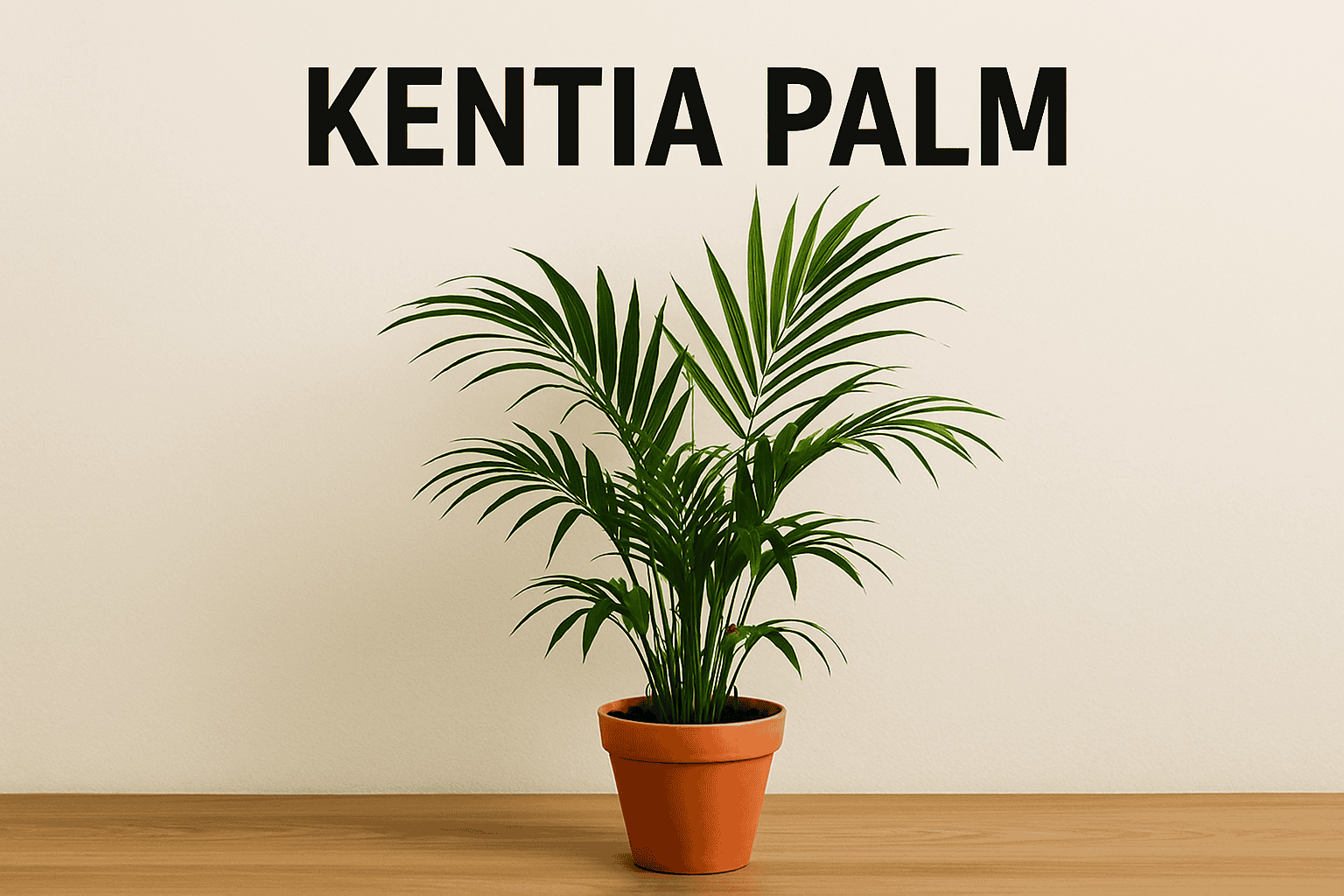
To be care healthy growth Kentia Palm plant, it requires bright, indirect light, well-draining soil, regular watering, proper temperature and humidity.
Introduction
Kentia palm is a species of flowering plant in the Arecaceae family and tall, elegant palms with arching fronds on long stems. It is slow growing with low maintenance palm plant. This plant is use for decorative purpose like office or mall. These palms thriving in container with proper care.
However, if you can provide the appropriate growing conditions, your plant may survive up to 50 years. I have shared the steps taken to grow this plant care in this article which will guide you.
Scientific classification
- Kingdom: Plantae
- Clade: Tracheophyte
- Clade: Angiosperms
- Clade: Monocots
- Clade: Commelinids
- Order: Arecales
- Family: Arecaceae
- Subfamily: Arecoideae
- Tribe: Areceae
- Subtribe: Linospadicinae
- Genus: Howea

Prefers
- Light – Bright, indirect light
- Soil – Well draining
- Soil pH – 6.0-7.0
- Temperature – 65°F and 85°F
- Humidity – 40-60%
- Blooming time – Spring
- Flower colour – Green cream
- Native area – Australia
- Toxicity – Non-toxic
Kentia palm care with some tips
Proper amounts of water, light, soil, temperature and fertiliser should be obtained for the plant to grow. The problems and benefits of the plant have also been shared in this article. This article will help you with all the essentials you need to grow your plant.
If you want to know Spiderwort plant care.
Light
Kentia palm prefers bright, indirect light and best to keep your plant away from the window. Prolonged exposure to bright direct sunlight may burn and scorch their leaves. If you notice difference in the amount of blooms so choice the sunnier spot and move your plant. This plant is growing them outdoors choose a part to dappled morning light to full shade spot.
Water

This plant likes slightly moist soil and can’t adopt overwatering. Get watered once the top 2-3 cm of potting mix is dry. This plant needs watering once 7-10 days during the growing season and once every 2-3 weeks during the winter season. Kentia palm don’t tolerate overwatering, it can causes yellow leaves.
Soil
Kentia palm prefers well draining loamy soil and it can also tolerate clay soil with organic matters. They tolerate neutral and slightly acedic pH grow very well but Kentia palms are slow growers. The potting mix like a combination of peat moss, leaf mold, and shredded bark. You can mix in perlite, coco coir, or vermiculite to improve drainage.
Temperature & humidity
The plants need temperature between 65-85 degree Fahrenheit, it can tolerate up to 100 degree Fahrenheit and down to about 25 degree Fahrenheit. This plant is so sensitive, to be care any cold temperature that fall below 45 degree.
The ideal humidity level is 40-60% and also prefers moderate humidity levels are sufficient for these palms. This plant is struggle in both high and dry conditions. If you can increase the humidity level then use the humidifier.
Fertiliser
To make your plants grow faster, apply nutrient-rich fertilisers when the plant starts flowering. It may cause plants to produce excessive foliage at the expense of blooms. Use a liquid or slow release fertiliser with a balance NPK ratio of around 3-1-2. High-nitrogen fertiliser can harmful for your plant.
Propagation of Kentia palm care
Propagation is the process when you want to grow up another plant. The best time to take your plant cutting for propagation is growing season when the plant actively grow healthy. The best way to propagate your palm by seeds. First of all, remove the rootball from the pot. Replant it in a suitable growing site and use rooting hormone to grow your plant healthy.
Pruning of Kentia palm care

Pruning is the essential part of its care that keeps your plant healthy and encourage lush growth. Kentia palm doesn’t require pruning but it can help maintain its appearance. To cut the brown or damage leaves at the base of the stem. If the palm becomes too wide, remove the lower leaves.
Trimming your plant for new growth to produce more new branches. Make sure to trim just above a set of leaves and regular pruning will also increase the chances of the plant producing its stunning, fragrant flowers.
Repotting of Kentia palm
This process can stress the plant so only do it when necessary. The best time to repot your plant in early spring. After the flowers bloom then the energy shifts to root development and making it the ideal time to repot. Repot this plant every 2-3 years and use a larger pot. This plant is slow grower and can tolerate being in the same pot for several years so repot is important when necessary. Use well draining sandy soil with proper care. Avoid damage roots to repot it.
Common problem of Kentia palm
- The most common problem is the leaves turning yellow or become brown and crispy. Yellow leaves are signs of overwatering.
- Common diseases associated with Kentia palm are root rot, leaf spot disease and powdery mildew.
- Root rot occurs when your indoor plant in water logged soil for too long.
Benefits of Kentia palm

- The most important benefit is
non-toxic and safe around small children and animals. It make a great choice for indoor plant. - Kentia palm can purify the air and breathe easier at home with better quality air, to remove the toxins from their environment.
- In fengshui, this plant symbolize peaceful environment, advancement and expansion. Kentia palm is drought tolerant palm and extremely slow growing.
Kentia palm plant Faq
1.Where should I place a Kentia Palm in my home?
Ans. The best place for a Kentia palm is by a window that gets bright, indirect light.
2. Why my leaves turning brown?
Ans. It was overwatering when it first happened but it is continued even when kept soil quite dry.
3. What is the difference between Kentia palm and Areca Palm?
Ans. Kentia and Areca plam are both popular indoor plant. Kentia palm has single trunk and the mature stem like green to brown and areca palm has multiple stems which are green with reddish spots.