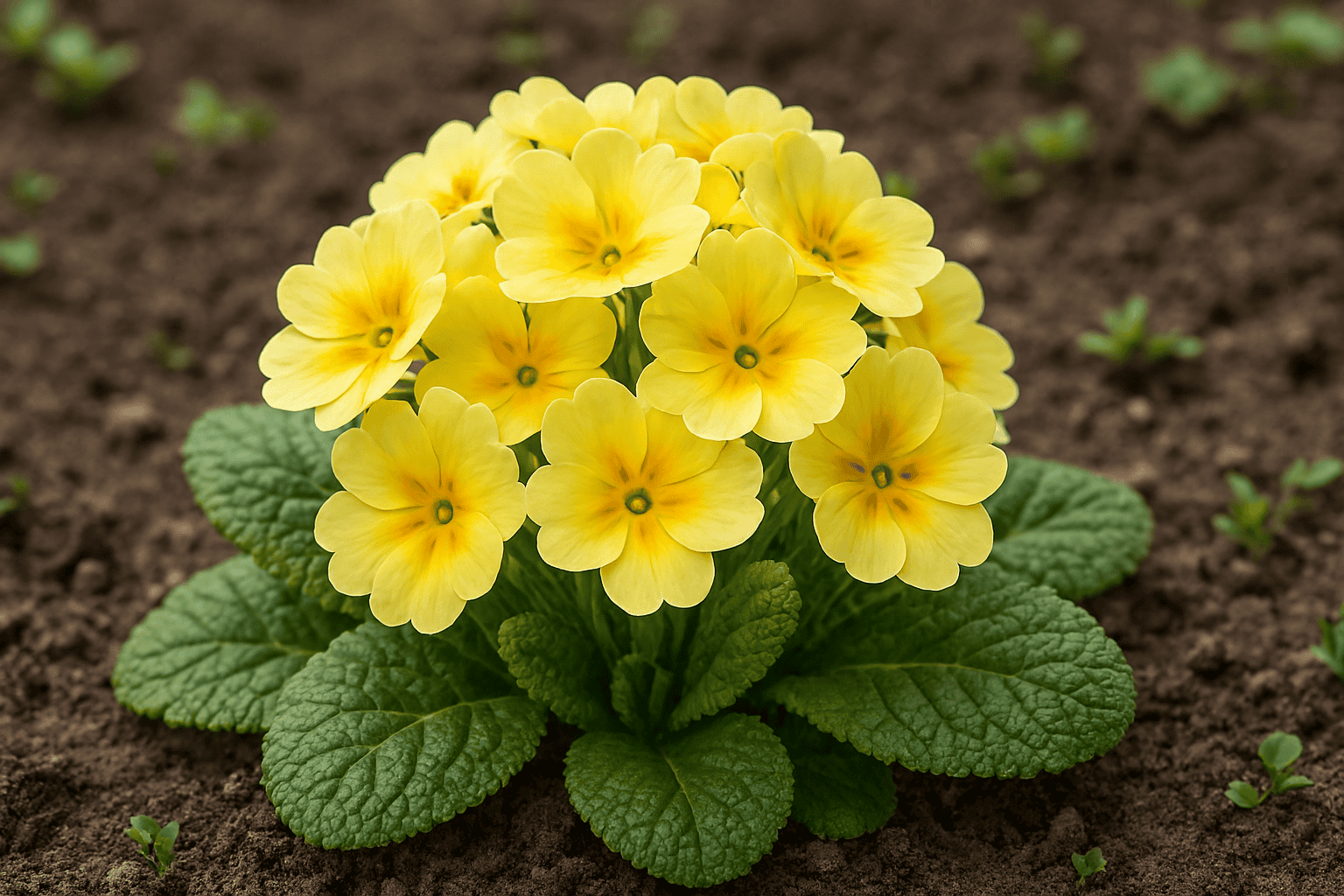
To ensure healthy growth Primrose plant , it requires bright, indirect light, well-draining soil, and regular watering. Primrose Plant care can lead to five year longevity and vibrant blooms.
Introduction
Want to bring home something that can make your home colourful, then you can add this plant to your garden. Primrose plant is also known as Primula, it is genus of herbaceous perennials in family Primulaceae. This plant has low rosettes of dark green leaves with colourful flowers.
Scientific classification
- Kingdom: Plantae
- Clade: Tracheophytes
- Clade: Angiosperms
- Clade: Eudicots
- Clade:Asterids
- Order: Ericales
- Family: Primulaceae
- Genus: Primula
- Species: P. vulgaris

Prefers
- Light – Bright, indirect light
- Soil – Well draining
- Soil pH – 5.5-6.5
- Temperature – 50–65°F
- Humidity – 40-50%
- Blooming time – February to May
- Flower colour – Deep red
- Native area – North America
- Toxicity – Human and pets
Primrose plant care with some tips
Adequate amounts of water, light, soil, temperature and fertiliser should be obtained for the plant to grow. The problems and benefits of the plant have also been shared in this article. This article will help you with all the essentials you need to grow your plant.
If you know about the types of Euphorbia plant.
Light
Primrose plant prefers bright, indirect light and also climates with cool summer. Some varieties of Primrose plant can tolerate full sun and some shade during the hottest part of the day. Too much can cause by sunburn and also the leaves are turning yellow. If you notice that your plant leaves get yellow then move the plant in shade area.
Water

This plant is water-loving plant and gets water when the soil begins to dry out. But don’t leave them waterlogged or the roots may rot. The best times to water are early morning or late evening.To be careful, reduce watering to only when the plant shows signs of wilt. This plant doesn’t need excessive watering. Overwatering can cause root rot, so be sure to check the soil before watering.
Soil
Primrose plant prefer well draining potting mix with slightly acidic nature. The ideal compost is peat moss, perlite, compost. This plant grow best in sandy or loamy soil with good drainage. Avoid heavy soil which retain moisture and can cause root rot. Most of the Primrose plant do best in moisture retentive soil.
Temperature & humidity
The ideal temperature is 60-65 degree Fahrenheit and night temperature around 50 degree Fahrenheit. Avoid sudden temperature changes to prevent shock.
Primrose plant prefers high humidity between 40-50%. This plant likes high humidity so you can provide humidifier or by setting the pot in a saucer filled with pebbles and water. To be care hybrid primrose need regular watering but cannot tolerate high humidity.
Fertiliser
During the growing season feed your plant water soluble fertiliser every two or three weeks. As a result, your plant’s growth will be better and a healthy plant will grow. After double primroses have flowered, fertilize them with liquid fertilizer to ensure healthy leaf growth. This plant prefers a balanced fertiliser with an NPK ratio of 10-10-10.
Propagation of Primrose plant care


Primrose plant can be propagation by division and plant these sections back in ground where you want them to grow and water throughly. It is easy to divide after flowering plant. Use a sterilised scissors to cut the multiple divisions part of the plant with proper care. Replant each in a new location and keep it well watered until you see new growth in a few weeks.
Pruning of Primrose plant care
Pruning is the essential part of its care that keeps your plant healthy and encourage lush growth. Trimming your plant for new growth to produce more new branches. Make sure to trim just above a set of leaves and regular pruning will also increase the chances of the plant producing its stunning, fragrant flowers.
If you want to remove the spent flowers by clipping them off at the base of the stem. Prune your plant once or twice a year after flowering periods. To remove dead or diseased foliage and to maintain their shape. Foliage can be pruned freely through the season to remove damaged or discolored leaves, or to maintain plant size.
Types of Primrose plant
- Primula marginata : It is a species of flowering plant in the family of Primulaceae, native to South eastern. This plant has silvery leaves with dramatic tooth edges.
- Primula vialii : Another variety of Primrose plant is Primula vialii, it is very striking plant with poker shaped, red tipped lilac pink flowers in early and midsummer.
- Double primrose : This plant is a short lived, semi- evergreen perennial plant. It has bright green leaves, topped with sturdy stems and fragrant double flowers.
- Primula sieboldii : Another variety of Primrose plant is primula sieboldii, it native to East Asia. This plant is used for small scale ground cover through.
- Primula veris : This plant is also known as cowslip, it is a perennial flowering plant in the primrose family. It’s used for expectorant and anti-inflammatory properties.
Repotting of Primrose plant
The best time to repot your plant in early spring. After the flowers bloom then the energy shifts to root development and making it the ideal time to repot. Using a standard potting mix when growing primrose in pots and have good drainage.
Repot them every two years as the plant becomes root bound. Keep your plant with proper care and wait a week before watering after repotting because a risk of root rot. Carefully remove the excess amount of soil from the root before placing this plant in a new container.
Common problem of Primrose plant
- Primrose plant affected by pests and disease. Spider mites can cause leaves to turn yellow. Leaf spot disease causes brown on yellow leaves.
- Another common problem is overwatering, it can cause root rot and saturated soil. To be care improve drainage and reduce watering frequency.
- The primrose plant’s leaves
are touched, an immediate irritation can occur, forming blisters. This plant is toxic to cats, dogs.
Benefits of Primrose plant

- Primrose plant used its stem and leaf juice for skin inflammation. The leaves are used for gastrointestinal complaints.
- This plant is generally easy to care for if you provide them with the right conditions.
- It has colourful flowers so you can decorate your home by this primrose plant.