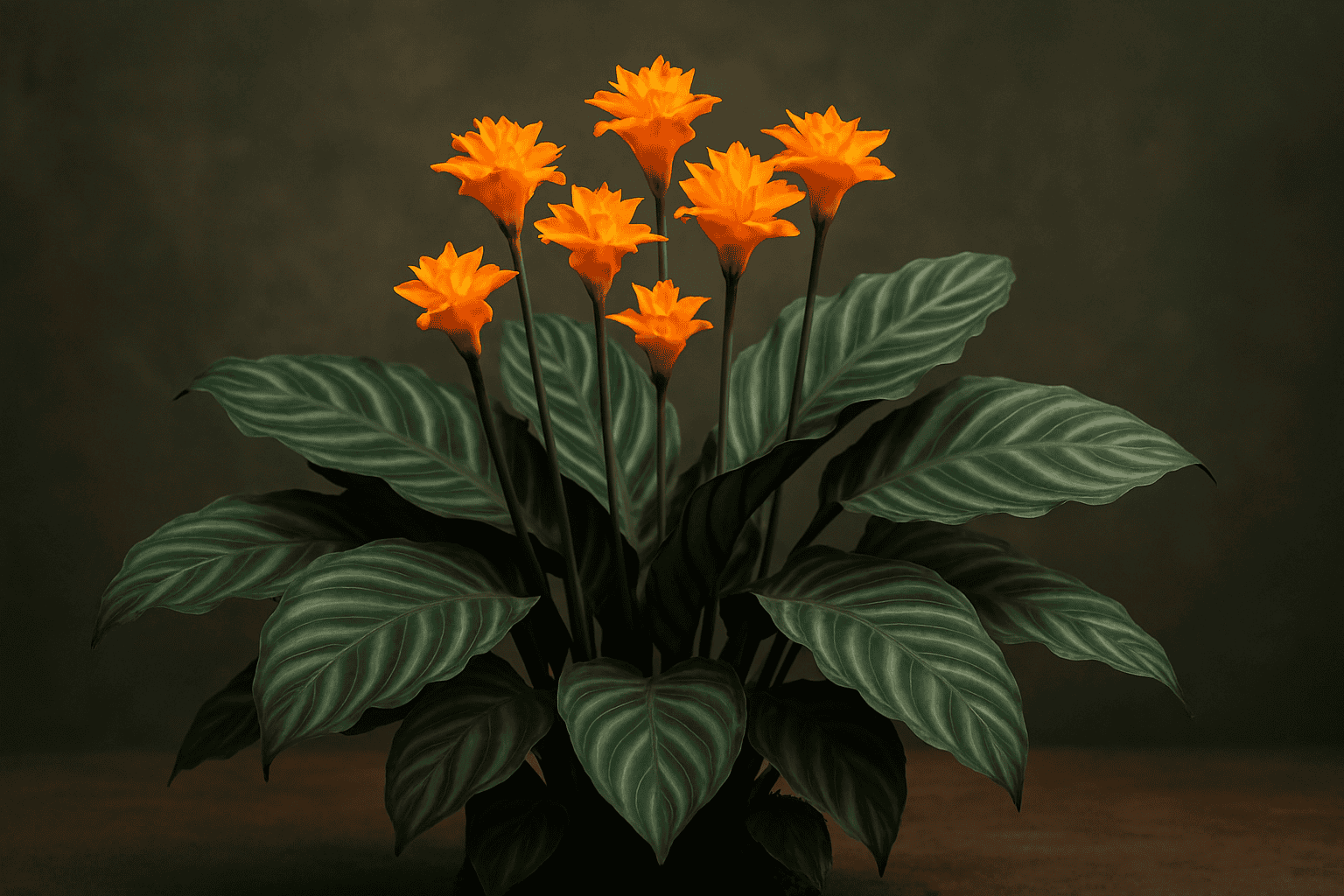
The Calathea crocata is saffron colour of flowering plant in the family Marantaceae. The gorgeous, bright saffron coloured flower clusters emerge above the foliage like torches. The foliage is also beautiful with shiny green leaves that have purple accents. While growing the plant, I realized that it is very sensitive and if not taken care of, it will face various problems.
However, if you can provide the appropriate growing conditions, your plant may survive long years. I have shared the steps taken to grow this plant in this article which will guide you.
Scientific classification of Calathea Crocata Plant Care
- Kingdom: Plantae
- Clade: Tracheophytes
- Clade: Angiosperms
- Clade: Monocots
- Clade: Commelinids
- Order: Zingiberales
- Family: Marantaceae
- Genus: Calathea

Prefers of Calathea Crocata Plant Care
- Light – Bright, indirect light
- Soil – Potting mix
- Soil pH – 6.5
- Temperature – 65°F-85°F
- Humidity – 60-80%
- Bloom time – 2 or 3 months a year
- Flower colour – Orange
- Native area – Eastern Brazil
- Toxicity – Human and pets
Calathea crocata plant care with some tips
This article will help you with all the essentials you need to grow your plant. Adequate amounts of water, light, and soil should be obtained for the plant to grow. The problems and benefits of the plant have also been shared in this article.
If you want to know another Calathea ornata plant care.
Light
This plant prefer medium to indirect bright light for its growth. Place your plant north, east or west facing window its a good option of this plant. Bright direct light can slowly discolour your plant leaves and burn them when exposed to direct sunlight.
Water

Get water when the soil is too dry but too much water it can cause the roots to rot. It prefers water 1-2 times in a week correspondingly it should also notice whether the soil is dry or not. During winter, the plants are not actively growing to reduce watering frequency. This plant is sensitive so it’s recommended to use filtered or purified water.
Soil
Soil is extremely important for plant growth. Mainly I have shared the common soil mix that will make the plant better if mixed with soil. Look for ingredients like compost coco coir, worm castings, and perlite. These compost are provide nutrients and help maintain moisture. If your soil dry out too much then you see browning, yellowing or curling leaves.
Temperature & humidity
Calathaea crocata is a tropical plant, the ideal temperature between 65-80 degree Fahrenheit. To keep your plant in these ideal conditions and avoid placing the plant in the cold area. If the temperature changes suddenly, the plant leaves turn yellow.
The humidity level is 50-80%. You will need to more attention to ensure the plant is in a humid environment with moist soil. If leaves turn brown or yellow, they may be too dry and need more humidity.
Fertiliser
The one thing that you apply to your plants outside is fertilizer. There are essential things you need to make such as how much temperature you need, if it is too much, you need to shift the pot to another place, how much soil mix you need. During the growing season feed your plant balanced fertiliser for the active growth. Stop fertilising during the winter because the plant goes dormant.
Propagation of Calathea crocata plant

If you want to make new baby plant from mother plant then propagation method is best. Another way of propagation is division method is work well. Generally, the plant should be removed from its container and, as important as possible, divided into areas with its own root system. Split the bulbous roots in such a way that the new plant has one or two leaves.
Use a sharp, sterilised knife to cut the root balls when the soil is loosing around the plant. Gently pull away as many as you would like to propagate new plants. Keep the propagate plant in warm temperatures and get soil evenly moist but not soggy.
Pruning of Calathaea crocata plant
Pruning is the essential part of its care that keeps your plant healthy and encourage lush growth. Trimming your plant for new growth to produce more new branches. Make sure to trim just above a set of leaves and regular pruning will also increase the chances of the plant producing its stunning, fragrant flowers.
This plant doesn’t require pruning and you should cut the flowers at the end of the growing season. It is best to trim off the foliage as it dies naturally. You can also remove any damaged leaves. To be careful, cleaning the pruning tool is weeping them off with using alcohol.
Types of Calathaea crocata plant
- Calathea crocata ‘Bicajoux’ : This plant produces pink flowers.
- Calathea crocata ‘Ventura’ : It produce lighter yellow flowers.
- Calathea crocata ‘Tassmania’ : This plant is a very popular variety with its lush foliage and flame like blooms.
Repotting of Calathaea crocata plant
Calathea crocata should be repotted once every year or two.Repot your saffron-coloured calathea every other year in the spring. This plant doesn’t require frequent repotting and plant growing out of a container requires repotting.Care should be taken when repotting that the soil of the plant is completely dry.
Keep your plant with proper care and wait a week before watering after repotting because a risk of root rot. Carefully remove the excess amount of soil from the root before placing this plant in a new container.
Common problem of Calathaea crocata plant

- The most common problem is under watering and overwatering. Under watering can cause crisp, browning leaves and over watering can cause the leaves turning yellow.
- Calatheas suffer in soggy compost as it causes the roots to rot. Allow the compost to dry out before watering again, and always let excess water drain away.
- Brown leaf tips are a common sign of a low humidity in a Calathea plant. Calatheas plant colors and patterns are certainly top of the list. So it is understandably distressing when those colors begin to fade
Benefits of Calathaea crocata plant
- This plant has attractive wide, green, colorful leaves. These wide leaves make them popular for areas of low light.
- It brings stability to life and provide a strong foundation for development and success. They also have a positive, calming effect, making them excellent lucky plants for indoor spaces.