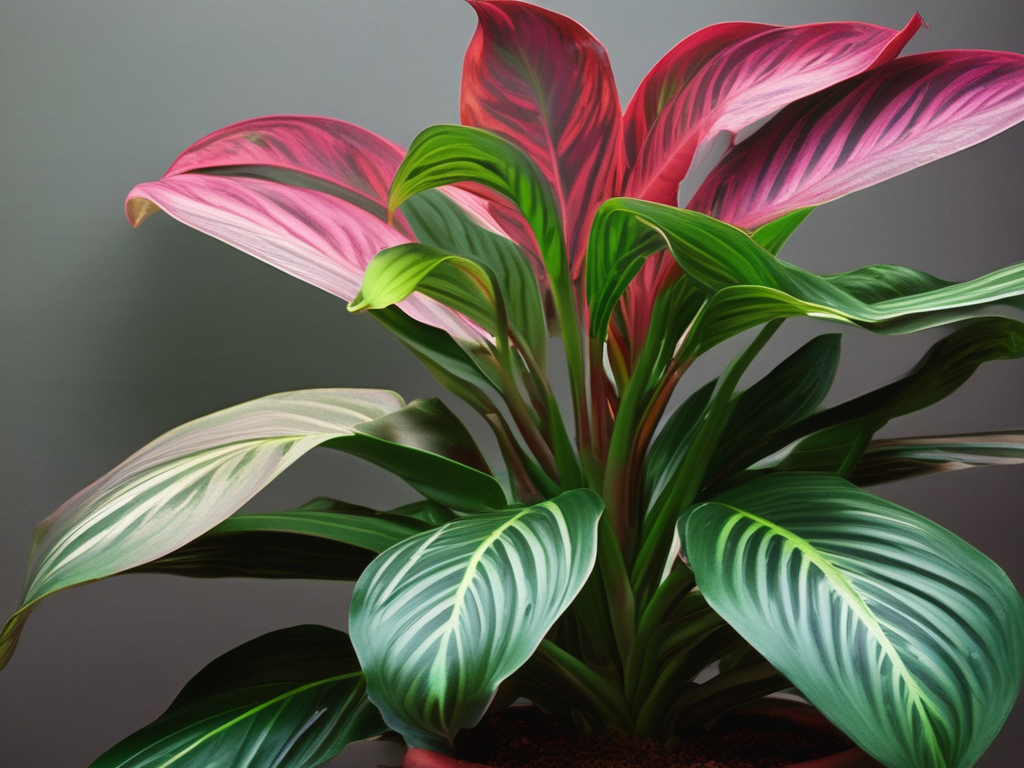
Aglaonema prefer low to bright indirect light, peat-based soil, and thrive in temperatures of 68 to 77 °F with 60-70% humidity. They are toxic to humans and pets, and their care includes proper watering, soil, temperature control, and occasional pruning.

Aglaonema is a genus of flowering plants, they are native to tropical and subtropical regions of Asia and New Guinea.
They are known commonly as Chinese evergreens. Its large, glossy, lance shaped to oval leaves and different colours combination such as silver, green , red, white and pink.
In Chinese of fungshui, to bring luck and prosperity. This plant is slow-growing and makes popular with colourful foliage.
Scientific Classification of Chinese Evergreen
- Kingdom: Plantae
- Clade: Tracheophytes
- Clade: Angiosperms
- Clade: Monocots
- Order: Alismatales
- Family: Araceae
- Subfamily: Aroideae
- Tribe: Aglaonemateae
- Genus: Aglaonema


Chinese Evergreen Prefers
- Light – low to bright indirect
- Soil – peat based potting soil
- Soil pH – 5.5 and 6.5
- Temperature – 68 to 77 °F
- Humidity – 60 to 70%
- Bloom time – Spring and Summer
- Flower colour – White
- Native area – Philippines, Northeastern Celebes
- Toxicity – Human and pets
Chinese Evergreen Care
Here I have shared some essential tips that will help your plant grow.
Light
Chinese evergreen are low light tolerant and prefers bright, indirect light. Direct sunlight can burn the leaves, while too little light can cause the plant to become leggy and lose its vibrant colors.Varieties with darker green leaves can tolerate dimmer conditions, while those with light or colorful variegation require brighter light to retain their colors and patterns.
Water


Chinese Evergreen is sensitive to dry soil and should be watered frequently. The top layer should be dry before giving more water. If the soil is still wet you giving the plant too much water and it can rot. If the soil is wet – snooze this action, we will remind you again in 2 days.Water the plant thoroughly from the top and let the pot drain until no more water is dripping through the holes at the bottom, before returning it to its outer container or saucer.
Soil
This plant prefers peat-based potting soil and soil with perlite. It’s a hardy plant, most indoor potting soil mixes will do just fine. Any material will do for a pot, though it’s common to use decorative ceramic or clay. Repot them every two or three years in spring. A mix of 2 parts organic potting compost, 1 part perlite or lava rock, and 1 part peat moss or coco coir should do the trick.Loamy soil is best for plant growth as it has high water retention capacity.
Temperature & humidity
Chinese evergreen is usually grown as an indoor plant but in zones 10 and 11 where winter temperatures don’t drop below 40 degrees Fahrenhite. They prefer warm temperatures in the 68 to 77 °F range, they can handle temperatures as low as 55 °F. Most kinds plant will grow well in the low to moderate humidity of an average house.
Avoid areas close to vents, windows and doors where temperature may fluctuate. If you provide the right care in the right environment, or as long as 10 or more years.
It prefers moist air with a humidity level of 60 to 70%. Most kinds will grow well in the low to moderate humidity of an average house. Chinese evergreen should be grown in a standard soil mix with extra humus. Enough moisture in the air for your plant to thrive without turning your living space into a steam room. Increase humidity by using a room humidifier, misting plants frequently or setting pots on a shallow tray filled with pebbles and water.
Fertilizer
Fertilize your Chinese evergreen in spring and once more in summer. It is not recommended for human or animal consumption. The Fertilizer contains macronutrients nitrogen (N), phosphorus (P), and potassium (K) is often recommended.10-8-15 means the fertilizer has 10 percent nitrogen, 8 percent phosphorous, and 15 percent potassium. NPK 20 20 20 is a highly concentrated, balanced plant fertiliser. It is ideal for growing plants in poor quality soils as it provides a high amount of each of the three essential plant macronutrients.
How to get propagate your plant


It can be easily propagated from stem cuttings. The growing medium and insert the cutting up to the base of the remaining leaf. Using scissors or a sharp knife, take a 6-inch cutting that has several stem nodes.Place them in a jar with water in a place with indirect sunlight. Another way to propagation is Leaf cuttings. Leaf cuttings of most plants will not generate a new plant,they usually produce only a few roots or just decay.
Pruning
Pruning is important to keep the plant healthy.You can make the plant bushy again by pruning it. Wearing gloves, trim the plant by cutting the stem just above a leaf node.Pruning and disbudding enhance flowering potential and plant health.Collect your cuttings, then place them in cups of water on a window sill where they can get indirect sunlight.Once roots begin growing, you can remove the stems and place them into pots of soil.
Proper pruning encourages new growth, increases airflow, and keeps your plant looking sharp.You can increase humidity by incorporating a humidifer if the air in the home is consistenly dry. Avoid placing the plant near heaters or air conditioning vents as it can dry out the leaves and cause leaf drop.
Common problem


- Chinese Evergreens are highly toxic to pets and humans. Ingestion will cause mouth and stomach irritation and possible vomiting.
- Brown leaves can result from low air humidity, cold drafts or underwatering. Raise room humidity, move plants away from drafty areas, and make sure plants.
- Chinese evergreen houseplants can be affected by spider mites, scale, mealybugs, and aphids. Routinely checking the leaves for signs of pests will help limit problems later. While Aglaonema care is simple, root rot can be an issue.
Benefits
1. Chinese Evergreen considered one of the best foliage plants for cleansing room air of toxins such as benzene and formaldehyde so this plant is best air purifier.
2. It also helps increase oxygen levels in your space, keeping the air fresh and helping promote a healthier night’s sleep. To celebrated as indoor plants that bring good luck into your home.
3. This plant is a rare evergreen tropical plant with creamish-white & dark green foliage. The Plant’s perennial beauty symbolizes wealth and new beginnings