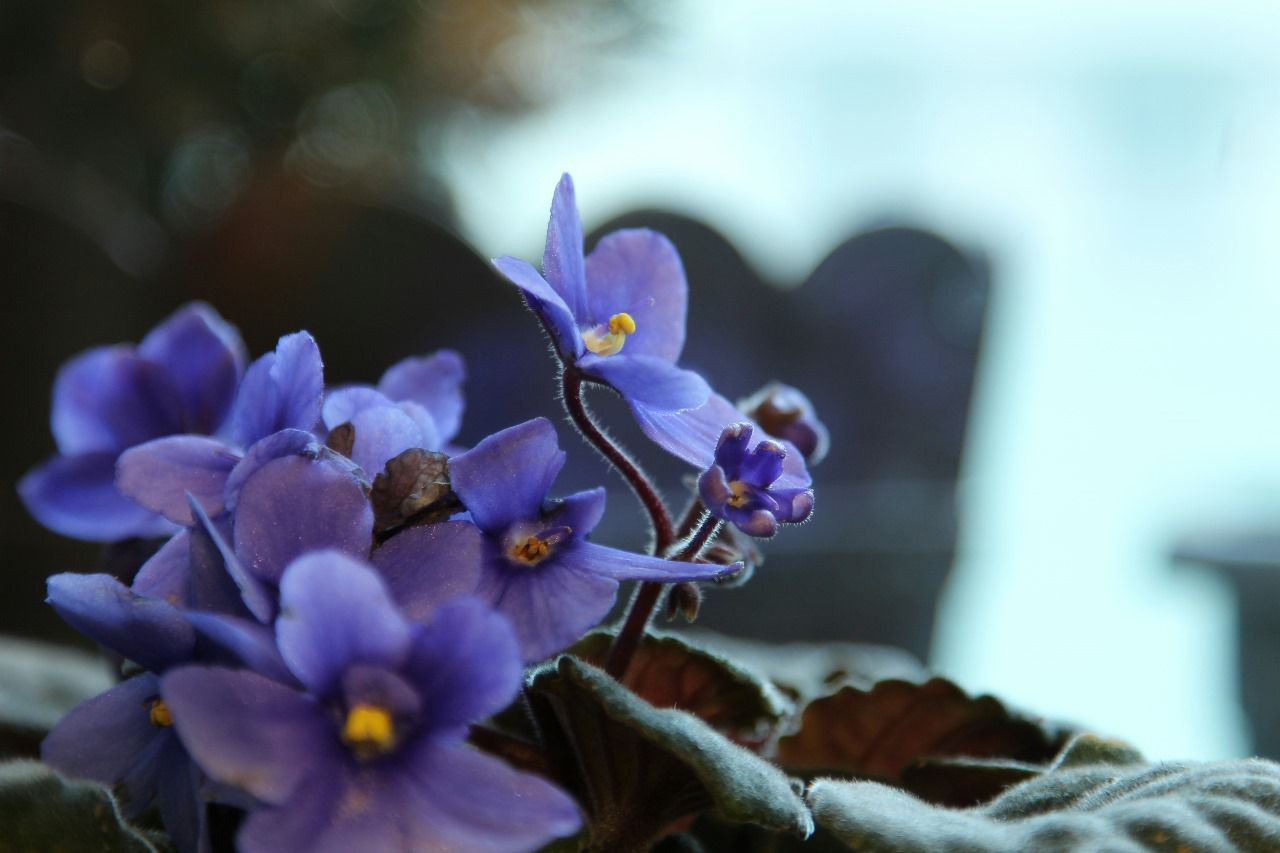
African violets are stunning indoor plants that require bright light, well-drained soil, and a temperature of 65-80°F.
African Violets are one of the most gorgeous indoor plants. This is a compact flower with low growing plants and bloom in several time of the year. I will share my own experience in this article that’s help you to grow your African violet plant.

They thrive in slightly acidic soil and need high humidity. Propagation can be done by leaf cuttings or division, and selective pruning helps shape their growth.
Common issues include fungal problems and watering imbalances. They symbolize affection and bring various health benefits.
Scientific classification of African Violet
- Kingdom: Plantae
- Clade: Tracheophytes
- Clade: Angiosperms
- Clade: Eudicots
- Clade: Asterids
- Order: Lamiales
- Family: Gesneriaceae
- Genus: Streptocarpus
- Subgenus: S. subg.Streptocarpella
- Section: S. sect. Saintpaulia


African Violet Prefers
- Light – Bright light
- Soil – Well draining
- Soil pH – 5.8 -6.2
- Temperature – 65°F- 80°F
- Humidity – 80%
- Blooming time – Any time
- Native area – Eastern Africa
- Toxicity – Human and pets
African Violet Care
Here, I will explain you about measure all the necessary things, your plant will grow very quickly.
Light
African violets need indirect sunlight, direct can burn the leaves. Choose a north- or east- facing window for best results.An African violet requires light intensity of 10,760 to 16,140 lux. During warmer seasons, windows with east or north exposures are best. Insufficient light is probably the most common reason for failure of African violets to flower.Keep plants away from cold glass and rotate the pot once a week so all leaves receive light.
Water


African Violets need just enough water to keep the soil moist, but never soggy. Too much water will leave your African Violets susceptible to such deadly pathogens as Pythium, Root Rot and Crown Rot.Water on the foliage may cause permanent leaf spotting. Use water that is room temperature. African violets are susceptible to crown rot, so it is important that the crown of the plant is not saturated with water. Generally, watering the plant from above is not recommended.
Soil
African violets grow best in well-drained, slightly acidic soil. Miracle-Gro Indoor Potting Mix is specially formulated to provide indoor plants like African violets with just the right growing environment. Balance moisture, nutrients, and acidity. Choose commercial or DIY mix with peat moss, perlite, vermiculite for optimal growth. Ideally two-thirds John Innes No 2 compost and one-third fibrous peat substitute, such as coir. Alternatively, use a general houseplant compost or a specialist compost for African violets.
Temperature & humidity
It prefer a temperature of about 70 degrees F. Though many Violets will tolerate temperatures between 60 and 80 degrees or higher, they will perform best when day and night temperatures vary no more than five degrees either way. If the temperature gets too cold, African Violets will suffer.A plant stand three feet away from a west- or south-facing window is an ideal location. Plants will still grow when situated right beside north- or east-facing windows, but leaves will be thin and spindly, and plants less likely to bloom.
These plants love humid air, so they like being in humid rooms such as kitchens or bathrooms.Another way to provide the required humidity is to place a humidity tray underneath your African violets.It is important to avoid temperature and humidity fluctuations, including sudden drafts. To provide an adequately humid environment, you may want to use a humidifier or place pots in a tray filled with gravel and water.
Fertilizer


Feed year round with a half-strength dilution of African violet fertilizer, and keep humidity high by grouping the plants on pebble trays, and misting often.Nourish your African Violet to bloom perfection by dodging common fertilizing faux pas. Phosphorus and potassium are key for African Violet blooms. Use high-phosphorus fertilizers like 8-14-9 for vibrant flowers. Fertilize every 4-6 weeks, more often when buds form.
African Violet Propagation
If you need to single leave to grow a new plant then propagation process is the best way. You can take cuttings any time of the year, the best time is during the Spring and Summer. The appropriate temperature and better lighting during these month is ideal time for growth of cuttings. Leaf cuttings are a relatively quick and easy way to propagate African violets, but if you have an older plant that has started to make pups or offshoots from the main plant, you can divide and repot the pups into their own containers.
You can use any kind of soil to propagate your African violet. Just be sure to use sterile soil. If you’re propagating via a plantlet or leaf cuttings, though, you can use water as well. Only one of the easiest plants to grow, it also is one of the easiest to multiply, and in so many ways. Consider multiplying any African violet that has called the same pot home for a long time.


African Violet Pruning
Pruning isn’t just about snipping away, it’s an art form that shapes the destiny of your African Violet. To keep your plant from going all wild child on you, selective pruning is your ticket to a bushier, more compact growth habit.Trimming excess leaves back helps direct the energy where you want it to go. Pruning spent flowers also makes space for new blooms to emerge.
They can be a little needy, as they have specific watering and light requirements. Because of this, African violets can sometimes get “leggy.” Leggy is when new growth forms on a plant tip. When the plant has more than 5 rows of leaves, the number and size of blossoms will decline until the plant fails to bloom.
Common problem of African Violet
- One of the most serious fungal problems of African violet is usually first noticed when the crown and roots of the plant turn soft and mushy.
- Wilting or drooping leaves often suggest a watering problem. It’s a delicate balance, too much love in the form of water can drown the roots, while too little can leave your violet parched.
- If the leaves of your African Violet are smaller than you are used to and the leaves of your African Violet are turning a yellowish color along their edges, there is a good chance your African Violet is not getting its required amount of nitrogen.
African Violet Benefits
- African violet encouraging the elimination of wastes from the body by improving liver, kidney, digestive, and lymphatic function.
- The type of person who appreciates waking up to fresh flowers in their bedroom, go for the African Violets. It features delicately beautiful flowers in a vibrant shade of purple.
- These charming flowering plants symbolize affection, devotion, and good luck, making them a thoughtful gift or addition to your home.