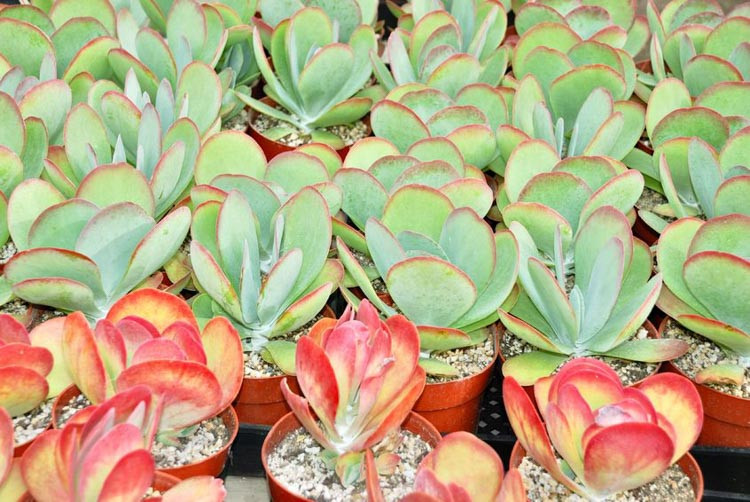
Kalanchoe thyrsiflora, better known as the paddle plant, is named for its flat, paddle-like leaves. They also go by flapjack, red pancake, or desert cabbage. Like most succulents, these drought-resistant plants are easy to care.The basal rosette of the plant generally grows 12-18 inches tall and 6-8 inches wide.

Scientific Classification of Paddle plant
- Kingdom: Plantae
- Clade: Tracheophytes
- Clade: Angiosperms
- Clade: Eudicots
- Order: Saxifragales
- Family: Crassulaceae
- Genus :Kalanchoe
- Species : K. thyrsiflora
Paddle Plant Prefers


- Light– Partial
- Water– Twice a week
- Temperature– 60-85 degree fahrenhite
- Humidity– 40-60%
- Soil type– Well drained
- Soil ph– Acidic
- Bloom time– Spring
- Native area– South Africa
- Toxicity– Human and pets
Paddle Plant Care
I have shared my experience how to grow plants which will help you a lot.
Light
Paddle plant grows best in full sun and in well-draining soil. It’s a great choice for containers and requires little care. Gardeners in warmer climates may keep the plant outdoors all year long.Set your plant in your sunniest window. It thrives in bright light to full sun year-round. Give the pot a quarter turn every week or so to expose all sides to sunlight. Although this succulent will tolerate low light for a while, its leaves may wilt.Six hours of morning sunlight hits the sweet spot for these succulents. As the seasons change, so should your plant’s position.
Water


This plants are very drought resistant, they do not like soggy soil. In their native habitat, flapjacks go through long dry spells followed by heavy rainfall. While waiting for rain or indoor watering, they store water in their leaves. Indoors, allow the soil to dry out before watering generously.Paddle Plant needs 0.8 cups of water every 12 days when it doesn’t get direct sunlight.
Kalancho thyrsiflora, commonly known as paddle plant, flapjacks, dog tongue or desert cabbage, is a drought tolerant, white-frosted succulent of the stonecrop family.Kalanchoe millotii is a member of the Crassulaceae family. It is an ornamental succulent plant that is native to Madagascar.The Kalanchoe Tomentosa Cinnamon is a very beautiful evergreen perennial succulent shrub. It is a striking cultivar of the Kalanchoe Tomentosa. Readmore
Soil
It requires loamy soil, which consists of equal parts silt, sand, and clay, works well whether your kalanchoe is kept indoors or outside. A succulent or cactus mix can also work—just avoid regular garden soil or peat moss, which tend to stay moist. These plants thrive in well-draining soil with a slightly acidic to neutral pH. A mix of garden soil, sand, and perlite or pumice is ideal to provide good aeration and prevent waterlogging.
Temperature & humidity
These succulents prefer it cozy, with temperatures ranging from 60 to 85 degrees Fahrenheit. This range is the plant’s happy place, where it can bask in the warmth without breaking a sweat. During winter, it should be kept above 0°C. When the temperature falls below -5°C, the leaves will exhibit water-soaked necrosis and wilting.
Paddle Plants flourish in moderate humidity—not too muggy, not too arid. Aim for the Goldilocks zone of 40% to 60% relative humidity. In this range, your plant’s leaves stay plump and happy, free from the crispy edges that scream “I’m parched!” or the limpness of a plant drowning in moisture-laden air.They aren’t cold-hardy, which is why they’re most often kept as indoor plants.
Fertilizer
Feed kalanchoe with Miracle-Gro Succulent Plant Food. Prune spent flowers, dead leaves, and shriveled branches. Create more kalanchoes by breaking off pieces and sticking them in soil so they can form roots. Keep kalanchoe in the dark 14 hours per day to trigger a re-bloom. Fertilize paddle plant with a balanced, water-soluble succulents and cacti food starting in spring, tapering off by fall to encourage dormancy.
Propagation of Paddle Plant


By taking stem cuttings and allowing them to root, you can create multiple new plants from a single mother plant. This not only increases the number of paddle plants in your collection, but it also gives you the opportunity to experiment with different growing conditions and techniques.You can use a knife or your pruners to cut those big ole stems. The knife can in handy for pruning in a tight spot where it would’ve been hard to fully open the pruners.
Propagation is the ultimate plant hack for growing your indoor jungle. By simply taking leaf cuttings or separating offsets, you can transform one Paddle Plant into a thriving family. It’s cost-effective, too no need to hit the nursery every time you crave a new plant.
Paddle Plant Pruning
Cut on a small branch or twig about 1/4 inch above the bud. To shorten a branch or twig, cut it back to a side branch or make the cut about 1/4 inch above the bud. Always prune above a bud facing the outside of a plant to force the new branch to grow in that direction.Dead or diseased branches are safe to prune right away. Start small, with a set of hand pruners, trimming smaller branches.Healthy plants will grow unabashedly. Even if the growth is a little unruly, that’s still ok. Compare new growth to older growth on the plant a healthy plant’s newer leaves should resemble the older leaves. If they are bigger, the plant is doing exceptionally well.
Common problem of Paddle Plant


1. Paddle Plants most diseases, but overwatering can lead to root rot.
2. Kalanchoe are root, crown or heart rot, sun-scald, soft rot, scabs, nematodes, leaf-spot disease and powdery mildew.
3. Inadequate light or extreme temperatures can send your paddle plant into a state of stress, causing leaves to fall off as if it’s shedding its problems.
4. All parts of the plant can be harmful if ingested, including leaves, stems, and flowers. It’s crucial to keep these plants out of reach to prevent accidental ingestion by curious children.
Benefits of Paddle Plant
1. It can be used to alleviate back pain. This pain usually arises from the dorsal and lumbar spine. To make it even more effective, place a hot.
2. Many studies have shown that using Kalanchoe- based products on your skin regularly can help keep wrinkles at bay.
3. The juice of the kalanchoe plant is used for various oral problems like gingivitis and oral inflammation caused by periodontal disease.