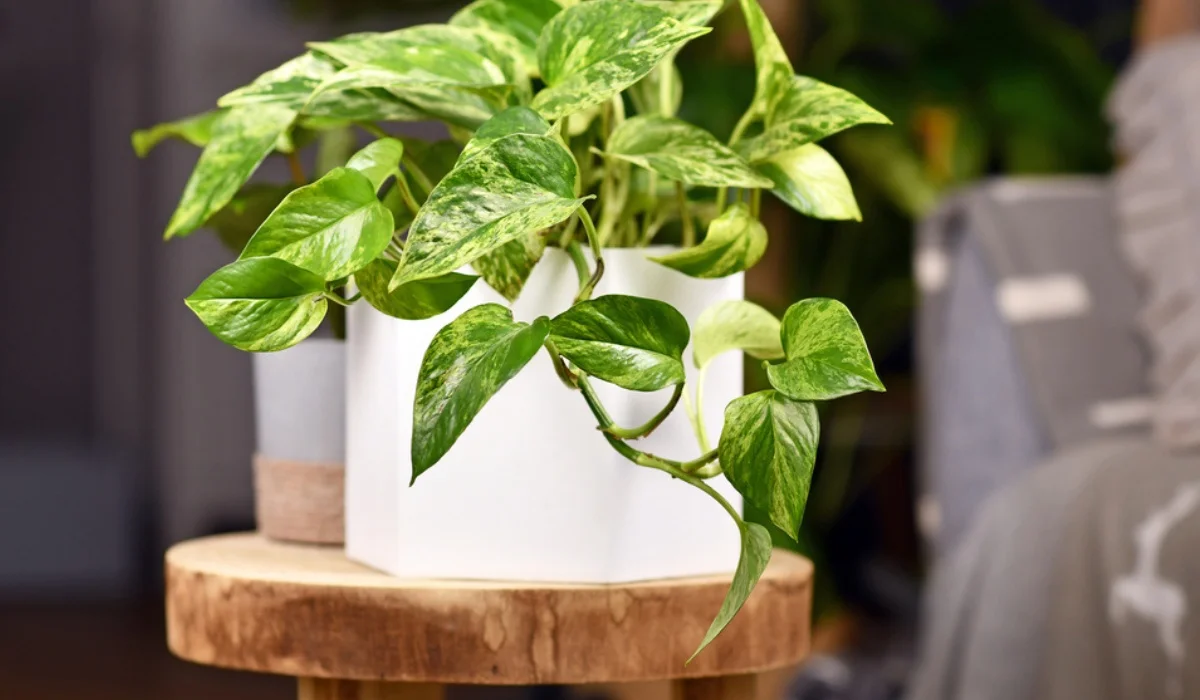
In this article I have informed about 17 types of Pothos plants with my own experience.

There are many types of pothos plant. But some of the popular pothos plants that everyone likes to keep at home. Those plants are even in my garden.
- Global green house
- Glacier Pothos
- Stain Pothos
- Silver Stain Pothos
- Jessenia Pothos
- Snow queen Pothos
- Harlequin Pothos
- Manjula Pothos
- Golden Pothos
- Marble queen Pothos
- Neon Pothos
- Variegated Neon Pothos
- Cebu Blue Pothos
- Baltic Blue Pothos
- N’Joy Pothos
- Emerald Pothos
- Hawaiian Pothos
17 Types of Pothos
1. Global green house


Global Green is a quick growercompared to more highly variegated varieties like Pearls and Jade or Manjula. Global Green pothos may be a new introduction into North America, but it’s just as easy to grow as other pothos varieties.Compared to the super common ‘Golden’ pothos and ‘Jade’ pothos, Global Green Pothos is definitely a unique, rare variety. It needs 0.8 cups of water and every 9 days when it doesn’t get direct sunlight and is potted in a 5.0″ pot. Use our water calculator to personalize watering recommendations to your environment.
2. Glacier Pothos


The glacier pothos can be distinguished by its coloring which is more silvery-green than the n’joy or pearls and jade. Its leaves also tend to be more oval-shaped than these other two varieties and it is considered rarer and harder to come by. It makes for an excellent indoor plant and is considered to be pretty hardy and low-maintenance. It does well in most standard household conditions and can withstand a bit of neglect if needed.
3. Stain Pothos


Satin pothos is a tropical plant, which means it needs warmth and humidity. The ideal growth temperature ranges from 65 to 85 degrees Fahrenhite.It can be difficult to find and acquire compared to some of its pothos relatives, and more expensive too. That being said, it is not considered particularly rare and most houseplant shops or nurseries should carry it.
4. Silver Stain Pothos


This is a stunning houseplant revered for its beautiful foliage and easy-going nature. This plant combines the resilience of pothos with the visual appeal of a rare specimen, making it a favorite among indoor plant enthusiasts. Keep your Silver Satin Pothos in indirect bright light. Too little light will cause the silver color to fade, but too much light will burn the leaves. Silver Satin Pothos makes a beautiful splash of greenery to any space. Each leaf is vastly unique with silver and green hues that feature a shimmery sheen.
5. Jessenia Pothos


Jessenia has almost equal amount of green and yellow variegation in its leaves. It displays green, heart-shaped leaves abundantly marked with chartreuse. The jessenia is among the rarest. It can be quite difficult to find and expensive to acquire if you do manage to find one. It’s this rarity that makes the jessenia so popular among plant lovers and collectors.
6. Snow queen Pothos


Pothos Snow Queen is a fast growing, easy care vining indoor plant with stunning marble-patterned variegated leaves. Pothos Snow Queen is a Pothos Marble Queen that has a large amount of white variegation.The Snow Queen Pothos is best known for its brilliant foliage, which offers a blend of deep green and bright white. In order to keep your plant’s leaves as vibrant as possible, make sure that you provide it with a source of consistently bright, indirect light.
7. Harlequin Pothos


Harlequin is a rare Pothos variety often mistaken for the patented variety Manjula. Its origins are obscure. It looks very similar to this pothos, although it does not have any cream/yellow coloring. It requires bright, indirect light in order to support its bright variegation. Highly variegated stark white leaves with relatively large splashes of green coloring.
8. Manjula Pothos


Manjula pothos can be found somewhat easily online and at nurseries that sell houseplants.The more variegation its leaves contain, the less energy your pothos can generate from the sunlight it gets. Manjula pothos isn’t a low-sunlight variety of pothos and requires adequate sunlight.
9. Golden Pothos


Golden Pothos is an important plant in Feng Shui that is believed to exude positive energy and bring good luck and money. It’s also said to help harmonize human existence with our surroundings. The Golden Pothos makes a great addition to any bedroom. Use a traditional plant pot or for extra efficiency, plant in a hanging basket. A Golden Pothos will work it’s magic while you sleep, purifying the air of toxins such as carbon monoxide and formaldehyde.
10. Marble queen Pothos


Marble Queen is a variety of the Golden Pothos plant with variegated leaves that are green and white. However, Marble Queen has a slower growth rate compared to the Golden Pothos. Marble Queen Pothos is not only beautiful but also are very rewarding plants to watch grow in water. We find that pothos are easy to propagate in water and grow pretty fast when given the right amount of warm temperatures and indirect light.
11. Neon Pothos


The neon pothos is a very fast grower and can be left in its original pot for the first 12-18 months. Only repot the pothos when lots of roots are sticking out of the nursery pot holes. Pothos are rated one of the best houseplants for removing all indoor air toxins. The pothos plant likes having its soil dry out completely before it becomes thirsty again. Wilting leaves are crying out for water, but don’t just reach for the watering can without a second thought.
12. Variegated Neon Pothos


The variegated variety of the popular neon pothos, this rare variegated pothos is difficult to come by. It needs plenty of bright indirect light in order to keep its color stable and cannot withstand low light.These varieties are known for their unique leaf patterns and difficulty propagating and finding in the market.The Neon Pothos plant is a popular indoor plant which is striking due to it’s bright, neon lime green leaves. It is often harder to acquire than a usual pothos and can sometimes be a bit slower growing.
13. Cebu blue Pothos


Cebu Blue Pothos stands out with its elongated, heart-shaped leaves that exhibit a distinctive metallic blue hue, creating an almost ethereal presence.To encourage strong, healthy growth, choose a location for your Cebu blue pothos that receives medium to bright indirect light. Unlike other varieties of pothos such as golden pothos or jade pothos, Cebu blue pothos do not do well in low light for extended periods of time.
14. Baltic Blue Pothos


Baltic Blue Pothos grow best with medium to bright indirect light, and it can also withstand low light if needed, although if the plant is set in low light conditions, its leaves won’t grow, and it may not develop fenestrations; it may also make your Baltic Blue Pothos plant prone to legginess.The Baltic Blue Pothos is a new cultivar of the Epipremnum pinnatum. Although it’s not as common as Golden Pothos
15. N’Joy Pothos


Pothos ‘Njoy’ is believed to usher in wealth, success, and prosperity by guiding the energy flow positively and abundantly according to Fengshui principles. It thrives in bright, indirect light but can also tolerate low light conditions. Avoid direct sunlight, as this can burn the leaves. Water your Pothos N’Joy when the top inch of soil is dry to the touch.
16. Emerald Pothos


Emerald Pothos is one of the rarest, most hard-to-find Pothos variations. They are so rare because of their unique leaf shape and distinct green-on-green variegation. It boasts a uniform green that’s lush and vibrant, a classic look that’s hard to get wrong. In contrast, Global Green steps up the style with green-on-green variegation, offering a subtle yet sophisticated pattern that demands a double-take.
17. Hawaiian Pothos


Hawaiian pothos is a cultivar of golden pothos. They share similar care requirements and appearances, but a savvy eye can spot the differences. The Hawaiian cultivar foliage tends to be larger and faster growing.This plant will do well in environments with low humidity but will thrive in a location that is more humid, such as a bathroom or kitchen. Brown leaf tips may indicate the air is too dry. Your Hawaiian Pothos prefers average to warm temperatures of 65-85 degrees Fahrenhite.