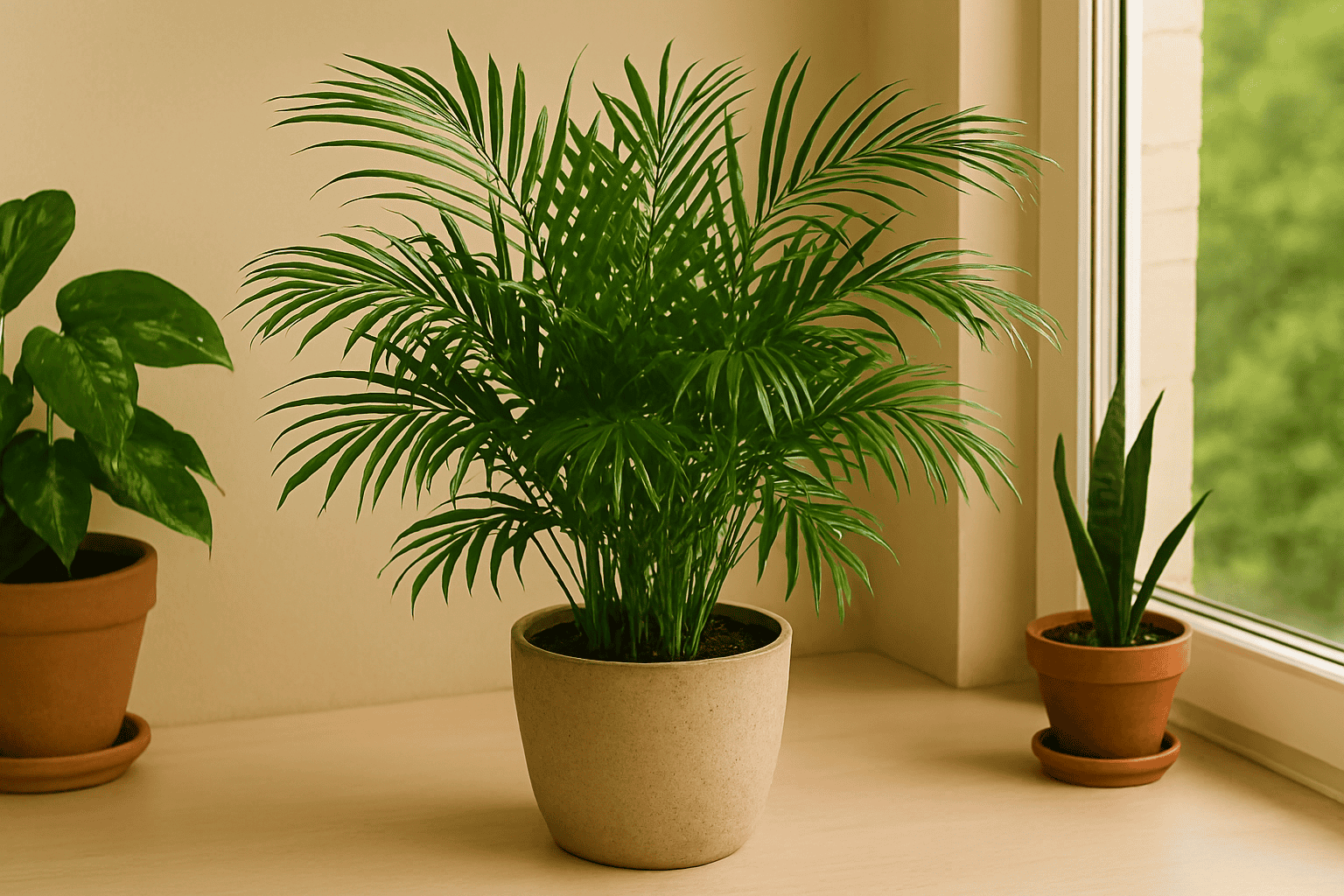
Cat palm plant is also known as Cascade palm, it can be grown both indoors and outdoors. It is a graceful, clumping palm prized for its lush foliage and its ability to thrive indoors. To maximize growth and flowering, ensure they receive bright, indirect light and well-draining soil with consistent but moderate watering to prevent root rot. With proper care and maintenance a Cat palm plant can live up several years, making it a timeless addition of your indoor gardening.
Scientific classification of Cat palm plant
| Kingdom: | Plantae |
| Clade: | Tracheophytes |
| Clade: | Angiosperms |
| Clade: | Monocots |
| Clade: | Commelinids |
| Order: | Arecales |
| Family: | Arecaceae |
| Genus: | Chamaedorea |
| Species: | C. cataractarum |
Cat palm plant prefers

- Light : Bright indirect light
- Soil : Well-draining
- Soil pH : 6.0 to 7.8
- Temperature : 65-80°F
- Humidity : 55%
- Blooming time : Late Winter to Spring months
- Flower colour : Yellow
- Native area : Southern Mexico and Central America
- Toxicity : Non-toxic
How to grow your Cat palm plant with some care tips
Adequate amounts of light, water, soil, temperature and fertiliser should be obtained for the plant to grow healthy. The common problems and benefits of the plant have also been shared in this article. This article will help you with help you with all the essentials you need to grow your plant.
If you want to know about the Creeping fig plant .
Light
Cat palm plant is a tropical beauty that thrives in the right lighting. It grow best in a space with bright indirect light, although they can also adapt to medium to low-light spaces. Some ideal spots for a cat palm include in front of an east-facing or west-facing window in the middle of a bright room. Avoid direct sun can scorch the delicate fronds.
Water

This plant love consistent moisture, so water every 2 weeks or when the top inch of soil feels dry. Water thoroughly until it drains from the bottom then discard excess water to prevent root rot. Check the pots to make sure your plant is not sitting in excess water after watering. Overwatering can leads to root rot and yellowing fronds and underwatering causes browning, crispy leaf tips. This plant requires enough regular watering to keep the soil moist at all times but not soggy. If you overwater a Cat Palm, some fronds might turn brown.
Soil
Cat palm prefers well-draining, loose and nutrient-rich potting mix. The ideal soil pH for cat palms is slightly acidic to neutral (6.1-7.5) and the mix should provide enough moisture retention to keep the soil slightly moist but not soggy. The organic nutrients such as Compost, aged manure or worm castings boost nutrients. The mix should contain essential minerals like nitrogen, phosphorus and potassium to support healthy foliage and roots.
Temperature & Humidity
It thrive in temperatures between 70-80°F and should not be exposed to temperatures below 45-50°F as cold can damage the foliage. Avoid temperatures below 50°F, as Cat Palms are not frost-tolerant and can suffer severe damage in cold conditions.
The relative humidity of about 50-60%, it conditions with high humidity, which is crucial for their health and can be achieved by using a humidifier. It can provide a temporary boost, but it’s less effective than other methods and can risk fungal diseases. Maintaining adequate humidity helps prevent issues like dry leaf tips and spider mite infestations.
Fertiliser
You can use an organic fertilizer like compost or cow manure every two weeks to boost the growth of the plant. During the active growing season (spring & summer), Cat palms should be fertilized once a month with an all purpose liquid fertilizer. Cat palms do not need to be repotted frequently, usually every 3 years.
How to propagate your Cat palm plant

Cat palm can be propagated most effectively by division, a simple process of separating rooted offshoots from the parent plant. These offshoots are smaller clumps that naturally from at the base of a mature Cat palm.
- Spring is the ideal time to propagate cat palms as the plant enters its active growth phase.
- Using your clean tool and carefully cut the offshoot from the parent plant. To ensuring the new piece has a good portion of its own roots.
- Choose a pot with drainage holes and fill it about halfway with a well-draining palm potting mix.
- Place this plant in bright, indirect light away from harsh light. Check the soil regularly and water when the top layer begins to dry out.
Pruning of Cat palm plant that make healthier
Cat palm doesn’t need regular pruning to look healthy. Pruning is the essential part of its care that keeps your plant healthy and encourage lush growth. It helps the plant conserve energy and produce more prolific and larger flowers. Use clean, sharp tools to cut off only dead, yellow or damaged fronds at the base of the plant. This plant is preferably in early spring to encourage healthy new growth and improve airflow. Avoid excessive pruning and trim fronds close to the stem without damaging the main trunk to maintain the plant’s natural shape and reduce the risk of disease.
Repotting of Cat palm plant
Repotting is very important to extend the lifespan of Cat palm plant and keep them healthy. Cat palms are slow growers so they need repotting every 2-3 years. This plant requires careful handling to avoid damaging their sensitive roots. Using a pot only one size larger with excellent drainage holes. Ensure it has drainage holes, as this is crucial to prevent root rot. Repot when the plant is root-bound or when new pups start appearing at the base of the parent plant. To repot a cat palm, move it to a pot only 1-2 inches larger in diameter with drainage holes, ideally in spring. Use a well-draining, peat-based soil mix, loosen the root ball and plant the palm, watering thoroughly afterward.
Facing some common problem of Cat palm plant

- The most common problem is Overwatering and underwatering are leading causes of plant stress which manifests as yellowing leaves, brown tips and drooping fronds. Underwatering Symptoms are crispy brown tips, brittle edges, and downward-folding fronds.
- Spider mites, mealybugs and scale insects, which damage leaves and can weaken the plant. These tiny pests cause leaf discoloration, stippling (tiny spots), and may leave behind fine webbing, especially in dry conditions.
Benefits of Cat palm plant
- Cat palm is an excellent air purifier, it is a great way to add oxygen and remove carbon dioxide from your home. They are also good at removing formaldehyde from the air.
- This plant helps reduce allergens and improve respiratory comfort especially useful for asthma or allergy sufferers. It also contributes to a healthier living environment by producing oxygen and creating a more tranquil atmosphere, though it does not have direct medicinal uses like herbal remedies.
Cat palm plant Faq
1. Do cat palms like being misted?
Ans. Cat palms like humidity levels over 50 percent but misting doesn’t recreate the humid environment many indoor plants need and can even create the conditions for plant.
2.What is growing out of my Cat palm?
Ans. That is the female inflorescence on your Chamaedorea cataractarum. As a monoecious species it can put out a male spathe at the same time for pollination.
3. Why is my Cat palm turning yellow or brown?
Ans. One of the most common is too much sun. These plants should not receive more than a few hours of direct sunlight per day and harsh, midday sun can burn the plant’s leaves.
4. Is a Cat Palm a good indoor plant?
Ans. Yes, Cat palms are excellent indoor plants due to their compact size, air purifying qualities and tolerance for indoor conditions.