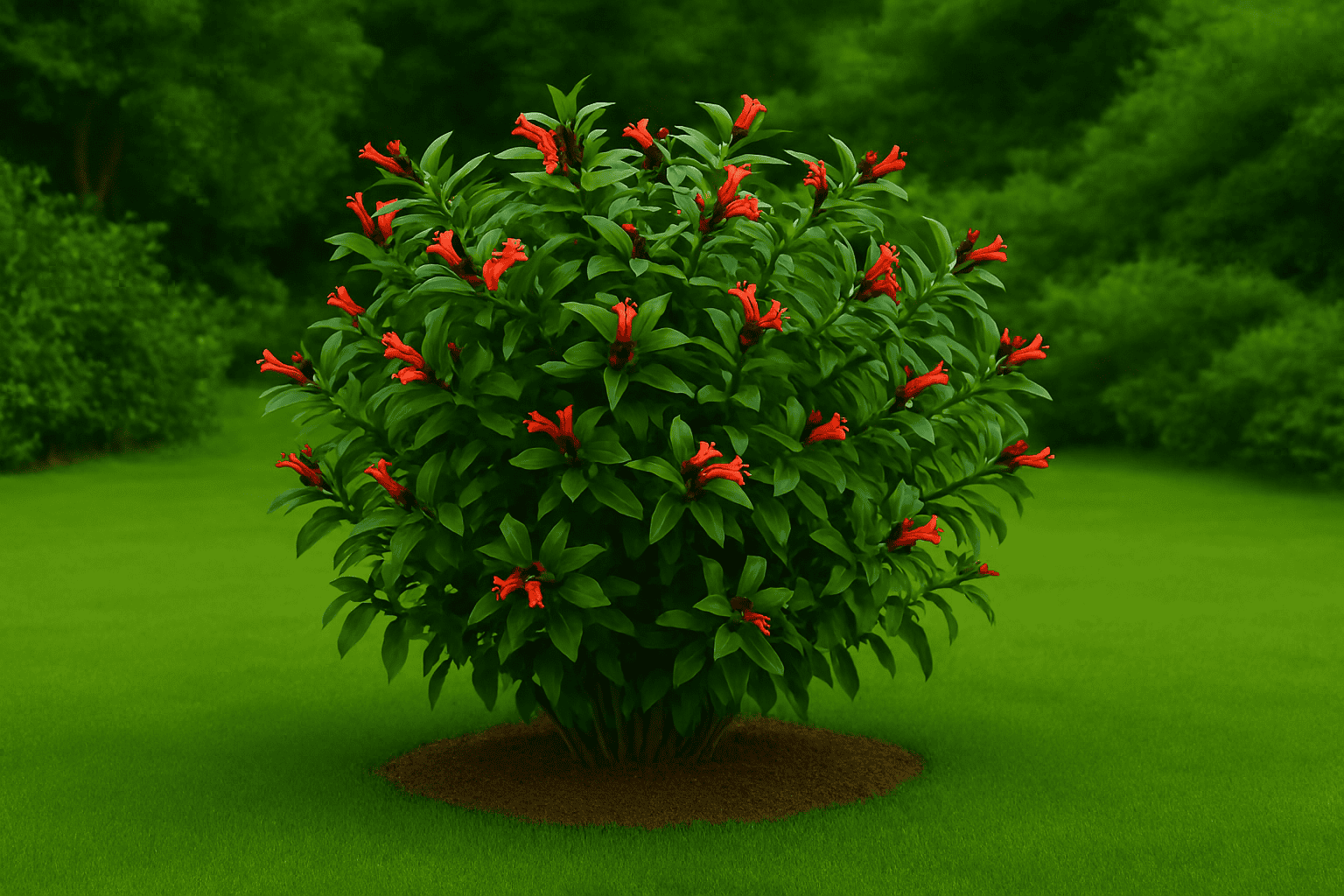
Lipstick plant is popular, striking, evergreen plant that native to tropical habitat. It has vibrant red, tubular flowers that resemble a tube of lipstick. This is known to improve the air quality and also known for removing unwanted pollutants and toxins from the atmosphere.
However, if you can provide the appropriate growing conditions, your plant may survive up to 2-3 years. I have shared the steps taken to grow this plant care in this article which will guide you.
Scientific Classification
- Kingdom: Plantae
- Clade: Tracheophytes
- Clade: Angiosperms
- Clade: Eudicots
- Clade: Asterids
- Order: Lamiales
- Family: Gesneriaceae
- Genus: Aeschynanthus
- Species: A. radicans

Prefers
- Light – Bright, indirect light
- Soil – Well draining
- Soil pH – 6.0-7.0
- Temperature – 65-75°F
- Humidity – 60-80%
- Blooming time – Spring
- Flower colour – Red
- Native area – Thailand, Malaysia
- Toxicity – Non-toxic
Lipstick plant care with some tips
Proper amounts of light, water, soil, temperature and fertiliser should be obtained for the plant to grow. The problems and benefits of the plant have also been shared in this article. This article will help you with all the essentials you need to grow your plant.
If you want to know about String of Hearts plant care.
Light
Lipstick plant thrive in bright, indirect light and prefers enough light to encourage growth and flowering. To avoid, direct light can scorch their leaves. The ideal placement includes an area near an east or west-facing window or a spot with bright, filtered light.
Water

This plant likes consistent moisture so moderate watering is best.Water regularly but allow the water to completely drain from the pot and never leave its roots standing in water. Change the water every few days to keep it fresh.Water your lipstick plant when the top 25% of soil is dry.
Soil
Lipstick plant prefers well draining, soil mix that natural growing conditions. A mix of peat moss, perlite and pine bark is a good option. You can use a commercially available orchid or epiphyte mix. Adding perlite or sand to regular potting soil also improves drainage. It is sensitive to root rot so ensure the soil allows excess water to drain quickly.
Temperature & humidity
It thrives in temperature between 65 degree Fahrenheit and 75 degree Fahrenheit.They are tropical plants and prefer warm temperatures and high humidity. Temperatures below 50°F can cause leaf drop. Avoid sudden temperature drops and cold drafts which can stress the plant.
This plant thrives in high humidity environment, ideally between 50-70%. The lipstick plant appreciates high humidity environments.
Fertiliser
Feed your plant during their growing season with a balance fertiliser. To make your plants grow faster, apply fertilisers when the plant starts flowering. Use a liquid indoor plant fertilizer diluted to half the recommended strength every other week during the spring and summer and once per month in the fall and winter. A balanced fertilizer with a slightly higher phosphorus content can also be beneficial, especially when encouraging flowering.
Types of Lipstick plant
- Black pagoda : Another variety of lipstick plant is Black pagoda, it has glossy green leaves with broad strips and flowers have a distinctive black colour.
- Tangerine Lipstick : This variety is a popular lipstick plant, it has a
trailing, waxy-leaved evergreen vine native to Southeast Asia. It is unique for its yellow orange flowers. - Rasta Lipstick : It is a cultivar of the popular lipstick plant and distinguished by its uniquely curled, twisted leaves with bright red lipstick-shaped flowers.
- Red Lipstick : This plant is a cultivar of the Chinese evergreen, it has trailing stems with waxy, dark green leaves and bright red, tubular flowers.
- Curly Lipstick : This cultivar produces gently curled leaves giving it a tidier appearance.Tubular clusters of flower buds emerge at the stems.
Propagation of Lipstick plant care

Propagation is the process when you want to another lipstick plant. It is easily propagated from cuttings. Remove a few of the lower leaves of each section and then leave them to one side for a couple of days to let them dry out and callous over. Choose a section without any blooms on it and all but a few leaves should be removed. Use a clean pair of scissors or shears to remove healthy, non-blooming stems from an existing plant. Place the cutting in a pot containing a mix of vermiculite and perlite. Produce your plant proper care and grow your plant healthy.
Pruning of Lipstick plant care
Pruning is the essential part of its care that keeps your plant healthy and encourage lush growth. Trimming your plant for new growth to produce more new branches. Prune your plants immediately after the flowering season is complete. Use sharp, clean pruners to remove any dead, yellowing flowers. It also helps to encourage new, healthy growth. During the growing season active growth periods, you can prune for shaping and to maintain a tidy appearance.
Repotting of Lipstick plant care
This plant is typically don’t need frequent repotting as their roots are not very demanding of space. It should be repotted when they become root-bound or when their current pot becomes too small for their growth. Select a pot that’s one to two inches larger in diameter than the plant’s current pot. The best time to repot is in early spring after the prolific spring and summer bloom season.
Common problem of Lipstick plant

- If you notice the leaves turning yellow wilting, a mushy base, and a foul odor from the soil.
- Overwatering can lead to root rot, a fungal disease that damages the plant’s roots. It can lead to root rot, while inadequate light can cause yellowing leaves and stunted growth.
- Spider mites are tiny pests that can cause significant damage to your lipstick plant. This tiny plant can cause big problem.
Benefits of Lipstick plant
- Most common benefits is air purification, it can improve indoor air quality by removing pollutants like formaldehyde, benzene and toluene.
- The vibrant colours and unique forms of some lipstick plants, like the Thai Pink Lipstick Plant.
- It is one of the fast-growing ornamental epiphytic houseplants. This lipstick plant is the perfect decorative hanging species for the front area of home.
Lipstick plant Faq
1. Is lipstick plant pet-safe?
Ans. Yes, Lipstick plants are non-toxic to dogs and cats.
2. Can lipstick plant be grown as landscape plant?
Ans. It is an epiphytic plant that grows in the crack of the plant bark. It can be grow in hanging basket that can be moved indoors if temperature drop is a good strategy.
3. Why it is called Lipstick plant?
Ans. It makes flowers that look like lipstick tubes.