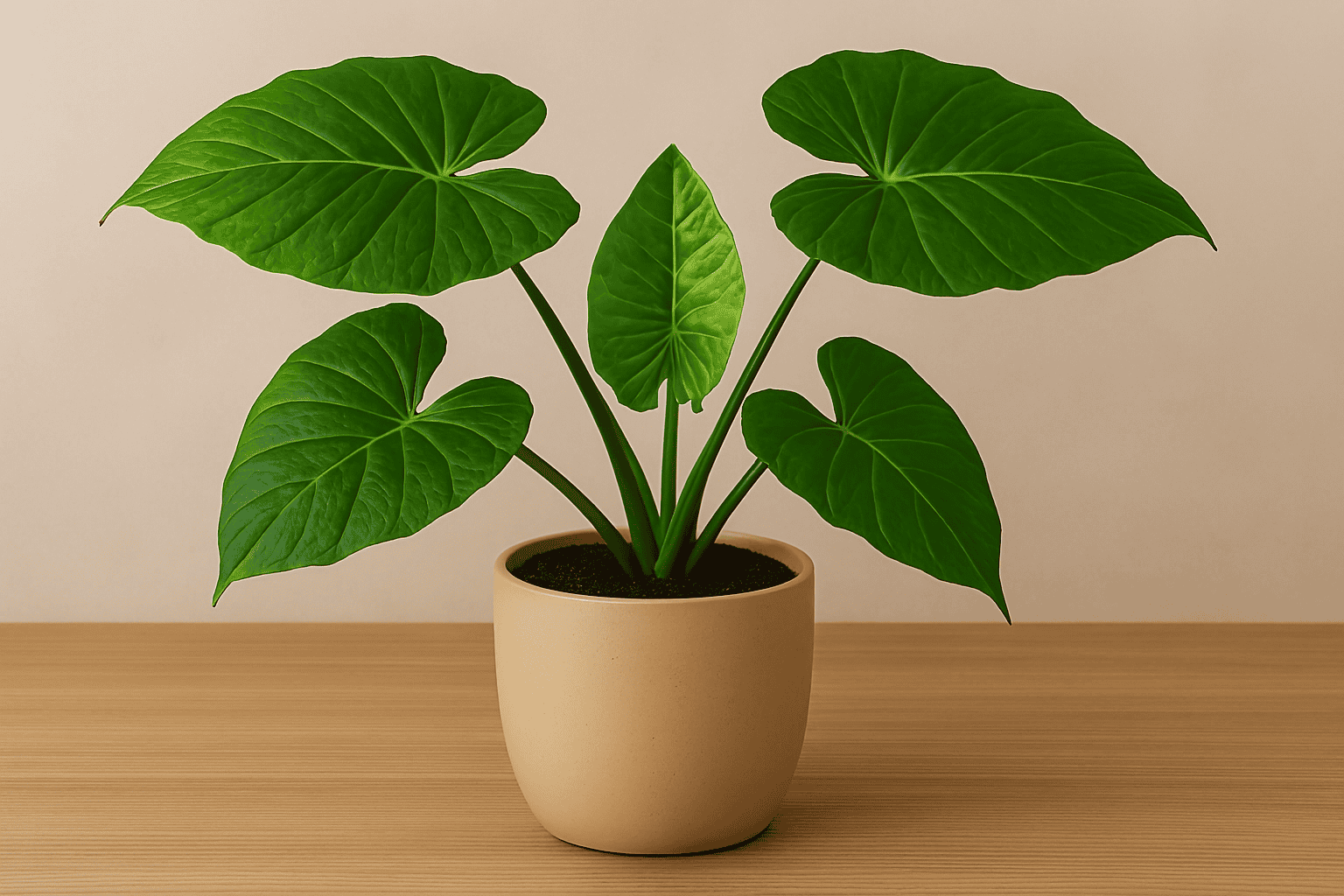
Elephant ear plant has lush, large leaves with varieties of foliage. Some species are widely cultivated and naturalized in other tropical and subtropical regions. Its symbolizes growth and expansion is based on Fengshui, this plant enhances prosperity by attracting wealth and ushering in opportunities.
Scientific classification
- Kingdom: Plantae
- Clade: Tracheophytes
- Clade: Angiosperms
- Clade: Monocots
- Order: Alismatales
- Family: Araceae
- Subfamily: Aroideae
- Tribe: Colocasieae
- Genus: Colocasia

Prefers
- Light – Bright, indirect light
- Soil – Moist
- Soil pH – 5.5-7.0
- Temperature – 65–80°F
- Humidity – 60 to 80 %
- Blooming time – Spring
- Flower colour – Red and Orange
- Native area – Southeastern Asia
- Toxicity – Human and pets
Elephant ear plant care with some tips
Proper amounts of water, light, soil, temperature and fertiliser should be obtained for the plant to grow. The problems and benefits of the plant have also been shared in this article. This article will help you with all the essentials you need to grow your plant.
If you want to know about the plants that grow without soil.
Light
They grow best in bright, indirect light and can be grown partial shade. It thrive in 6 to 8 hours of direct light per day. Elephant ear plants need a lot of bright indirect light. Varieties with darker leaves need more sun to maintain their colour. Too much sunlight can burn the leaves while too little sunlight can cause yellowing. A perfect place is near a sunny window with Southern or western exposure.
Water
Water your plant thoroughly then allow the top few inches of the soil to dry out before watering again. It needs a lot of water and makes it good plant where gardeners usually have trouble finding suitable plants. Especially when grown in containers and they will need water daily.
Soil

Elephant ear plant prefers moist, well draining, rich and fertile soil with organic matter. It should be able to retain sufficient moisture to remain consistently moist. Mix in plenty of organic matter such as chopped leaves, peat, or composted. This plant do best in wet soils during the growing season and can grow on the margin of ponds.
Temperature & humidity
This plant grow best in warm temperatures between 65 degree Fahrenheit and 85 degree Fahrenheit. The daytime temperatures of 70 to 85 degree Fahrenheit and nighttime temperatures no lower than 60 degree Fahrenheit.
It prefers humidity levels between 60-80%. A humidifier can help maintain consistent humidity levels. Low humidity levels can cause the leaves of an elephant ear plant to dry out and turn yellow.
Fertiliser
To make your plants grow faster, apply fertilisers when the plant starts flowering. Feed your plant during their growing season with a balance fertiliser. It must be fertilized once every 2-4 weeks during the growing seasons in the spring and summer. Use a 20-10-20 NPK fertiliser is also perfectly acceptable.Do not feed the plant in winter or fall.
Propagation of Elephant ear plant care
The most common propagation method for soil propagation.This method is best for tubers that already have their own root system. Prepare a pot for each division with good drainage holes and a suitable soil. It can be propagated by division. Simply remove the plant from its pot and then separate a clump of roots from the main rootball. Place the cutting in a pot with fresh potting soil with proper care.
Pruning of Elephant ear plant care

Pruning your plant can help it look healthy and neat. It is the essential part of its care that keeps your plant healthy and encourage growth.Trimming your plant for new growth to produce more new branches. Make sure to trim just above a set of leaves and regular pruning will also increase the chances of the plant producing its stunning, fragrant flowers.
Use a sharp knife to cut the leaves off at the bottom of the stem. Regular pruning will help to keep this large leaf plant in shape. The leaves will naturally droop as they age. Remove browning leaves at any time during the growing season to make room for new leaves.
Types of Elephant ear plant
- Black magic colocasia : It is most enticing variety with blue black foliage. It has red orange colour flowers.
- Diamond head colocasia : It has splendid with its luminous blue black leaves.
- Alocasia Portora : It has green leaves on a purple stem that reaches up to 5-6 feet high.
- Elena Colocasia : It has similar olive green leaves like “lime zinger”.
- Rose glow Caladium : It is ideal for shades areas and grow pink-white foliage.
- Red flash Caladium : It has smoky, green leaves with bright flashes of red.
Repotting of Elephant ear plant
You can repot in Spring when the plant is coming out or when the roots are crowded. Use a pot that is one size larger than the current one and use a well draining potting mix. Carefully remove the roots and place the plant in the new pot. It should take place during Spring and Summer when your plant has become completely rootbound in its container.
Common problem of Elephant ear plant
- The most common problem is overwatering, it leading to root rot and yellowing leaves. It could mean the plants need more or less sunlight, water, or fertilizer.
- Wilting is a sign that the plant is getting too much sun or heat and not enough water.
- Spider mites is appropriate action immediately and damage looks like tiny yellow or brown spots on the leaves. Another sign of spider mites is webbing found on the plant.
Benefits of Elephant ear plant

- Elephant ear plants are ornamental plants with stunning and colourful foliage. It has dark green matte leaves with a purple to black luster and bright green veins and petioles.
- Its symbolizes growth and expansion. It based on Fengshui, this plant enhances prosperity by attracting wealth and ushering in opportunities.
- These plants help remove toxins like formaldehyde from indoor spaces.
Elephant ear plant Faq
1. What are alternatives to elephant ear?
Ans. The banana plant is a great alternative plant to elephant ear plant because it has a similar lush.
2. Do elephant ears grow indoors?
Ans. It can be grown as indoor plant as long as they are in a bright spot.
3. How to preserve and frame an elephant ear leaf ?
Ans. I have seen someone do imprints or leaves into ceramic and then paint using watercolours and it just look incredible.