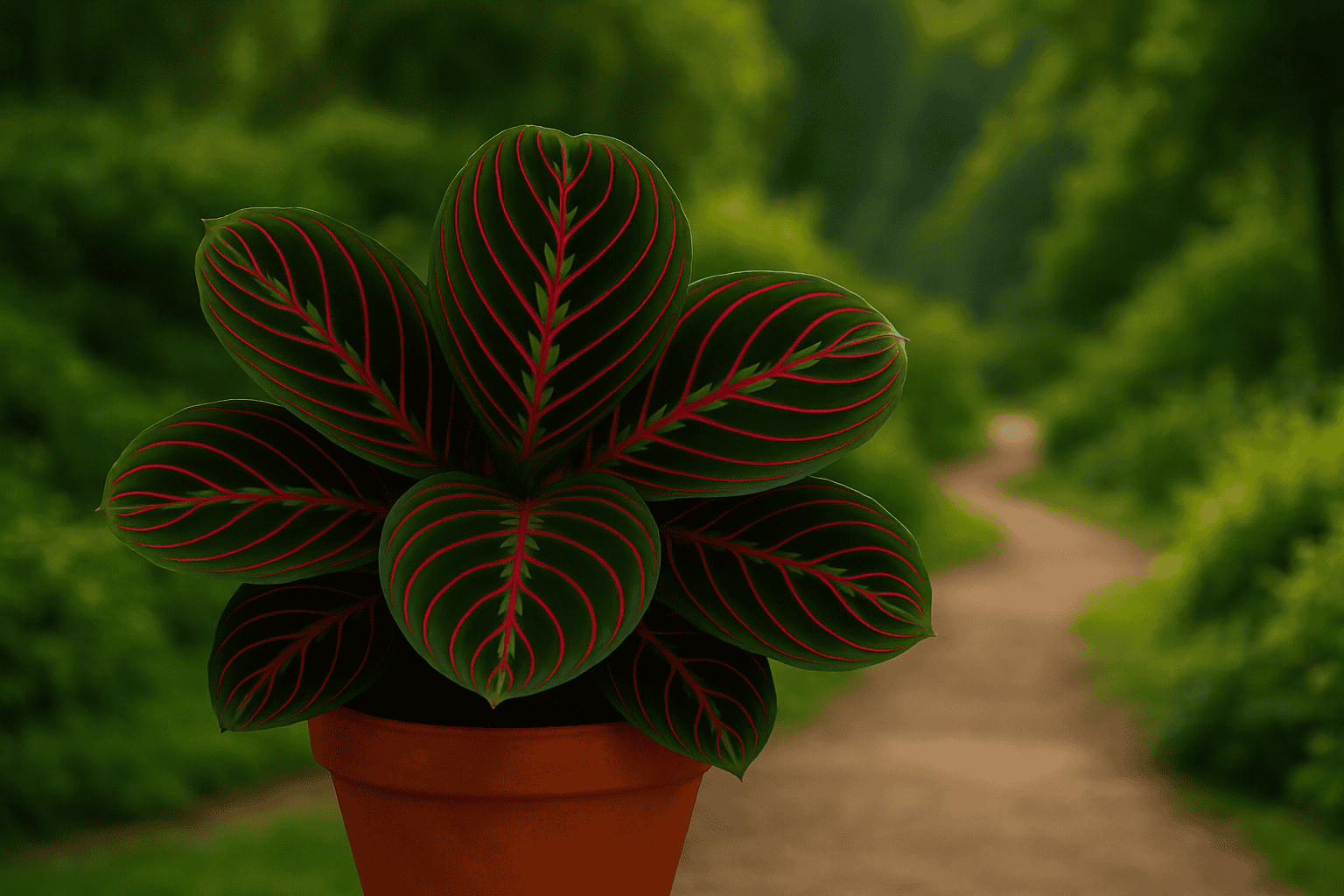
To be care healthy growth Prayer plant, it requires bright, indirect light, well-draining soil, regular watering, proper temperature and humidity.
Information
Prayer plant is gets its name from how the leaves fold up at night, opening and drooping in sync with a circadian rhythm. It has multiple colorful leaves and unique patterns of addition to houseplant collections. This plant is one of the most attractive to its beautiful decorative foliage.
However, if you can provide the appropriate growing conditions, your plant may survive up to several years. I have shared the steps taken to grow this plant care in this article which will guide you.
Scientific Classification
- Kingdom: Plantae
- Clade: Tracheophytes
- Clade: Angiosperms
- Clade: Monocots
- Clade: Commelinids
- Order: Zingiberales
- Family: Marantaceae
- Genus: Maranta
- Species: M. leuconeura

Prefers
- Light – Bright, indirect light
- Soil – Well draining
- Soil pH – 5.5 to 6.0
- Temperature – 68°–85°F
- Humidity – 50-60%
- Blooming time – Late Spring
- Flower colour – White, Purple and Violer
- Native area – Brazil
- Toxicity – Non-toxic
Prayer plant care with some tips
Adequate amounts of water, light, soil, temperature and fertiliser should be obtained for the plant to grow. The problems and benefits of the plant have also been shared in this article. This article will help you with all the essentials you need to grow your plant.
If you want to know Christmas Cactus care.
Light
Prayer plant prefers bright, indirect light and can tolerate low light conditions. Place your prayer plant near a north or east-facing window. To be care, direct sun can cause the leaves to fade and scorch. It generally tolerate low-light areas but may develop leggy growth in very low-light conditions.
Water

This plant needs regular watering with filtered or distilled water. Prayer plant prefers water once or twice a week during the Spring and Summer. These plant is so sensitive therefore, you need to be careful not to overwater the plant. Keep the soil of your prayer plant evenly moist, watering once the top layer of soil has dried out.
Soil
Prayer plant prefers well draining potting mix with slightly acidic to neutral. The potting mix such as peat moss, perlite, and a small amount of loamy soil to provide the best growing conditions. Adding perlite to the mix helps improve aeration and drainage.The soil should drain well to prevent root rot, which can occur with overly wet conditions.
Temperature & humidity
This plant needs temperature between 68°–85°Fahrenheit. Keep your prayer plant in warm, humid conditions. The humidity level is between 40-60%. If you want to increase the humidity level then use a humidifier or put the pot on a tray filled with pebbles and water, but don’t let the bottom of the pot sit in water.
Fertiliser
To make your plants grow faster, apply fertilisers when the plant starts flowering. It may cause plants to produce excessive foliage at the expense of blooms. A balanced, water-soluble fertilizer with a 10-10-10 or 5-5-5 NPK (nitrogen-phosphorus-potassium) ratio. However, too much fertilizer can burn the plant’s roots.
Propagation of Prayer plant care

Propagation is the process when you want to grow up another plant. The best time to take your plant cutting for propagation is growing season when the plant actively grow healthy. Simply separate the roots gently and repot the divisions in potting mix with good drainage. It can easily be propagated in water. This is best done in early spring, though you can also propagate by root division in summer. Use a clean, sharp knife to cut the propagation part and produce proper care.
If you want to grow your plant in water then cut off a stem cutting approximately one inch below a node. Dip the bottom inch of the cutting into rooting hormone. Make sure the leaves remain above the water line. Check after three to four weeks and the roots should reach roughly one to two inches.
Pruning of Prayer plant care
Pruning a prayer plant can help it look bushier and remove dead leaves and stems. You can also prune your plant after blooming to late Spring without harming the plant. Pruning is the essential part of its care that keeps your plant healthy and encourage growth. Use a sharp sterilised knife to remove segments. Prayer plants don’t need pruning. Although you can trim them just above the leaf nodes to encourage them to grow in a different direction.
Types of Prayer plant
- Lemon Lime– Lemon Lime is evergreen perennial with green marking on its foliage. It grow best in warm conditions and bright, indirect light.
- Crocata– The Calathea crocata is saffron colour of flowering plant in the family Marantaceae. The gorgeous, bright saffron coloured flower clusters emerge above the foliage like torches.
- Fascinator– Fascinator prayer plant has unique leaf movement which resembles hands in prayer. It is a living piece that brings beauty and movement into indoor spaces.
- Lubbersiana– It is species of flowering plant in the genus Ctenanthe, it has lovely foliage indoor plant with elliptical leaves growing in an upright clump on thin, bamboo-like stems.
Repotting of Prayer plant care
Prayer plants grow slowly, so only need to be repotted every 2 to 3 years. Repotting is important if you want to grow more than one of your favorite plants. Carefully remove the roots and place the plant in the new pot.The best time to repot a prayer plant is in spring or early summer. Choose a pot that is 2 inches larger than the previous pot. Never repot the plant while it is actively blooming.
Common problem of Prayer plant

- The most common problem is overwatering, it can cause the leaves turn yellow and fall off. It can lead to root rot and fungal problems.
- Dehydration is the most common cause for Prayer Plants drooping. These plants require consistently moist soil, especially during active growth periods in the spring and summer.
- High humidity will keep these plant away. Spider mites are the most common pests that can infest Prayer Plants, though mealybugs and aphids are also common pests. Spotting mealybugs on your Red Prayer Plant can be a real buzzkill. These pests look like tiny, fluffy white spots.
Benefits of Prayer plant
- Prayer plant attracts people with attractive leaves and foliage. Most indoor plants have air purification features.This feature removes harmful toxins from the home and creates a positive atmosphere. If a person is suffering from excess tension or returning from office, having such a positive vibe at home will reduce his stress level.
- This plant is famous for their wide, green, colorful leaves. These wide leaves make them popular for areas of low light. It will reward your care and attention by improving the quality of the air you’re breathing.
Prayer plant Faq
1. How fast do Prayer Plants grow?
Ans. This plant is slow grower and generally reach about 12 inches.
2. Can prayer plants bloom?
Ans. Yes, it can bloom when grown indoors with right conditions. It will display delicate white and pinkish purple flowers in the Spring and Summer.
3. Are Prayer plants easy to care for?
Ans. This plant prefers easy to care and greenhouse like conditions.