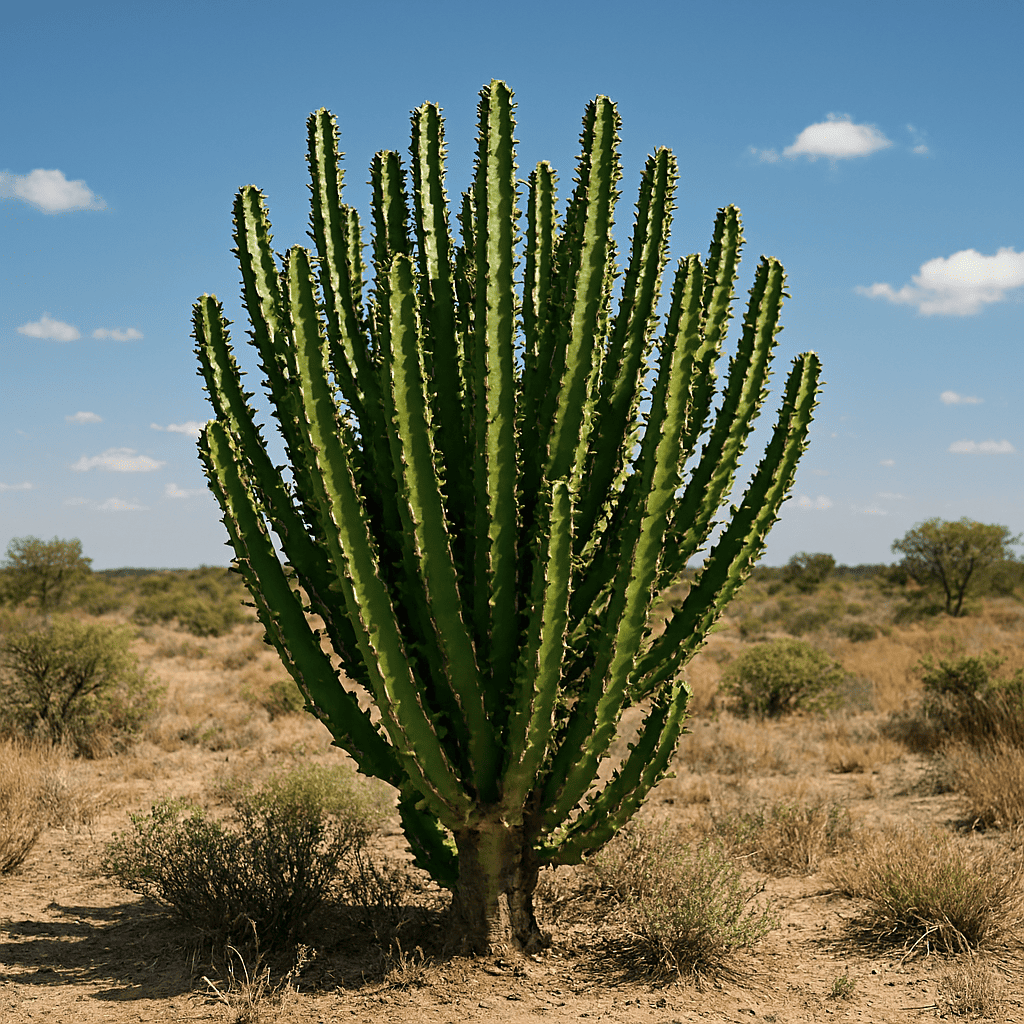
To be care healthy growth African milk plant , it requires bright, indirect light, well-draining soil, regular watering, proper temperature and humidity.
Introduction
African milk plant is not cactus but a succulent because this plant needs hot temperature. It has triangular stems and teardrop shaped leaves. This plant can be brought home as indoor plant at any time of year. Choose an area that receives partial light and has sufficient space for the plant.
Scientific classification
- Kingdom: Plantae
- Clade: Tracheophytes
- Clade: Angiosperms
- Clade: Eudicots
- Clade: Rosids
- Order: Malpighiales
- Family: Euphorbiaceae
- Genus: Euphorbia
- Species: E. trigona

Prefers
- Light – Bright, indirect light
- Soil – Potting mix
- Soil pH – 6.1–7.8
- Temperature – 65-85°F
- Humidity – 40% and 60%
- Blooming time – Spring and Summer
- Flower colour – White or Yellow
- Native area – Central Africa
- Toxicity – Human and pets
African milk plant care with some tips
Proper amounts of water, light, soil, temperature and fertiliser should be obtained for the plant to grow. The problems and benefits of the plant have also been shared in this article. This article will help you with all the essentials you need to grow your plant.
If you want to know Types of Marigold plant.
Light
African milk plant prefers bright, indirect light and place your plant in a Sunny location with 6-8 hours of direct light per day. To be care turn your plant weekly so that all sides receive equal part. If your plant grow with environmental experience, place in a spot with partial shade to avoid over heating. In the winter, move your plant closer to a window.
Water

This plant needs medium water and also prefers soil that stays evenly moist but not soggy. Water your plant once a week and let the soil dry out between waterings. More water when the plant is growing and less in the fall and winter when growth slows down. Avoid overwatering, it can cause damage or root rot. In winter, only provide water to the top inch of soil when it feels dry.
Soil
Good drainage is essential to grow your plant easily and soil pH of 6.1 to 7.8. Sandy and sandy loam soils help this plant thrive in a xeriscape environment.The best soil mix for an African Milk plant is a 2:1:1 mix of cactus or succulent potting mix, perlite, and coarse sand. Allow the soil to dry out between waterings, especially during the dormant winter months.
Xeriscape Environment is means adaptable to changing environmental conditions. It has the potential to reduce water usage and maintenance, improve biodiversity and lower pollution. Xeriscaping reduces the need for synthetic fertiliser and pesticides.
Temperature & humidity
African milk plant is grow best in warm temperature and range between 65-85 degree Fahrenheit. The daytime temperature is 65-85 degree Fahrenheit and nighttime temperature is 60-70 degree Fahrenheit. They can tolerate temperatures as low as 32°F for a short time, but they don’t do well in cold weather.
African milk plant prefers moderate humidity level between 40-60%. Low humidity can cause leaves to turn brown and crispy and high humidity can root rot. This plant has thicker leaves can tolerate lower humidity levels.
Fertiliser
Feed your plant liquid fertiliser, 2 to 3 times monthly throughout the growing season. To make your plants grow faster, apply fertilisers when the plant starts flowering. Use an all-purpose 20-20-20 fertilizer or a cactus and succulent preparation. It may cause plants to produce excessive foliage at the expense of blooms. This helps the plant get enough nutrients to continue to grow.
Propagation of African milk plant care

African milk plant can be propagated by stem cutting. At first, wear gloves to protect your hands and goggles to protect your eyes. When the stem cutting, release a sap that can irritate the skin and eye disease. Sterilised knife with alcohol to cut the stem and place it in an area to dry out of direct sunlight until it develops a callus. When the callus has formed and place it. To be care, choose a healthy, thick stem that is still attached to the plant.
Pruning of African milk plant care
Pruning is the essential part of its care that keeps your plant healthy and encourage growth.Trimming your plant for new growth to produce more new branches. Make sure to trim just above a set of leaves and regular pruning will also increase the chances of the plant producing its stunning, fragrant flowers.
You can also cut off the ends of the branches to make them grow more bushy. To be care, use a sharp and sterilised knife to remove the stem. To manage the plant’s height, cut the tallest branches above a leaf node. In early Spring, remove any dead or broken branches.
Types of African milk plant
There are at least two types of African milk plant;
- Euphorbia trigona ‘Rubra’: This plant is also known as ‘Royal Red’, it has red leaves and can tolerate more full Sun.
- Euphorbia trigona: Another variety of African milk plant, it is a cactus-like plant bearing a main upright stem with several smaller branches.
Repotting of African milk plant
African milk plant needs excellent draining soil and repot your plant when roots start to appear from the drainage hole. Clay pot is ideal because it absorbs excess water and Spring is the prime time for repotting the African milk plant. Use a well-draining potting mix, such as a cactus or succulent mix, or a mixture of potting soil, perlite, and sand. After the flowers bloom then the energy shifts to root development and making it the ideal time to repot.
Common problem of African milk plant

- One of the most common problem is under watering and overwatering. It can lead to fungal issue like cork disease. If the plant has root rot then the leaves turning yellow. Under-watering signs that drying skin and drooping leaves.
- African milk plant can be effected by Spider mites and Mealy bug. For this, healthy and strong plants become useless.To remove them, mix a solution of water and a few drops of mild dish detergent, then wipe the bugs off with a cloth dipped in this solution.
Benefits of African milk plant
- African milk plant is also known as Coriander, its leaves can help with stomach ulsars, blood sugar levels and liver health.
- Coriander leaves contain calcium, magnesium, and phosphorus, which can help strengthen connective tissue.
African milk plant faq
1.Can African milk plant grows in full Sun?
Ans. Yes, African plant grow in full sun and a mix of partial shade throughout the day.
2. Does my African milk tree have a disease?
Ans. Cut a few inches below and above the damage and put some sulfer fungicide powder on it.
3. African milk tree too tall for comfort?
Ans. It has grown significantly in height and likely needs to be pruned to manage its size.