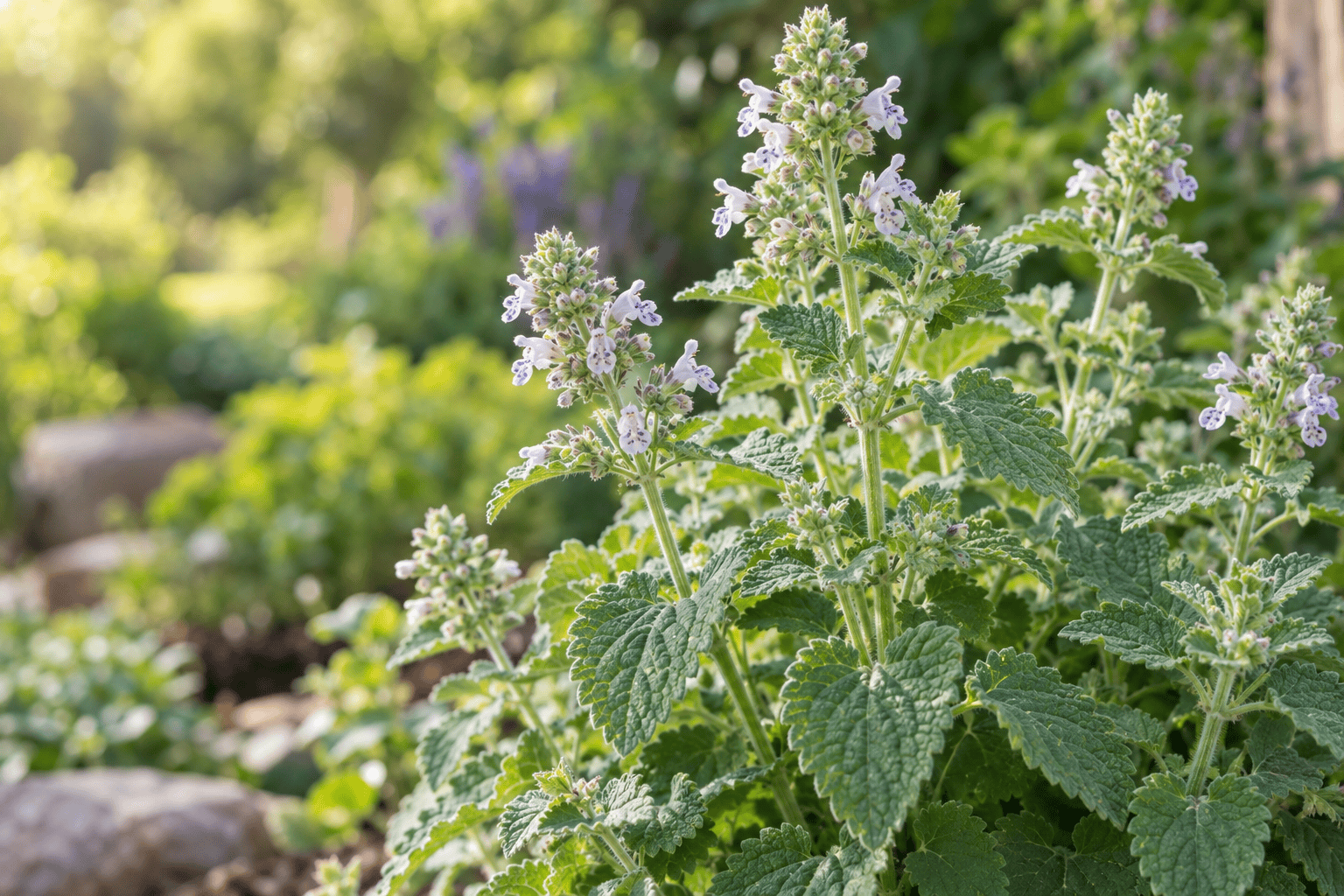
Catnip is a vigorous and weedy mint family member that is easy-to-grow. It features square stems and gray-green leaves that range from triangular to oval. The flower colour is white flowers tinged with purple.
To maximize growth and flowering, ensure they receive bright, indirect light and well draining soil with consistent but moderate watering to prevent root rot. With proper care and maintenance a Bee balm plant can live up 2 to 5 years, making it a timeless addition of indoor gardening.
Catnip plant prefers
- Scientific Name : Nepeta cataria
- Family: Lamiaceae
- Plant type: Herbaceous
- Length: 2 to 3 feet
- Temperature: 55 to 85 degree Fahrenheit
- Humidity: 40% and 70%
- Sun Exposure: Direct light atle
- Soil type : Well draining
- Soil pH : 6.1 and 7.0
- Blooming time : Late Spring
- Flower colour : Lavender
- Toxicity: Non toxic
How to grow and care Catnip plant
Adequate amounts of light, water, soil, temperature, humidity and fertiliser should be obtained for the plant to grow healthy. This article will help you with all the essentials you need to grow your plant.
If you want to know Catmint plant care.
Light

Catnip prefers needs about 5 to 6 hours of direct sunlight or full grow light each day to stay compact and leafy. Too little light can cause leggy growth, while too much heat needs afternoon shade in hot climates.
Water
Catnip is a very drought-tolerant plant and sitting in waterlogged soil can kill it. Water young plants twice a week for the first two weeks and reduce watering to every other week after plants become well established. It requires daily watering for the first 2-3 weeks to establish. After establishment, water deeply 1 to 2 times a week so the ground stays saturated.
Soil
Catnip plant grow best in well draining with good drainage. A sandy or loamy soil with a pH of 6.1 to 7.8 is ideal. Any good quality, rich potting soil will be sufficient.
Temperature & Humidity

Catnip plant grow best in 55 degree to 85 degree Fahrenheit temperature.The plant tends to struggle in hot, humid climates.If the temperature change suddenly the plant leaves turning yellow.
This plant prefers low to high humidity.The plant can tolerate lower humidity but may benefit from slightly higher levels during hot. Average room humidity and normal outdoor conditions are fine.
Fertiliser
Fertiliser is essential things you need to make such as how much temperature you, if it is too much, you need to shift the pot to another place, how much soil mix you need. Mix some compost into the soil at the time of planting to give your catnip a boost. Use a well balanced, organic fertiliser with an NPK ratio of 5-5-5 or 10-10-10. To be noticed that over fertilising can cause the plant to grow weak, leggy foliage with fewer aromatic oils that attract cats.
Types of Catnip plant
There are many types of Catnip plant. Some of them are given below:
- Nepeta citriodora : This catnip plant is also known as Lemon Catnip. It produces purple flowers.
- Nepeta camphorata : Another type of Catnip plant is Nepeta camhorata. This plant remains under 2 feet tall and wide.
- Nepeta cataria : This catnip plant is also known as True Catnip plant. It produces white to purple flowers.
- Nepeta mussinii : Another type of catnip plant is Nepeta mussinii, it is also known as Persian Catmint. This plant produces lavender flowers.
Propagation of Catnip plant
Catnip plant propagate by cutting which encourages bushier growth. Take cutting in spring or early summer.
- Remove the leaves on the lower half of cutting.
- Use a sterile scissors to cut into pieces of stem at a 45 degree angle just below a leaf node.
- Place the cutting portion in a small container of water with adding some potting mix.
- Change the water every day.
- Roots should appear within a week. Once the plant has produced new growth.
Pruning of Catnip plant that make it healthier
Pruning is the essential part of its care that keeps your plant healthy and encourage lush growth. Trimming your plant for new growth to produce more new branches. The ideal time to prune catnip is immediately after the first bloom, usually around July. Make sure to trim just above a set of leaves and regular pruning will also increase the chances of the plant producing its stunning, fragrant flowers.
Trim away any old, dead or damaged leaves or stems. Pruning catnip is primarily to limit its spread and tidy up its growth. Snip the central main stem just above a pair of small side leaves to force the plant to branch out instead of growing straight up.
Repotting of Catnip plant
Catnip plant grow best in Spring and requires regular repotting and should only be transplanted once it has outgrown its previous container. This plant potted every 2 to 3 years in the Spring only when it becomes tightly root bound. If the roots are tightly bound or circling around the root ball, gently tease and loosen them with your fingers to encourage outward growth. Even if your plant doesn’t need a larger container, it is ideal to refresh it with new potting mix every year.
Facing some common problem of Catnip plant

- Poor soil quality, indicate that either too sandy or too clay heavy composition. Excessive sandy soil may retain
- Catnip plant leaves turn yellow when the plant is overwatering. It should be removed immediately so thar plant does not start to rot.
- Spot on leaves can give clues to specific problems your Catnip may be facing. These spot might be brown, black and white, each indicating different issues.
Benefits of Catnip plant
- This plant reduce stress and promote relaxation and sleep. It helps ease muscle tension and menstrual in the gut.
- The oils in catnip might also have insect repellant effects. People use catnip for anxiety, colic, common cold, insomnia, repelling mosquito.
- Catnip tea has potent antioxidants that can boost immune strength and keep chronic ailments at bay. People have been drinking catnip tea and it is quite safe but some people may experience upset stomach or vomiting.
Catnip plant Faq
1. Is planting pots of Catnip a good idea to attack cats to yard and controls rodent?
Ans. I had a lot of stoner cats in my yard when I had catnip but they have not been effective in hunting the chipmunks.
2. Have you seen catnip flowers before?
Ans. That’s whats in good quality dried Catnip. Unfortunately it spreads like crazy, worse than mint in the garden.
3. How bad is catnip?
Ans. Catnip will grow and spread just about anywhere. It spreads pretty aggressively but only within immediate vicinity.