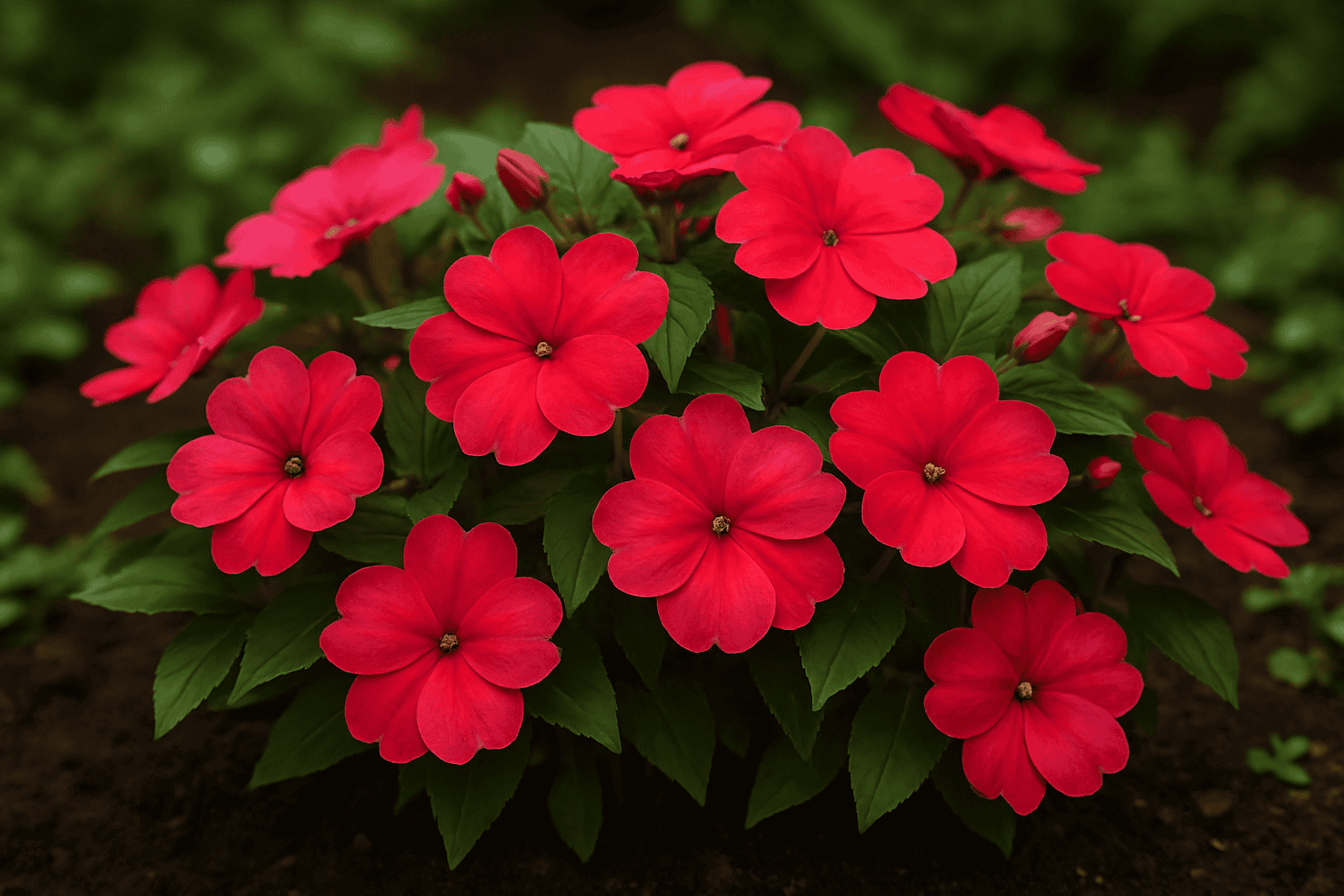
Impatiens is a genus of flowering plants commonly known as balsam or touch-me-nots. One of the most popular bedding plants due to their brightly-coloured flower including white, red, pink, violet, coral and purple.To maximize growth and flowering, ensure they receive bright, indirect sunlight, well-draining soil, and consistent but moderate watering to prevent root rot.
With proper care and maintenance, a Impatiens plant can live up to few months to a years, making it a timeless addition of your indoor gardening.
Scientific Classification of Impatiens plant
| Kingdom: | Plantae |
| Clade: | Tracheophytes |
| Clade: | Angiosperms |
| Clade: | Eudicots |
| Clade: | Asterids |
| Order: | Ericales |
| Family: | Balsaminaceae |
| Genus: | Impatiens |
| Species: | I. balsamina |
Impatiens Plant Prefers

- Light – Bright, indirect light
- Soil – Well-draining
- Soil pH – 6.0 to 6.5
- Temperature – 65°F and 75°F
- Humidity – 50-70%
- Blooming time – Summer
- Flower colour – White, Red, Pink
- Native area – Africa and Asia
- Toxicity – Human and Pets
Impatiens Plant Care: Expert tips for Lush, Vibrant Blooms
Proper amounts of water, light, soil, temperature and fertiliser should be obtained for the plant to grow. The problems and benefits of the plant have also been shared in this article. This article will help you with all the essentials you need to grow your plant.
If you want know about Purple oxalis plant care.
Light
Impatiens plant can be grown in partial sun and inexpensive flowering plants that will put on a great summer-long floral display even when grown in full shade. They can tolerate some morning sun, avoid exposing them to harsh afternoon sunlight which can scorch their delicate foliage and flowers.
Water

Impatiens plant need regular watering but overwatering can be detrimental. They prefer consistently moist soil, but not soggy conditions.Water at the base of the plant to keep the foliage dry, reducing the risk of fungal diseases.Water Impatiens daily for the first week after planting.
Soil
It grow best in well-drained soil enriched with organic material. They prefer a slightly acidic soil with a pH range of 6.0–6.5. A good potting mix should be loose and airy, allowing for proper drainage while retaining moisture.
You can amend the soil with compost or well-rotted manure to improve its texture and nutrient content.The soil must drain well to avoid becoming soggy from the frequent watering that impatiens require.
Temperature & Humidity
Impatiens plant prefers warm temperature such as daytime temperatures between 70-85°F and nighttime temperatures between 55-65°F . This plant is very sensitive to cold and can be damaged or killed by temperatures in the 30 degree Fahrenheit.
Generally, this plant thrive in humid conditions with moderate to high humidity and typically above 50%. If the air is too dry, you might notice impatiens’ leaves drooping or wilting, especially during warmer temperatures.
Fertiliser
This plant thrive in regular fertiliser when grown in container. Proper nutrition will help boost chances of your plant flowering. It needs a balanced fertilizer that a contains eqaul parts of nitrogen, phosphorus and potassium.
Fertilize every other week with a quarter strength water-soluble fertilizer. Use a balanced, water-soluble fertilizer, like a 10-10-10 mix, every 4-6 weeks during the growing season to support healthy growth and vibrant blooms.
Impatiens plant care: How to propagate of Impatiens Plant

This plant is easily propagated through stem cuttings.Choose a non-flowering stem on the impatiens with at least two leaf nodes and make a cut just below a node. Remove the lower leaves and any flower buds from the cutting to encourage root growth and prevent rotting. Place the container in a bright location and change the water every day or two.
Impatiens plant care: Pruning Impatiens plant that make your plant healthier
If your Impatiens become leggy and damage the leaves then pruning is important. It is the essential part of its care that keeps your plant healthy and encourage lush growth. Trimming your plant for new growth to produce more new branches. Make sure to trim just above a set of leaves and regular pruning will also increase the chances of the plant producing its stunning, fragrant flowers.
Impatiens plants are generally easy to prune and benefit from regular maintenance to encourage bushier growth and more blooms. Use sharp, clean scissors or pruning shears to cut back stems, removing about a third of the plant’s length. Always sterilize your pruning tools with a solution of bleach and water to prevent the spread of disease.
Types of Impatiens Plant
- Blue Diamond Impatiens: These flowers can range from a true blue to a deep violet and light-medium green of the foliage. Keep these in a shady, moist area outdoors.
- Divine Cherry Red : It has
beautiful pinkish-red flowers and deep green pointed foliage.
This plant needs consistently moist soil, so make sure it never dries out. - Creeping Balsam : Creeping balsam is a unique variety with small, rounded leaves are a dark bluish-green that stands out against red stems.
- Fusion Glow yellow : This variety has pale yellow flowers with bright orange centres. It making them an eye-catching plant in the garden. It starts blooming in spring and will continue into summer
- Garden Balsam : It has an eye-catching upright growth habit with a fountain of foliage at the top and flowers up and down the stem. Flowers can be red, purple, pink, white or two-toned.
- Gaint Impatiens : Giant impatiens has a trunk (caudex) that stores water to survive dry conditions. It’s native to tropical Thailand.
It has a shallow root system and thick stem with a rounded bulb-like shape at the bottom, giant dark green leaves, and yellow flowers.
Repotting of Impatiens plant
Repotting is very important to extend the lifespan of Impatiens plants and keep them healthy. Carefully remove the plant from its pot, loosen the roots, and clean away old soil. Gently remove the plant from its current container and place it in a slightly larger pot with fresh potting mix. Ensure it has drainage holes to prevent water logging. It prefer partial shade and consistently moist soil. Choose impatiens with vibrant flowers and healthy foliage for repotting.
Common problem of Impatiens plant care
- The most common problem is overwatering, it can cause root rot and yellowing leaves. Underwatering can cause crispy and stunted growth.
- Lack of essential nutrients like nitrogen, phosphorus and potassium which can cause yellow leaves, stunted growth and reduce flowering.
- The common pest like Aphids, Spider-mites and Whiteflies can causing yellow and brown leaves. This fungal disease can cause dropping of leaves, it followed by browning and wilting.
Benefits of Impatiens plant care

- One of the few flowering plants that thrive in shaded areas, providing a burst of colour in spots where many other plants struggle. Studies have shown that exposure to nature, especially vibrant flowers like Impatiens, can significantly elevate mood and reduce stress.
- This plant can still contribute to cleaner indoor air. They help increase humidity levels and can absorb some toxins present in the air, making your home a healthier place to live.
- Impatiens can contribute to better sleep quality by enhancing the air you breathe at night. While Impatiens themselves don’t emit oxygen at night and create a calming atmosphere conducive to restful sleep.
Impatiens plant Faq
1. Are Impatiens too common plant in the garden?
Ans. The plant is quite popular and particular colour of impatiens helps fill a need in a flower border.
2. Why are the flowers on my double impatiens looking so unhealthy?
Ans. Double impatiens is really sensitive to the environment and the buds are really heavy.
3. Why is my Impatiens so leggy and yellowing?
Ans. There is a particular type of caterpillar that loves Impatiens.. There is a safe spray available that you can use and then if you cut it back hard before you spray you will probably get them all.