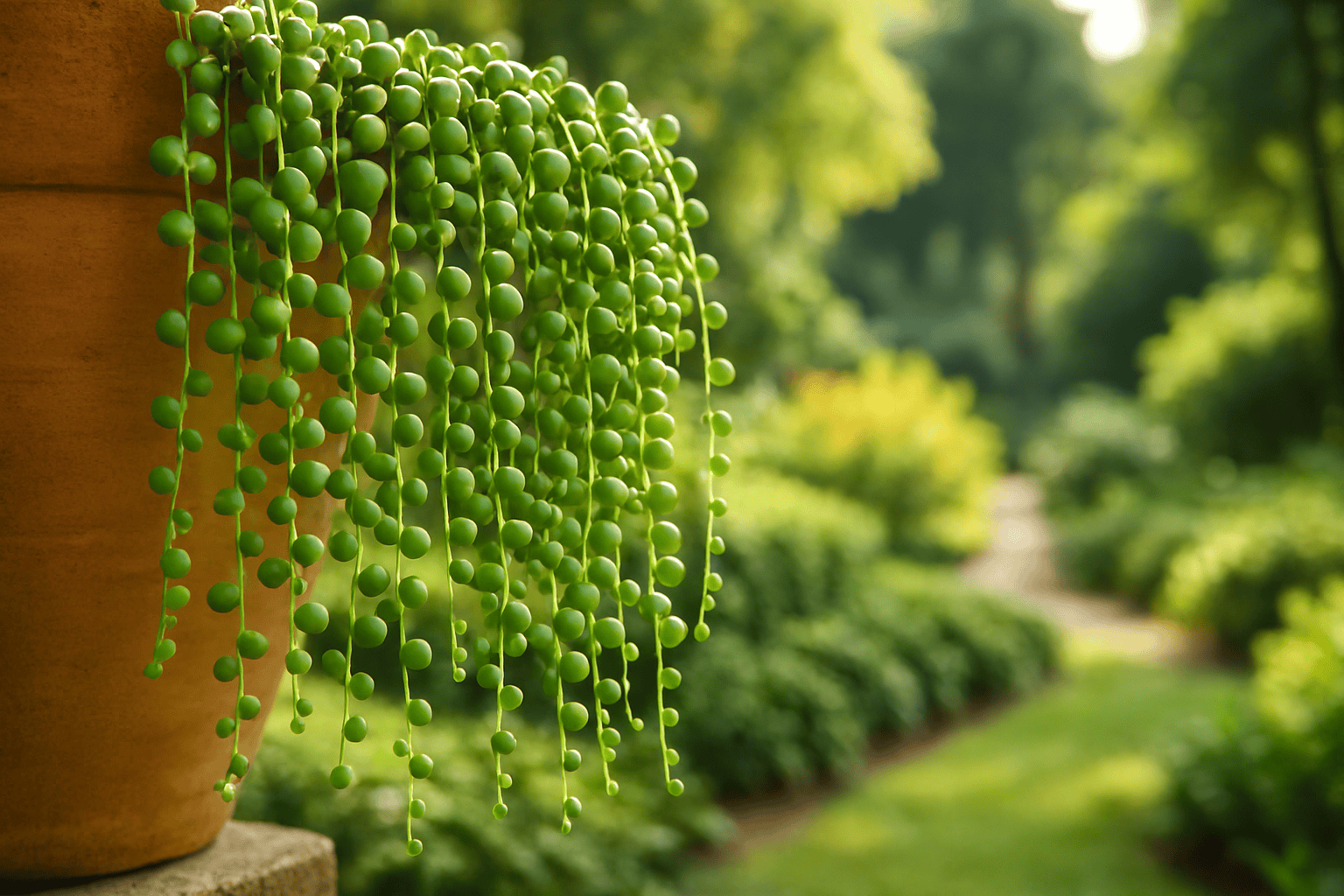
To be care healthy growth String of Necklace plant, it requires bright, indirect light, well-draining soil, regular water, proper temperature and humidity.
Introduction
String of necklace is a unique trailing succulent. The plant originates from the southern tip of Africa and its uniqueness makes this plant a favorite for plant parents. It can be grown outdoors in tropical or subtropical climates but is also an easy indoor plant that can be grown in a west or south facing window.
However, if you can provide the appropriate growing conditions, your plant may survive up to 10 years. I have shared the steps taken to grow this plant care in this article which will guide you.
Scientific Classification
- Kingdom: Plantae
- Clade: Tracheophytes
- Clade: Angiosperms
- Clade: Eudicots
- Clade: Asterids
- Order: Asterales
- Family: Asteraceae
- Genus: Crassothonna
- Species: C.capensis

Prefers
- Light – Bright, indirect light
- Soil – Well draining
- Soil pH – 6.0-6.5
- Temperature – 65-80 degree Fahrenheit
- Humidity – 30-50%
- Blooming time – Spring
- Flower colour – Pink, purple
- Native area – South Africa
- Toxicity – Human and Pets
String of Necklace Plant with some care tips
Proper amounts of light, water, soil, temperature and fertiliser should be obtained for the plant to grow. The problems and benefits of the plant have also been shared in this article. This article will help you with all the essentials you need to grow your plant.
If you want to know about Daffodil plant care.
Light
Place your plant in a south-facing window and shaded spot where they will get indirect or filtered sunlight all day.This plant prefers direct and indirect light with six and eight hours a day. When grown in low light conditions, the leaves will revert to green and the plant is more likely to become leggy. In case your place doesn’t have enough light for your String of Dolphins, then consider putting them 6 – 12 inches.
Water

This plant should be watered when the soil is completely dry. During the growing season, get water thoroughly and winter season reduce water frequency. It should be watered when the soil is completely dry and typically every 1-2 weeks but this may vary based on environmental condition. Let the soil dry out and then water your string of necklace thoroughly. Allowing any excess water to drain out of the pot.
Soil
It requires well-draining, acidic soil with a pH between 6.0 and 6.5. This plant prefers a dry, loamy, sandy, or gravelly soil with a nonpartisan pH level. A mixture of 40% Coco coir , 20% Perlite, 15% Orchid bark or 50% perlite and 50% Soil Mix is highly.
Temperature & humidity
It thrive in warm temperature and ideally between 60-80 degree Fahrenheit.They can tolerate brief periods of temperatures below 40°F but should be protected from frost.
String of Necklace prefers moderate humidity, ideally around 40-60%. It can tolerate lower or higher humidity so these levels are most suitable for healthy growth and leaf health. If you want to increase humidity level then use humidifier.
Fertiliser
Feed your plant during their growing season with a balance fertiliser. To make your plants grow faster, apply fertilisers when the plant starts flowering.Choose a balanced, water-soluble fertilizer with equal amounts of nitrogen, phosphorus, and potassiumto feed a string of necklace plant. Over-fertilizing this plant can cause the leaves to lose their iconic dolphin shape.
Propagation of String of Necklace plant care

String of Necklace can be easily propagated through stem cuttings in either water or soil. The best time to propagate is in spring or summer. This method is low chance to propagate but soil and water cuttings is best method. It does not produce a lot of clumps or divisions and its round.
You can divide the mother plant or take cutting in the Spring when the plant is actively growing. Make sure to observe the room temperature before placing them in slightly moist substrate and similar to conditions the mother plant requires. Carefully separate the mother plant’s root ball into two parts while repotting the each part separately.
Pruning of String of Necklace plant care
String of necklace plant does not need regular pruning but if the plant becomes leggy. It is a good practice for promoting healthy growth and maintaining its appearance. Prune to encourage branching and remove dead or damaged leaves.Trim off any dead stems and pearls, as well as stems that have lost a lot of their pearls. Pruning your String of Necklace promotes a fuller plant.
Repotting of String of Necklace plant care
Repotting should be done only during the growing season (spring-summer). The stems and leaves are fragile, so make sure you handle this succulent with care during repotting.When the plant outgrows its pot and typically every 1-2 years.
Gently removing the plant from its old pot then inspecting the roots and transferring it to a new pot with fresh soil.Choose a pot that is slightly larger than the previous one. Repotting every few years, with a pot one size larger is recommended to refresh the soil and encourage growth.
Common problem of String of Necklace plant

- This may have a lot of problems due to poor drainage and overwatering. Root rot, mold, and fungal diseases are among the most common issues.
- It stores water in their leaves, they need proper watering to stay healthy. When their water storage runs down, their little round leaves begin to shrivel.
- The most common problem is overwatering, yellow leaves,
brown leaf tips, leggy growth and pests.
Benefits of String of Necklace plant
- It is an easy-to-grow succulent that turns bright ruby red when under stress.
- This succulent plant has several benefits such as low-maintenance, drought-tolerant and can even help improve indoor air quality.
- It can help to remove toxins from the air, making a decorative room and peaceful environment. To contribute a cleaner and fresher living environment.
String of Necklace Plant Faq
1.Why is it called string of necklace?
Ans. String of necklace is called for it’s name from small, cylindrical leaves that turn ruby red when stressed.
2. How often should you water this plant?
Ans. On average, you should water every 12-14 days.