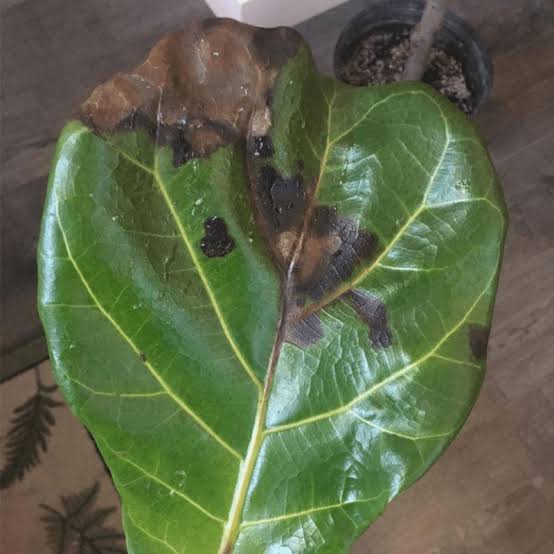
The plant gets it name from the violin like shaped with a waxy finish that grow in an upright direction. Ficus lyrata, commonly called fiddle leaf fig or banjo fig, is native to Africa. It is a broadleaf evergreen plant that may grow to 60-100 tall in its native habitat. It is sometimes grown in the tropics as an ornamental shade plant.

Typically mean there is some watering stress occurring. Overwatering or poor drainage can cause spots to appear and can lead to fungal infections such as root rot. Arguably the most common cause of brown spots in a fiddle leaf philodendron is root rot from over watering. Root rot is a fungal infection that takes place when the roots sit in water for too long and don’t have adequate drainage. This plant roots in particular need fast draining soil and ample drainage.
Some problems of your plant
1. This plant is such a gorgeous leaves but unfortunately yellow, discolored leaves are among the plant and it’s often caused by well meaning carer who has simply gone overboard with watering.
2. The most common cause of brown leaves on a fiddle leaf fig is due to a fungle infection from the roots sitting in too much moisture.
3. It’s often caused by poor air circulation due to over crowding or just a lack of air movement in the environment. It start as small chalky white or gray spots on your plant.

Ficus lyrata, commonly known as the fiddle leaf fig is a species of flowering plant in the mulberry and fig family moraceae.Lyrata should thrive in an indoor setting. Ofcourse, temperature,water and nutrition are vital factors to maintain a lush plant, without access to adequate sunlight,the plant will not thrive.This plant is require bright, filtered light to grow and look their best. Direct sunlight can burn the leaves, especially exposure to hot afternoon sun.To keep water your plant the same amount each week.Just as a human cannot live without water, plants cannot live without soil. So this plant needs common soil for the article will helps you .This tropical plants are prefer warm temperatures at 65°- 85° fahrenheit and avoid letting temperatures drop below 60° fahrenheit.
What Causes Fiddle leaf fig brown spots
There are several reasons that a fiddle leaf fig may begain to brown leaves or spots. Here I will explain you that top 7 reason for your plant turning brown and what to do about it.
Overwatering
Darker brown spots around leaf edges and centers will form from getting too much water. Overwatering and keeping the soil moist will cause the roots rot and can lead to fungal infections. Check under your plant for drainage. Overwatering leads to root rot a fungus in the roots that can eventually damage leaves and even kill your plant.
Solution
Overwatered fig should be removed from their pot, inspected for root rot and any dead or discolored roots should be removed. Then these plants should be repotted with fresh soil in a sterilized container. Report your plant with fresh potting soil in the well draining container. Then water once and make sure the excess water is draining out the bottom of the container.
Underwatering
This doesn’t necessarily mean that are consistently underwatering as it could have only happened one time to cause the browning.
Watering the plants on time is a big task
If you give too much water, the plant dies, and if you forget to water, it dies.
So I always use this product so that I don’t make such a mistake. If you also want to escape from the plight of the plant, you can use it.

The easiest thing about this product is that you can install it in a minute and water the plants like a timer setting.

WATERING PROBLEM ONE SOLUTION
$50 ONLY 14.92


The brown leaf tips will not turn back to green but you can trim the brown edges to get the plant back to looking healthy. Brown spots starting on the edges of its leaves, curling leaves from the edges inward, leaf drop. Underwatered plant will also have dry, hard soil that recedes and shrinks away from the edge of the pot.

Treat
The problems come from dehydration. This directly affects leaves so they become droopy. The best way to treat wilting and dropping is to adjust the watering schedule and ensure proper drainage. Remove all the dead leaves , make sure the plant has great light and begin a consistent watering and fertilizing. If the top leaves are dead and have been removed, pinch off the top to encourage new growth.
This tropical plant is famous for their big veined velvety leaves,their leaves grow increasingly impressive.Like other plants that naturally from part of the forest understory, Philodendron gloriosum likes bright indirect light.This plant will appreciate being kept lightly moist. You can let the first 1 to 2 inchs of soil dry out before watering again during the active summer growing months.This plant grows best in well draining soil containing peat, pertile, charcoal and orchid bark.When taking a piece of the stem make sure to take a multiple piece of aerial roots. It’s best to propagate your plants the Spring when the plant is actively growing.
Leaf burn
The most common sign of sunburn or leaf burn on your plant is the browning and drying of the leaves, followed by leaf drop. This will typically be one of the first signs to look out for, so when you notice it, it’s important to take action quickly. The spot caused by excess direct sunlight will be light brown and will appear on the leaves exposed to direct sunlight.
Treat
The way to treat sun burnt leaves is to remove them from your plant. However, if the sunburn spots are very minor and the cosmetic damage doesn’t bother you, you can leave them as they are. Perhaps the most annoying thing about the plant sunburn is the aesthetic degradation it cause. Leaves usually won’t recover from sunburn, so removing a portion of the leaf or the entire leaf is necessary to maintain the health.
Extreme humidity
This plant is love to grow in humidity conditions that are between 40%-60%. High humidity is not going to hurt them, though they may become more susceptible to infections on their leaves like fungus
Treat
When the plant receive too much moisture a fungal infection can spread from the roots to the leaves causing the leaves to turn brown and mushy in appearance, remove the damaged broots and leaves and the report the plant in new soil.
Root rot
When a plant sits in soggy soil, it’s root cannot absorb oxygen and nutrients properly. Wet soil is the perfect breeding ground for fungi like pathogens that cause the plant root rot. To fix the root ball and get rid of any sodden and infected soil. Next clip off any sections damaged roots that have turned black , brown or mushy. Make sure you use sterilized pruning scissors.
Treat

1. Rinse all the roots thoroughly with water.
2. With a new container with good drainage,repot your plant with fresh, fast draining soil.
3. Place your fiddle in bright, indirect light and water once.
To treat root rot, allow your plant to dry out completely before rewatering and make sure it has plenty of indirect sunlight.
Bacterial infection
One of the first signs of problems in the plant is brown spots, but brown spots can mean a lot of different things. They could indicate dryness or sun damage, insect infestation or in rare cases, fungal or bacterial infection in the plant. Overwatering may also trigger fungal and bacterial infection.
Treat
Mix 1 part 3% hydrogen peroxide with 15 parts water and pour the solution into a spray bottle. Spray the plant’s root with the hydrogen peroxide solution. After pruning, some of the harmful bacteria and fungi can remain on the roots, so by spraying the roots you will kill any remaining pathogens on them. If less then 50 percent of the leaves, repotting with new soil, allowing the plant to dry out between waterings and giving it plenty of sun.
Pest
If you are dealing with a minor infestation then the sign of pest damage on the foilage are small dark spots or small red spots. The insect themselves are often times too small to spot with the naked eye.
Treat
You can treat spider mites with plain water. Spray down your plant with a strong steam of water to dislodge spider mites. Don’t forget to spray both the topside and the underside of the leaves to remove eggs and adult insects that are stuck to the foilage.

Leave a Reply